
Best Short Boards
Hathaway Avenger 9 ft Shuffleboard Table
The shortest length that still feels like a shuffleboard table rather than a game. At 9 feet the hang shot is still possible and position play still matters - it just all happens closer.
Shuffleboard Tables
Shuffleboard is the game that fits the room nobody else can use: long, narrow and against a wall. The only question is how many feet you have.
What decides this purchase: Overall table length, plus about 2 feet of player room at each end
The winner of each roundup in this section, with a direct link to Amazon.
Best Short Boards
The shortest length that still feels like a shuffleboard table rather than a game. At 9 feet the hang shot is still possible and position play still matters - it just all happens closer.

Best Shuffleboard Tables
Playcraft lists a 1.75-inch vertical-stave butcher-block playfield with pro climate adjusters and a storage cabinet. The vertical stave construction is what keeps a board this wide from cupping, and the adjusters are what fix it when it tries.
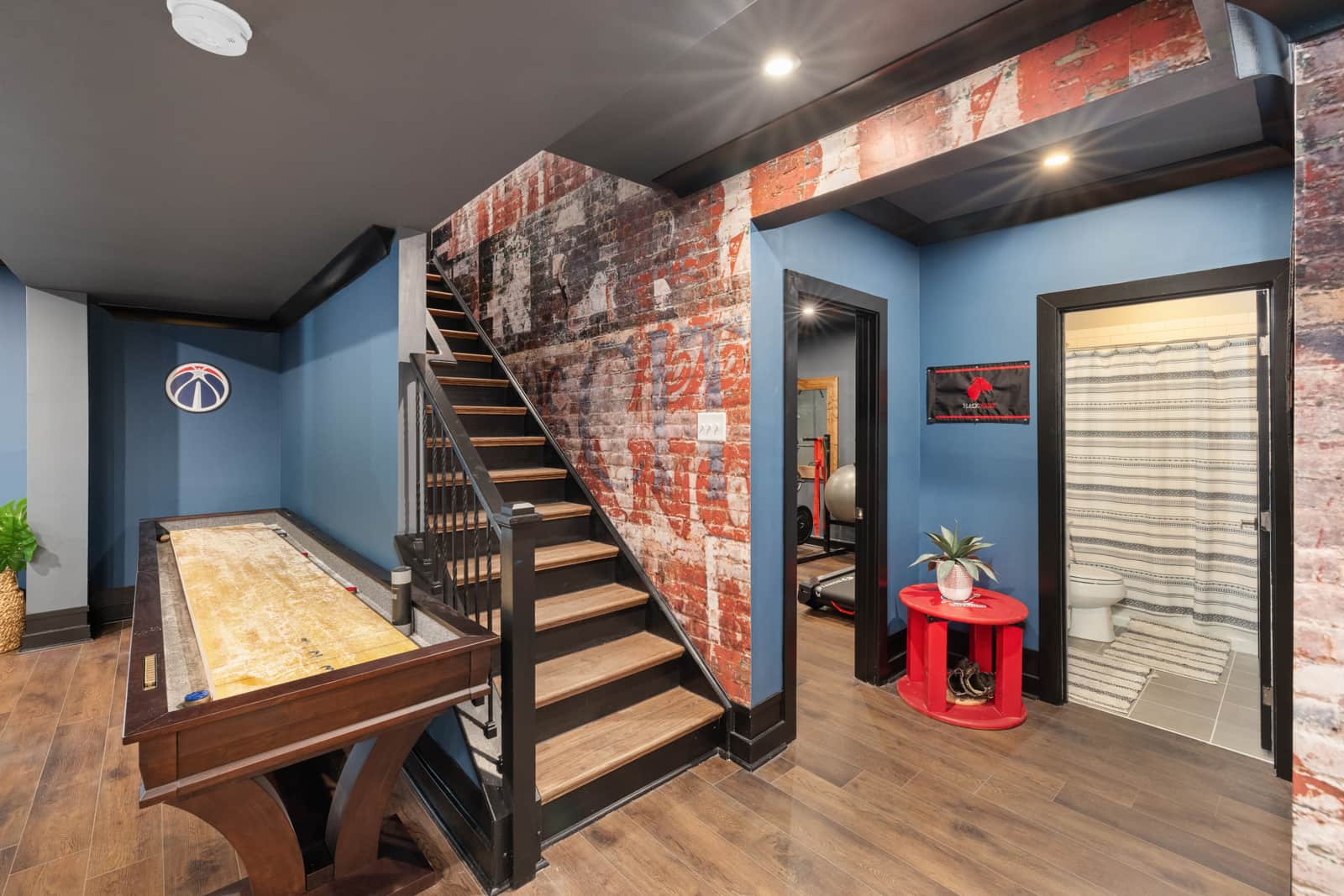
Shuffleboard is the most under-considered table in a home game room, and it is the one that solves the hardest rooms. A table is roughly 20 inches wide at the playfield and about 30 inches wide at the cabinet. It wants length and nothing else. A long narrow basement, a wall in a finished garage, a bonus room that is wrong for everything else - shuffleboard fits all of them.
Tournament tables are 22 feet long. Home tables are sold at 9, 12, 14, 16, 18, 20 and 22 feet, and each step changes the game rather than just scaling it. On a 9-footer the whole board is within easy reach and the game is about touch. At 14 feet you have to commit to a push. At 22 feet it becomes a distance game and hanging a puck off the end is a genuine skill.
Add about 2 feet of player room at each end - 3 feet is better - and that is your room requirement. A 12-foot table in a 16-foot room is comfortable. A 12-foot table in a 13-foot room is a table you squeeze past, every time.
A good shuffleboard playfield is solid hardwood, built as a vertical-stave butcher block: narrow strips glued on edge so the grain runs vertically and the board resists cupping. Thickness runs from about 1.5 inches on home tables up to 3 inches on commercial boards. Thicker means heavier, more stable, and more expensive.
Wood that wide moves with humidity, and a board that has crowned or cupped sends every puck the same direction. That is what climate adjusters are for: threaded rods running the length of the underside that let you pull the board flat again when the seasons change. They are not a luxury feature on a basement or garage table; they are the thing that keeps the table playable in year three.
Shuffleboard wax is not wax at all. It is tiny silicone beads that you scatter on a polished board so the puck rides on them. Without it the puck will not travel. The tins are sold in numbered speeds, and the number is the speed: low numbers are slow and controlled, high numbers are fast and the board becomes unforgiving. Most people buy two grades and settle somewhere in between.
You also need silicone spray or a polish to keep the finish slick underneath the beads, and a brush to sweep between games. Budget for consumables; they are cheap and the game stops being fun without them.
If your clear wall run is under about 11 feet you are looking at a 9-foot table with barely any player room, which is a worse version of the game. A tabletop shuffleboard on a dining table is honestly more fun in that situation, and costs a tenth as much. And if small children will be at the table, know that the pucks are heavy metal and the board sits at counter height.
Measure first
Measure the longest uninterrupted wall run in the room, then subtract 4 feet. Round down to the nearest table length sold. That is the table you can buy without turning sideways every time you walk past it.


Picks
Nine-foot and tabletop shuffleboard for rooms with no 16-foot wall, with an honest account of the short game.
Picks
Shuffleboard tables ranked by the wall run each needs, with playfield thickness and climate adjusters explained.
Compare
How shuffleboard length changes the game, the room each needs, and which one suits your space.

Compare
Room shape, cost, noise and accessibility compared - and why a narrow room usually answers this question itself.

Guide
Why shuffleboard playfields cup and crown, what climate adjusters do, and how to use them properly.
Guide
Shuffleboard dimensions from 9 to 22 feet with playfield and cabinet widths, height and the room each length needs.
Guide
What shuffleboard wax is, what the speed numbers mean, and the full maintenance routine that keeps a board playable.