Skip to content
Cue&Cabinet

Dart Boards

Dart Boards and the Throw-Line Math

A board needs 5 feet 8 inches of wall and 7 feet 9 and a quarter inches of floor in front of it. That is the entire space requirement, and it is why darts fits almost anywhere.

What decides this purchase: Board type (sisal or electronic) and the 7 ft 9.25 in throw distance it still needs

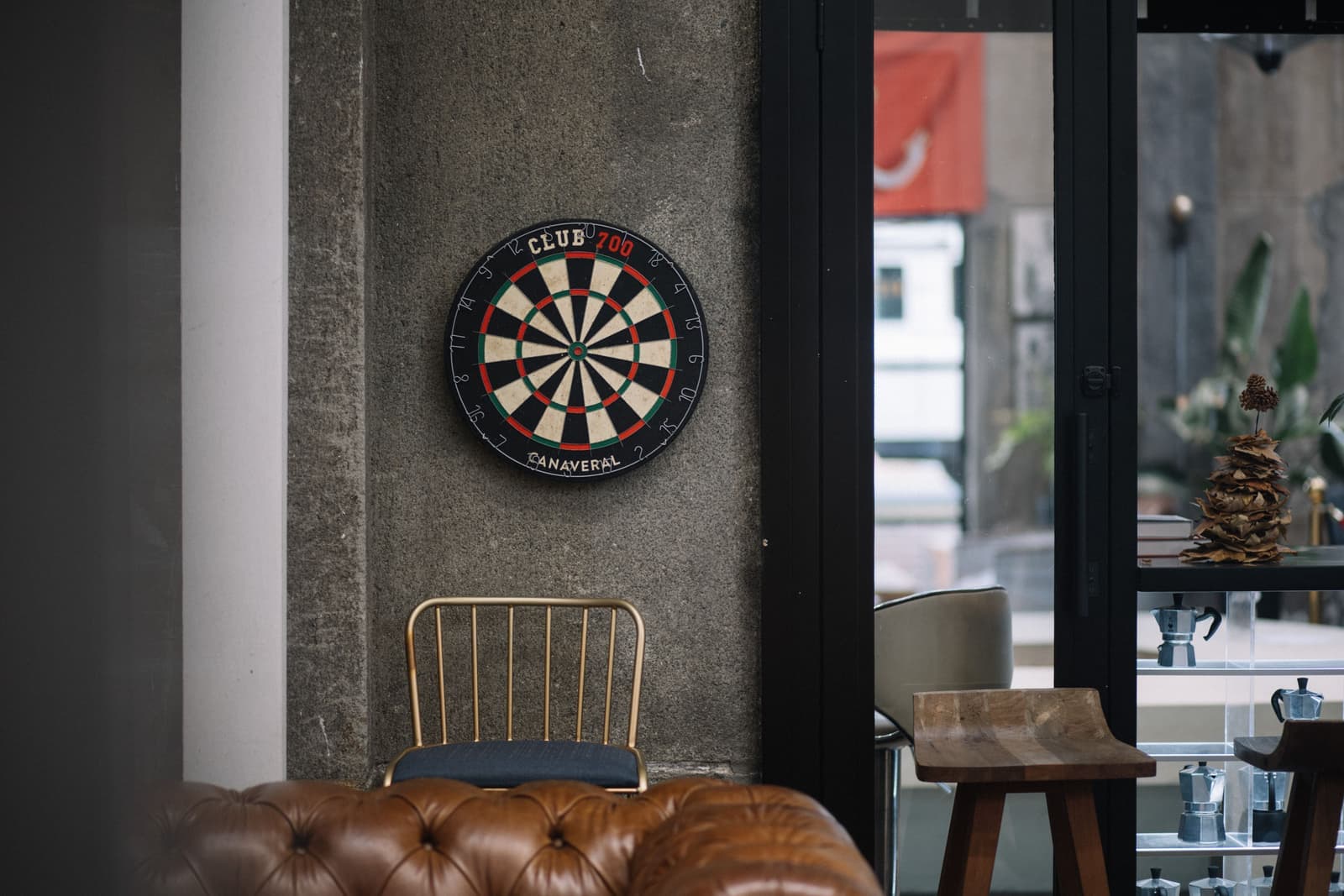
A bristle dart board mounted at regulation height on a dark wall with a throw-line mat on the floor

Start with these

The winner of each roundup in this section, with a direct link to Amazon.

Darts has the smallest footprint of any game on this site and the most precise setup. The numbers are fixed by the World Darts Federation and they are not approximate: the center of the bullseye sits 5 feet 8 inches above the floor, and the throw line - the oche - is 7 feet 9 and a quarter inches from the face of the board, measured horizontally. The diagonal from the bull to the back of the oche is 9 feet 7 and three-eighths inches, which is the measurement you use to check the other two.

That means a usable darts setup needs about 8 feet of straight floor, 5 feet 8 inches of unobstructed wall, and roughly 2 to 3 feet of standing room behind the line. Call it 11 feet of run. A hallway does it. A garage wall does it. The corner of a basement that is useless for everything else does it.

Measure the height from the finished floor, not the subfloor, and measure to the center of the bull, not the top of the board. Both mistakes are extremely common and both are permanent once the bracket is screwed in.

Sisal or electronic: the fork in the road

A bristle board is compressed sisal fiber. Steel-tip darts push the fibers apart and they close again, which is why a good board self-heals and lasts years. It scores nothing for you, it makes a satisfying noise, and it is what every professional plays on. It also means steel points and real holes in whatever is behind the board.

An electronic board is plastic with thousands of small holes and a sensor behind each segment, played with soft-tip darts. It scores automatically, which matters more than people expect - most casual players give up on cricket because keeping score is tedious. It is quieter, it is safer around children, and soft tips do not punch holes in drywall. It also registers the odd bounce-out as a miss, and the segment feel is nothing like sisal.

There is no overlap between them. Steel-tip darts destroy an electronic board; soft tips will not stick in sisal. Choose the board and the darts follow.

Protect the wall before you need to

Everyone misses. With a bristle board the question is only whether the misses land in a foam surround, a backboard, a cabinet door, or the drywall. A surround is a foam ring that fits around the board and catches near misses. A backboard is a larger panel that catches wide ones. A cabinet does both and closes over the board when you are done, which is the usual choice for a room that is not solely a games room.

Lighting matters more than it sounds. A single ceiling light behind the thrower puts your own shadow directly on the board. Either light the board from the front and above, or buy a cabinet with integrated lighting, which solves it in one purchase.
Measure first

Start with your room, not the board

Mark 5 feet 8 inches up the wall and 7 feet 9.25 inches out along the floor. If you can stand comfortably behind that mark and swing your arm, the room works. Everything else is board choice.

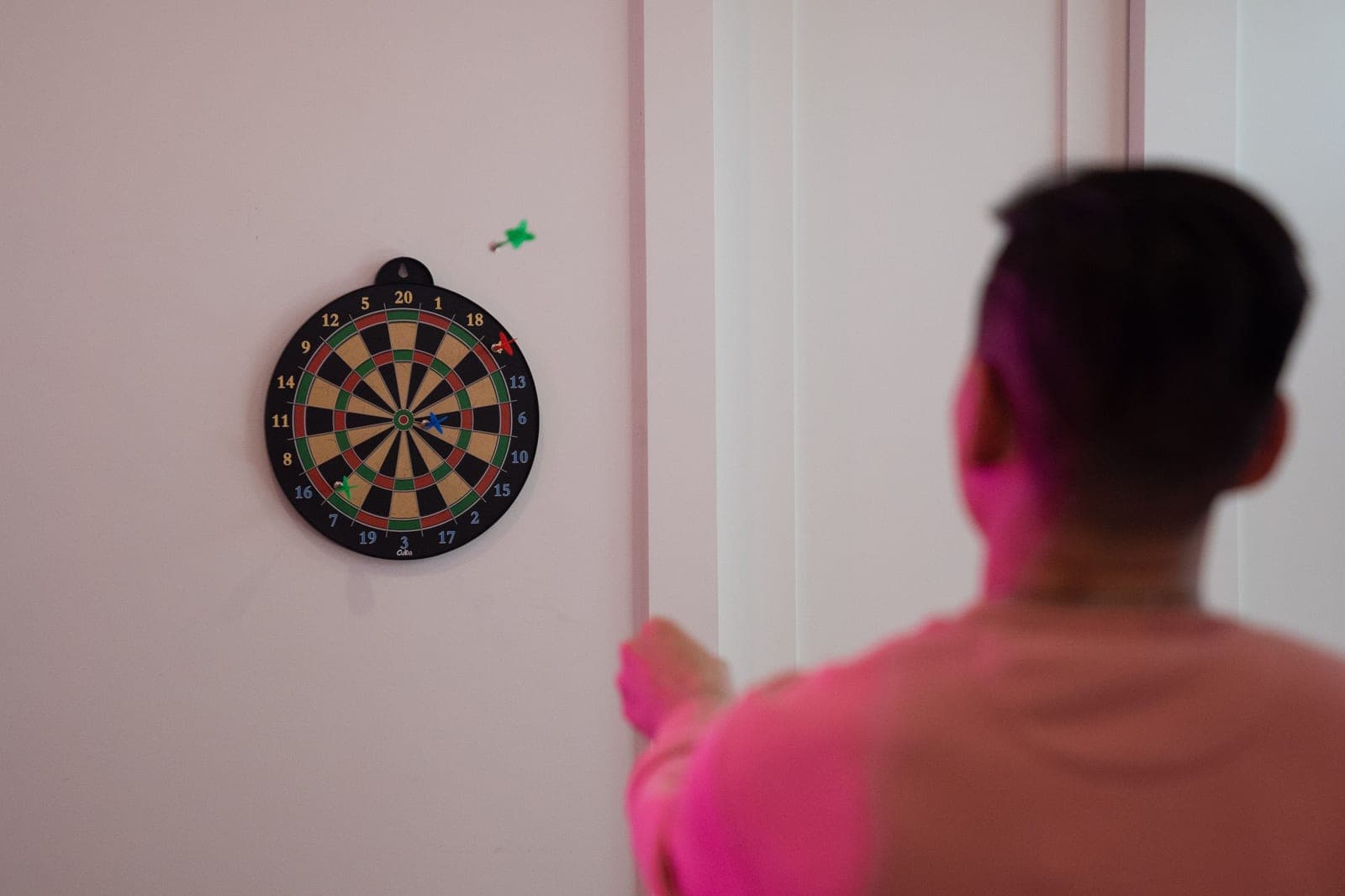
A thrower standing at the oche, showing the run of floor a dart board needs

The picks

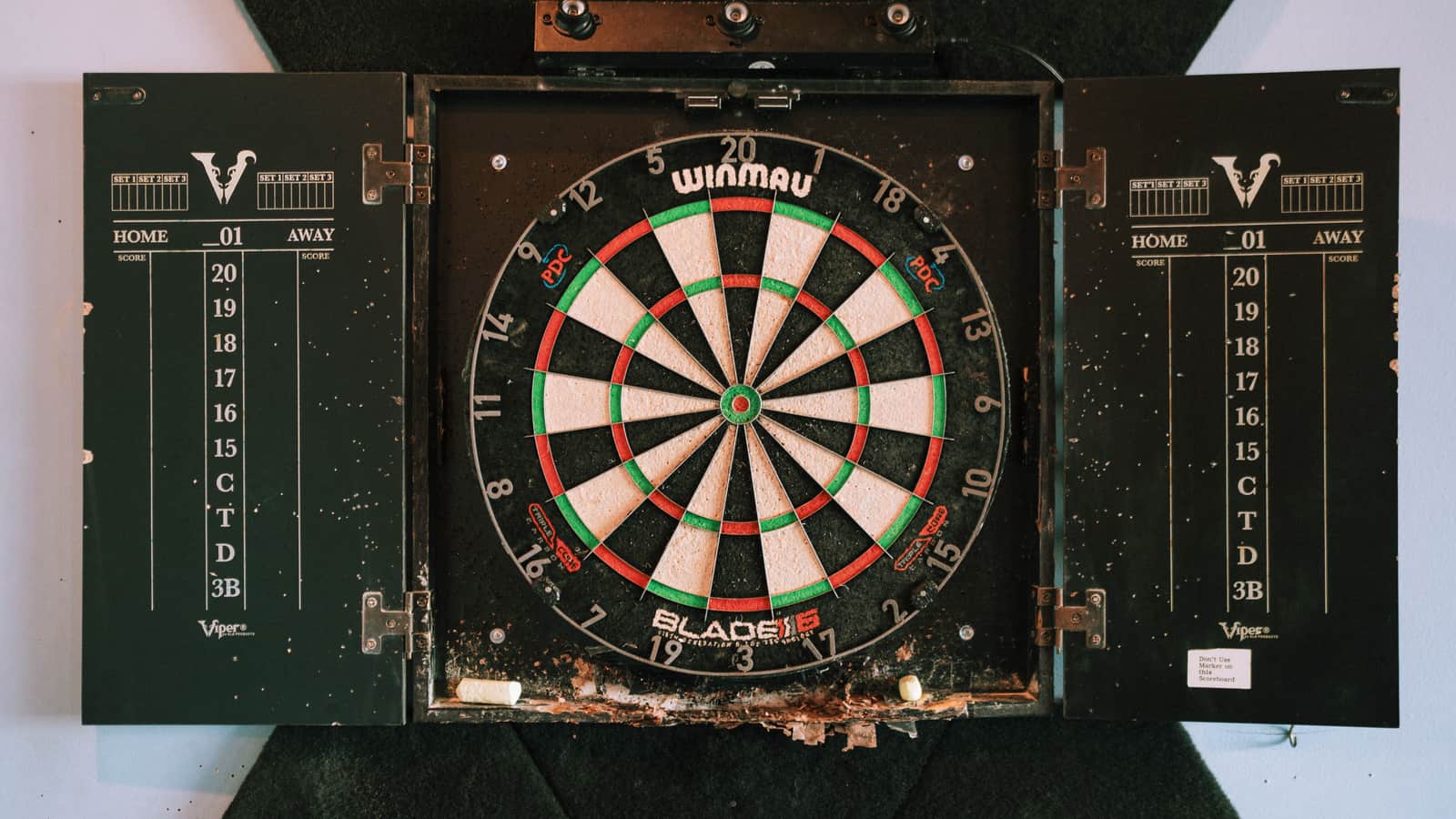
An open wooden dart board cabinet mounted on a wall with scoring surfaces inside the doors

Picks

The Best Dart Board Cabinets

Dart cabinets compared on door coverage, lighting and scoring surfaces - the purchase that solves three problems at once.

Head to head

Darts stuck into a sisal board with the fibers visible around the points

Compare

Sisal vs Plastic Dart Boards

What sisal is, how self-healing works, and how plastic segments differ - the material story behind the board choice.

Guides

A dart board cabinet with its doors open, protecting the wall around the board

Guide

Dart Board Wall Protection

What actually stops darts damaging a wall and floor, what does not work, and how to choose based on how you miss.

Questions people actually ask

What is the regulation dart board height and distance?
The bullseye center sits 5 feet 8 inches from the floor and the oche is 7 feet 9.25 inches from the board face, measured horizontally. The check diagonal from bull to oche is 9 feet 7.375 inches. Full setup instructions here.
How much space do I need behind a dart board?
Two to three feet behind the throw line is enough to stand and swing, so about 11 feet of total floor run. Side clearance barely matters - 2 feet each side of the board is plenty.
Is the throw distance different for soft tip?
Yes. Soft-tip electronic darts are commonly thrown from 8 feet, measured the same way, because the board face sits further forward. Check the board's own manual - manufacturers state their intended distance.
Which dart board is best for a beginner?
A mid-price sisal board if you want the real game and do not mind scoring on a phone, or an electronic board if you want to play cricket without a maths argument. Both are covered in the roundup.
Will a dart board damage my wall?
Steel tips will, eventually, because everyone misses. A surround catches near misses, a backboard catches wide ones, and a cabinet does both and hides the board. Soft-tip electronic boards largely avoid the problem.

Sources

By Brijon M.Last updated October 6, 2026Published October 6, 2026