Guide
How Long Does a Pool Table Last?
The frame and the bed outlive the house. Everything you actually touch is a wear item - and knowing which is which changes what you buy.
How these picks were made: from published manufacturer specifications, governing-body standards and the room arithmetic - not from first-hand use. We have not played on these tables. Read the method.
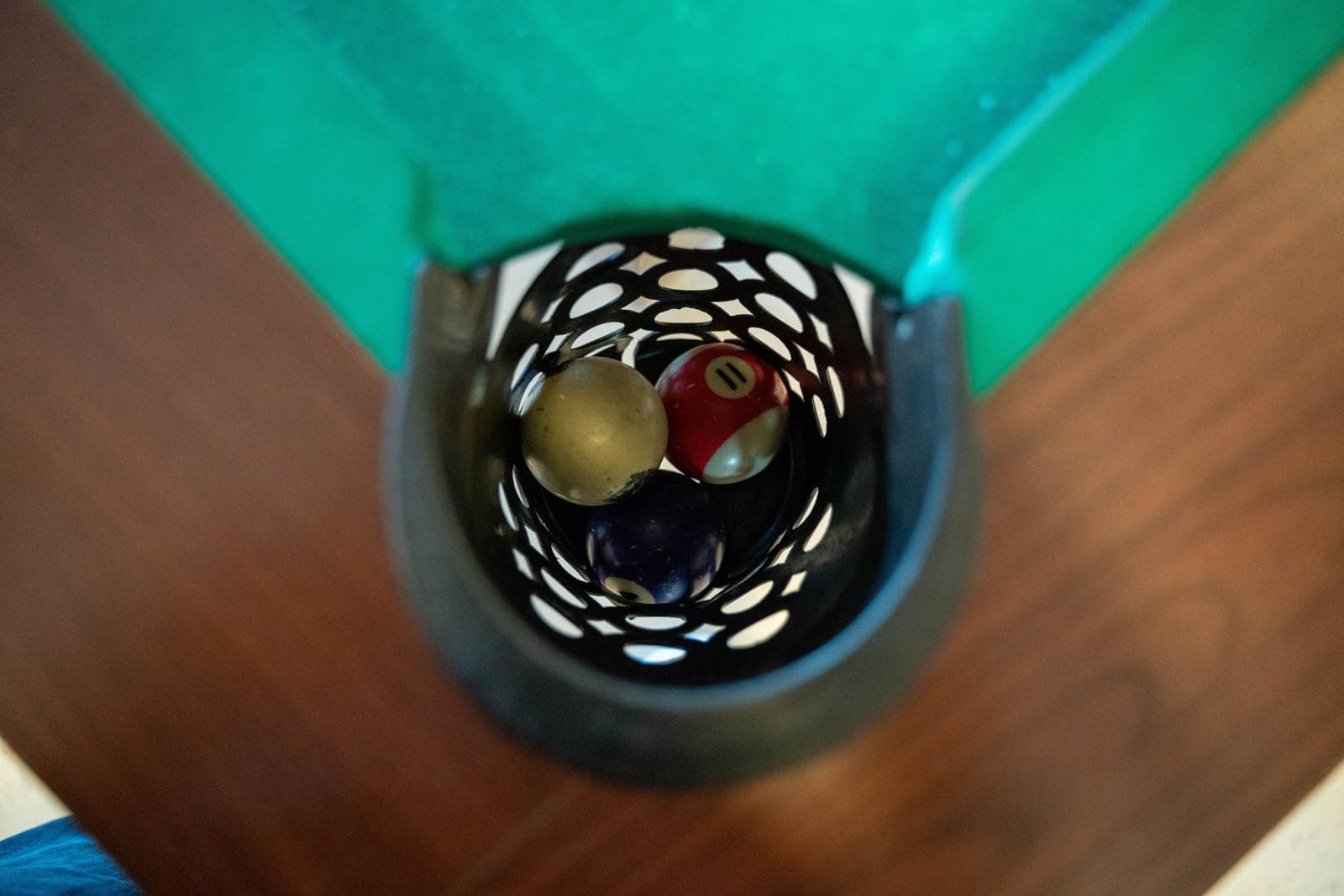
A slate pool table lasts essentially indefinitely - the bed is quarried stone and the frame is hardwood, and a well-made slate table from the 1960s is still a good table today. What wears out is everything else: the cloth in roughly 5 to 10 years of household use, the rail cushions in 10 to 25 years, the pockets whenever the leather dries out. A composite-bed table is different: there the bed itself is the wear item, and its life depends almost entirely on the room's humidity rather than on how much you play.
Part by part
| Part | Typical life, home use | What shortens it | Renewal |
|---|---|---|---|
| Slate bed | Indefinite | Being dropped, chipped at a seam | Essentially never |
| Composite bed | 5-15 years | Humidity cycling, standing water | Replace the table |
| Hardwood frame | Decades | Damp, loose bolts left loose | Re-tighten each season |
| Rail cushions | 10-25 years | Heat, sunlight, age of the rubber | Re-rubber the rails |
| Cloth, woolen blend | 3-7 years | Chalk dust, sun, drinks, no cover | Recloth |
| Cloth, worsted | 7-15 years | Burns and tears rather than wear | Recloth |
| Pockets and leather | 10-20 years | Dry heat, direct sun | Replace the set |
| Balls, phenolic resin | Decades | Chips from being dropped on concrete | Replace the set |
Why the cloth is the part you will replace
Cloth does not wear out from balls rolling on it. It wears out from the chalk those balls carry, which is an abrasive, and which gets driven into the weave by every roll. That is why the two cheapest accessories in this category - a brush and a cover - have such an outsized effect on service life, and why a table in a dusty garage needs reclothing long before an identical table in a clean basement.
There are three failure modes, and only one of them is gradual. Gradual abrasion thins the cloth over the break area and in front of the pockets until the bed shows through. A burn - from a cigarette or a dropped light bulb - is instant and local. A tear from a miscued shot is instant and obvious. Worsted cloth resists the first and is no better at the other two. The cloth and felt guide covers the material choice and what a recloth involves.
Cushions, and the symptom nobody recognizes
Rail cushions are natural rubber. Rubber hardens with age, heat and ultraviolet light, and it does so whether or not the table is played. The symptom is a table that banks short: a ball off the cushion comes back with less energy than it should, so position play stops working and nothing you do with the cue fixes it. Most people conclude they are playing badly.
There is a test that takes thirty seconds. Roll a ball firmly across the table into a cushion and watch the rebound. A healthy K66 cushion returns the ball most of the way back with a crisp sound. A dead cushion gives a dull thud and a ball that stops short. If you are buying a used table - especially a cheap slate table - check this before you check anything about the bed, because re-rubbering the rails is a bigger job than reclothing.
What actually extends the life
#1 · The recloth that lasts longest
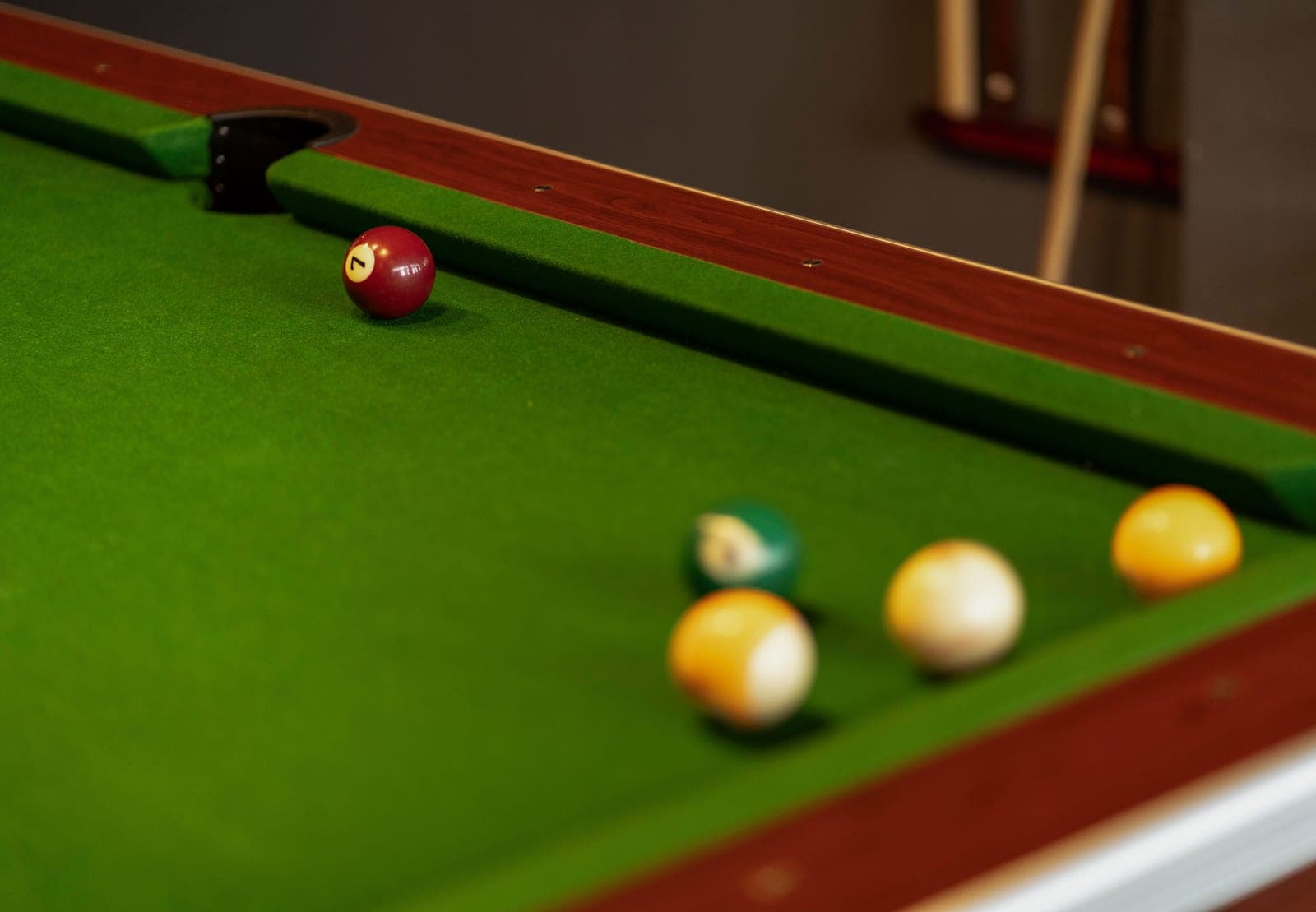
Simonis 760 Billiard Cloth
Worsted cloth: a tight-woven surface with no nap, so the ball rolls straighter and the cloth lasts. The standard recloth upgrade.
Worsted cloth is a tight-woven surface with no nap, so the ball rolls straighter and the cloth lasts. If a table is going to be reclothed every several years, this is the version that stretches the interval the furthest - and it is the single upgrade that most changes how an older table plays.
- What works
- No nap, so roll is straighter and more consistent
- Tighter weave wears far slower than woolen blend
- What does not
- Costs more per yard
- Shows a burn or a tear rather than hiding it
#2 · The cheapest way to extend cloth life
Fitted Pool Table Cover
Dust is what kills cloth in a garage. A fitted cover is the cheapest item on this site and the one that pays back fastest.
Dust is what kills cloth, and a fitted cover is the cheapest item on this site. It is also the one with the clearest payback: dust settles into the nap and grinds the fibers every time a ball rolls over it, so covering the table between sessions directly buys cloth years.
- What works
- Keeps dust, sun and spills off the playing surface
- Costs a fraction of a recloth
- What does not
- Only works if it actually goes back on
#3 · The two-minute habit
Pool Table Brush and Rail Cleaning Kit
Brush along the nap, not across it. A two-minute habit that adds years to a woolen cloth.
Brush along the nap, not across it. A two-minute habit that adds years to a woolen cloth, because the chalk dust that would otherwise be ground into the weave gets lifted out of it instead.
- What works
- Removes the chalk that does most of the abrasion
- Also cleans the rails, where hands leave oil
- What does not
- Has to be done regularly to matter at all
Composite beds, and what their life really depends on
On a composite table the usual question - how long will it last - has an unusual answer: it depends on the room, not the play. An engineered playfield in a dry, heated basement can stay acceptably flat for well over a decade. The same table in an unconditioned garage or a damp basement will develop a roll in a few years, and no amount of leveling fixes a bed that is no longer flat, because leveling adjusts the legs and the problem is in the panel.
This is the practical reason the bed material decision is worth taking seriously up front rather than treating as a budget line. The slate versus MDF comparison sets out which rooms genuinely suit each.
The maintenance schedule that covers it
- Every session: cover the table when you finish. This is the whole of the cloth-care programme in one habit.
- Weekly, if played often: brush the cloth along the nap, from the center toward the pockets, and wipe the rails.
- Monthly: check the level with a long spirit level in both directions. New tables settle, and old floors move.
- Each season: go round the frame and rail bolts with the correct wrench and bring them back to snug. Wood moves, bolts loosen, and a loose rail changes how the table banks.
- Each year: look at the cushions with the rebound test, and look at the pocket leather for cracking.
- Every 5-10 years: expect a recloth. Treat it as a scheduled service rather than a failure.
What we checked, and what we did not
The service-life ranges above are the intervals at which these components are normally renewed on domestic tables, presented as ranges because they vary enormously with room conditions and play rate. They are not warranty terms, manufacturer claims or measured test results, and we have not run any component to failure. The rebound test and the humidity target are standard practical checks, and the material behavior described follows from what the parts are made of.