Guide
Is a Pool Table Worth It?
Almost every regretted pool table was regretted for the same reason, and it was never the table.
How these picks were made: from published manufacturer specifications, governing-body standards and the room arithmetic - not from first-hand use. We have not played on these tables. Read the method.
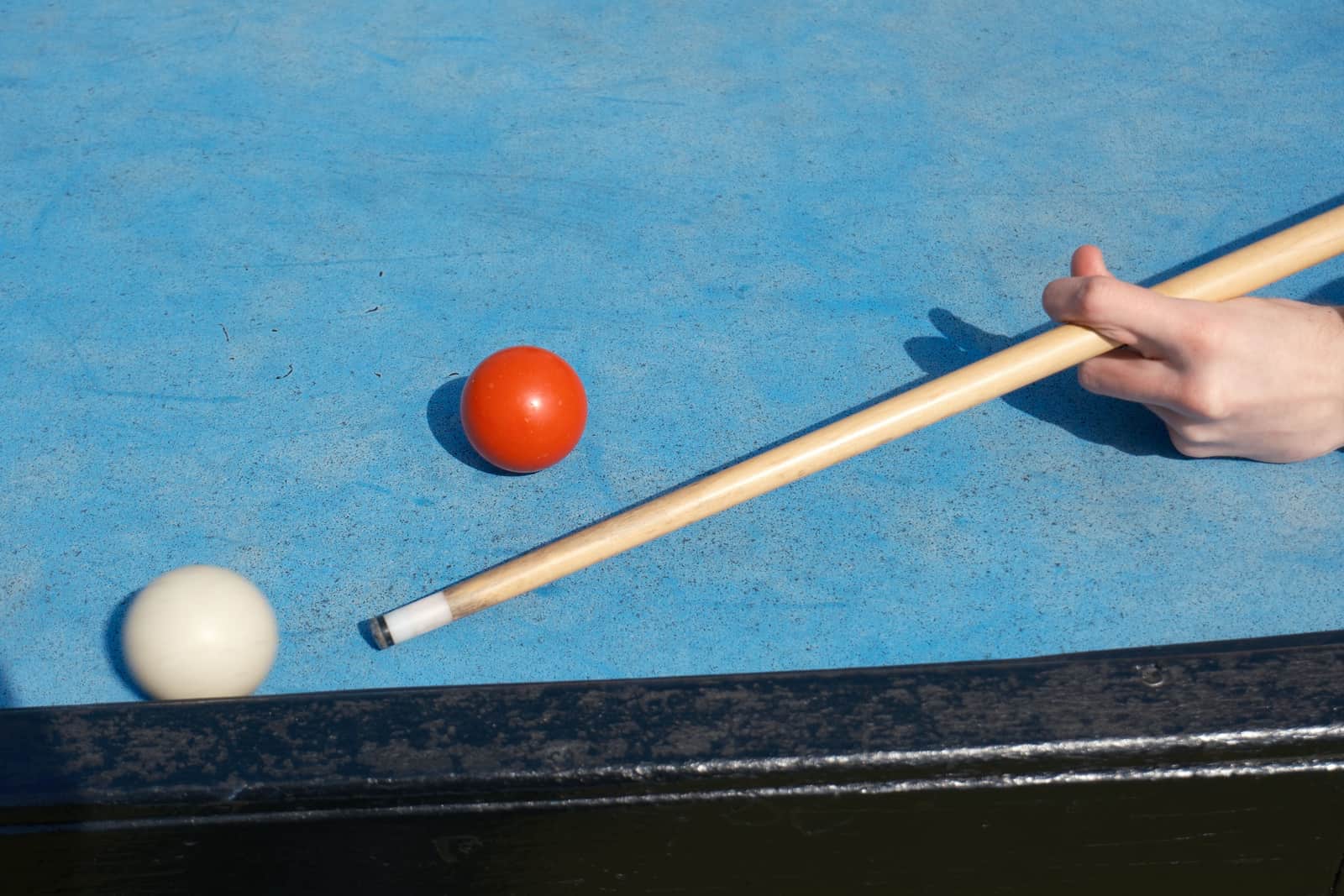
A pool table is worth it if your room has clear floor on all four sides for the cue you will use, and if the table can stay set up permanently. If both are true, it is one of the few pieces of home equipment that gets used for decades and holds its appeal with guests, children and visiting adults alike. If either is false, it is worth it for about six weeks. The table almost never disappoints people; the room does.
The test, in two numbers
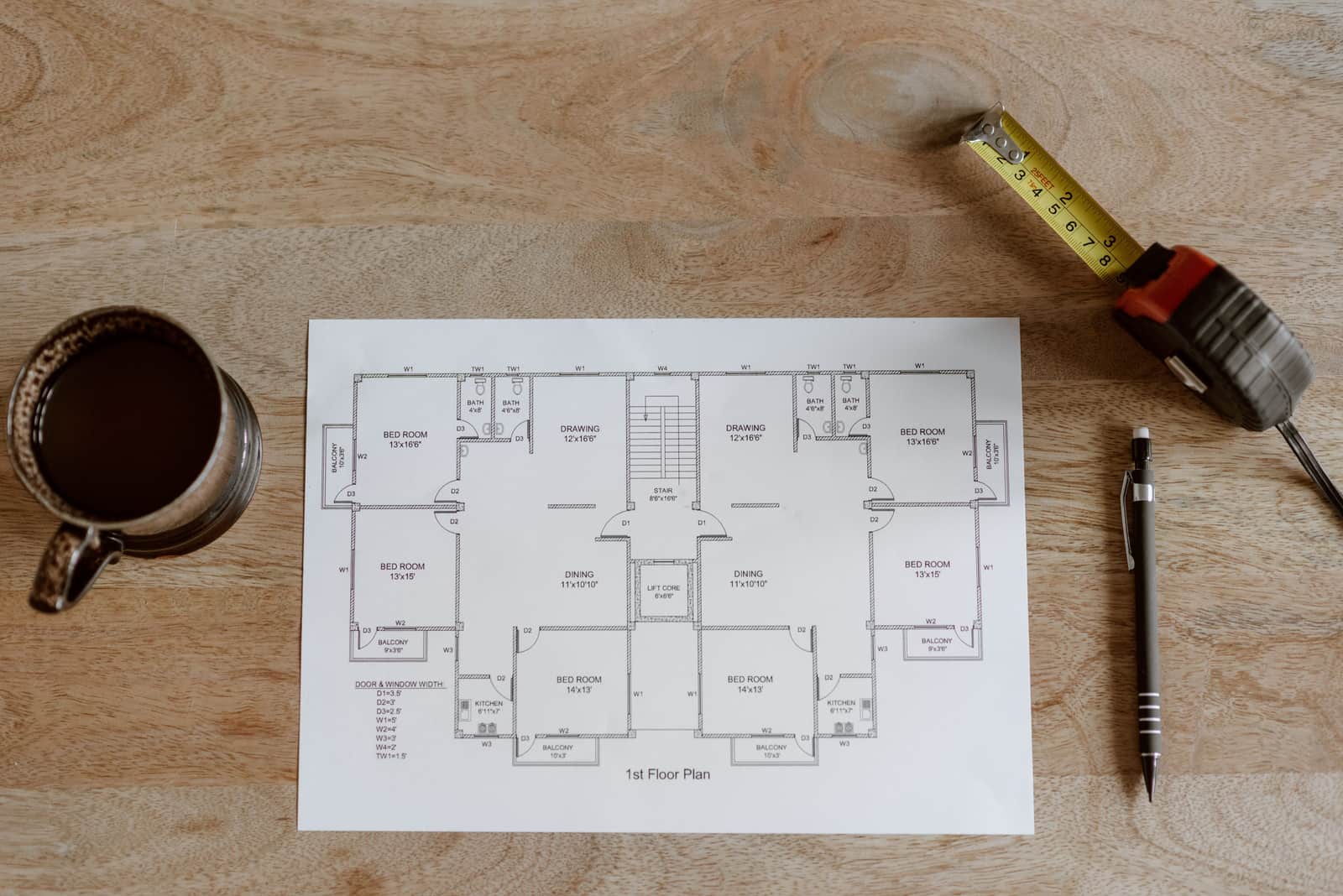
Take the playing surface of the table you want, add the length of your cue plus 6 inches of stroke to each side, and compare that against the clear floor at table height - measured to whatever actually projects into the room, not to the drywall. If the number fits, the table will get played. If it does not fit, you will be shooting off a wall on a third of your shots, and that is the specific experience that makes people stop playing.
| Table | With 58 in cues | With 48 in cues | Verdict |
|---|---|---|---|
| 6 ft | About 12 ft 10 in x 9 ft 8 in | About 10 ft 10 in x 7 ft 8 in | Fits most basements |
| 7 ft | About 17 ft 2 in x 13 ft 11 in | About 15 ft 4 in x 12 ft 1 in | The common home size |
| 8 ft | About 18 ft 4 in x 14 ft 6 in | About 16 ft 4 in x 12 ft 6 in | Needs a dedicated room |
| 9 ft | About 19 ft 10 in x 14 ft 10 in | About 17 ft 10 in x 12 ft 10 in | Rare in a house |
The room size guide has the full chart and the measuring method. It is worth doing with a tape and chalk on the actual floor before any other part of this decision, because every other question is downstream of it.
What a pool table is actually good at
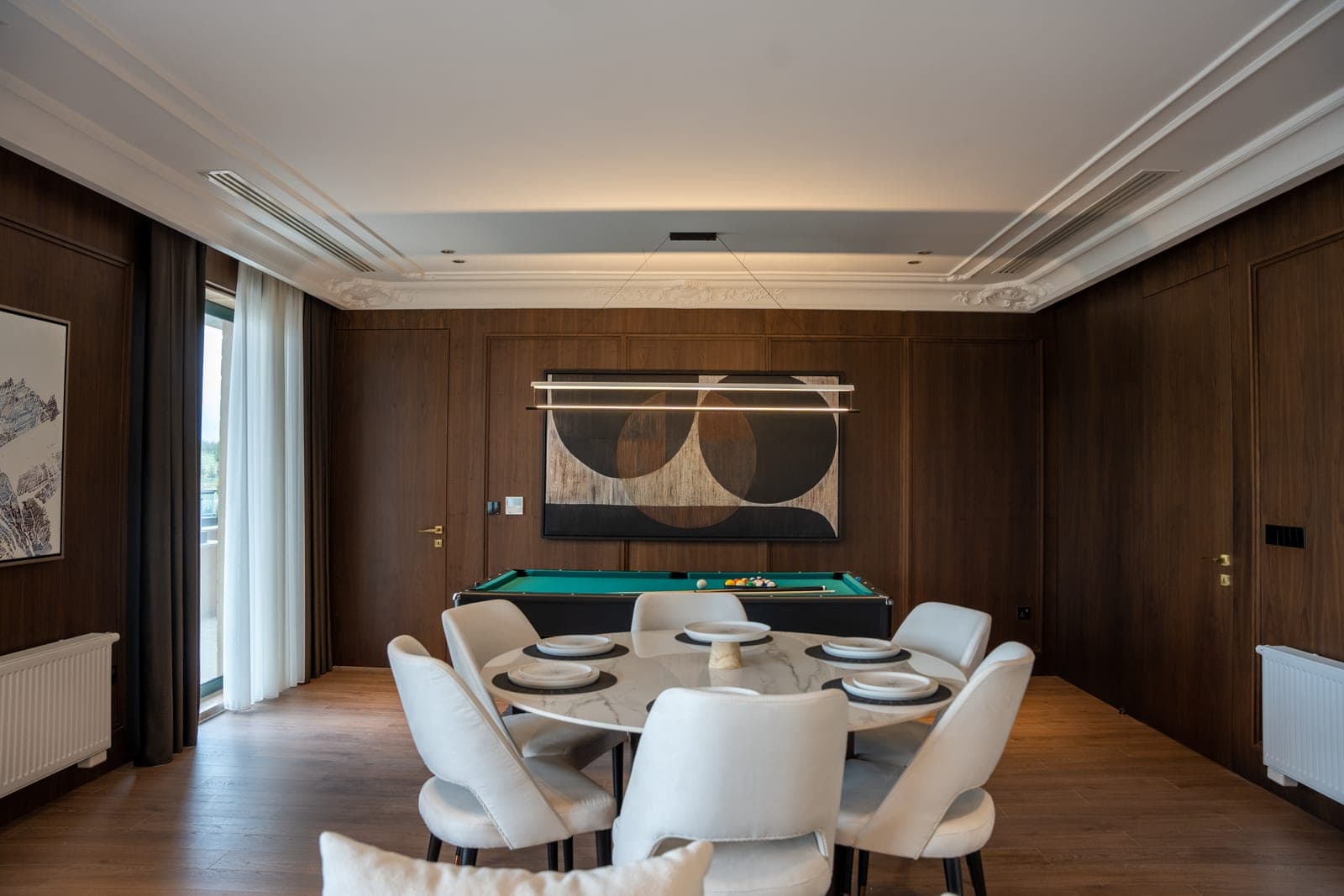
It is worth being specific, because the generic case for a games table undersells pool. A pool table is a conversation shape: two to four people stand around it, nobody is sitting facing a screen, and the game is slow enough to talk through. That is why it works at a party and why it works with a teenager who will not sit down for a conversation. It is also almost infinitely scalable in skill - a beginner enjoys their first evening and a good player is still learning in year ten.
- It gets used by guests. Unlike most game room equipment, adults who have never owned a table know how to play.
- It does not need a second person at the same skill level. A mismatched game of pool is still a game; a mismatched game of table tennis is a lesson.
- It rewards practice alone. Twenty minutes of drills is a real use of a table, which is what keeps it in use on ordinary weeknights.
- It outlasts trends. The equipment has not meaningfully changed in a century and does not need updates, subscriptions or a working screen.
The three ways people regret one
The room was too small. This is the overwhelming majority. The table fits, physically, and then every shot along one rail is taken with a short cue at an awkward angle. Six weeks later the table is a surface for folded laundry. The clearance arithmetic above prevents this entirely and takes ten minutes.
The table had to be put away. A table that gets dismantled, covered with a dining top or shoved against a wall after every session is a table that gets played four times. If the room genuinely cannot give up the space permanently, that is not a reason to avoid a table - it is a reason to buy a folding table or a dining combo, where putting it away is designed in rather than a chore.
The weight was underestimated. A slate table is 700 to 900 pounds in sections that do not bend, and moving it later means a full disassembly and a professional re-install. People who expect to move house inside five years, or who bought slate for an upstairs room without checking the span, end up in a situation where the table dictates the decision. The weight and floor support page covers the figures.
Three tables for three answers
#1 · The room that passes the math
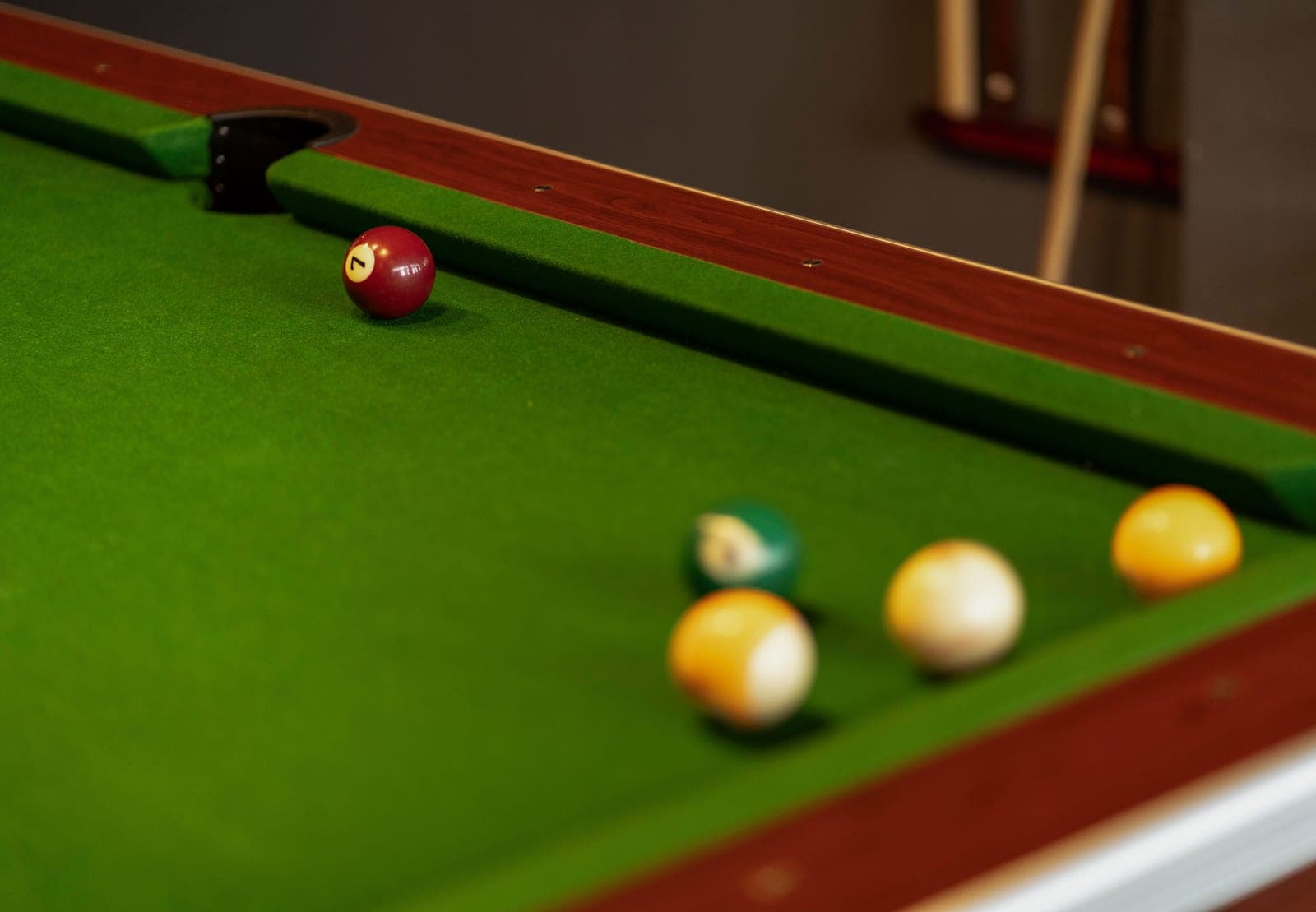
Fat Cat Tucson 7 ft Pool Table
A 7-foot arcade-style table with an automatic ball return, aimed at basements that cannot take a 4-inch slate bed.
If your room clears a 7-footer, this is the size and format most homes should land on. A 7-foot table with a ball return is the pub-sized game people actually know how to play, and the return keeps a casual game moving without anyone walking the table to re-rack.
- What works
- Real 7-foot geometry in a size most rooms can clear
- Ball return suits casual, high-turnover play
- What does not
- Needs short cues on tight sides in a small room
- Rail bulk from the return channels eats a little clearance
#2 · A room that has another job
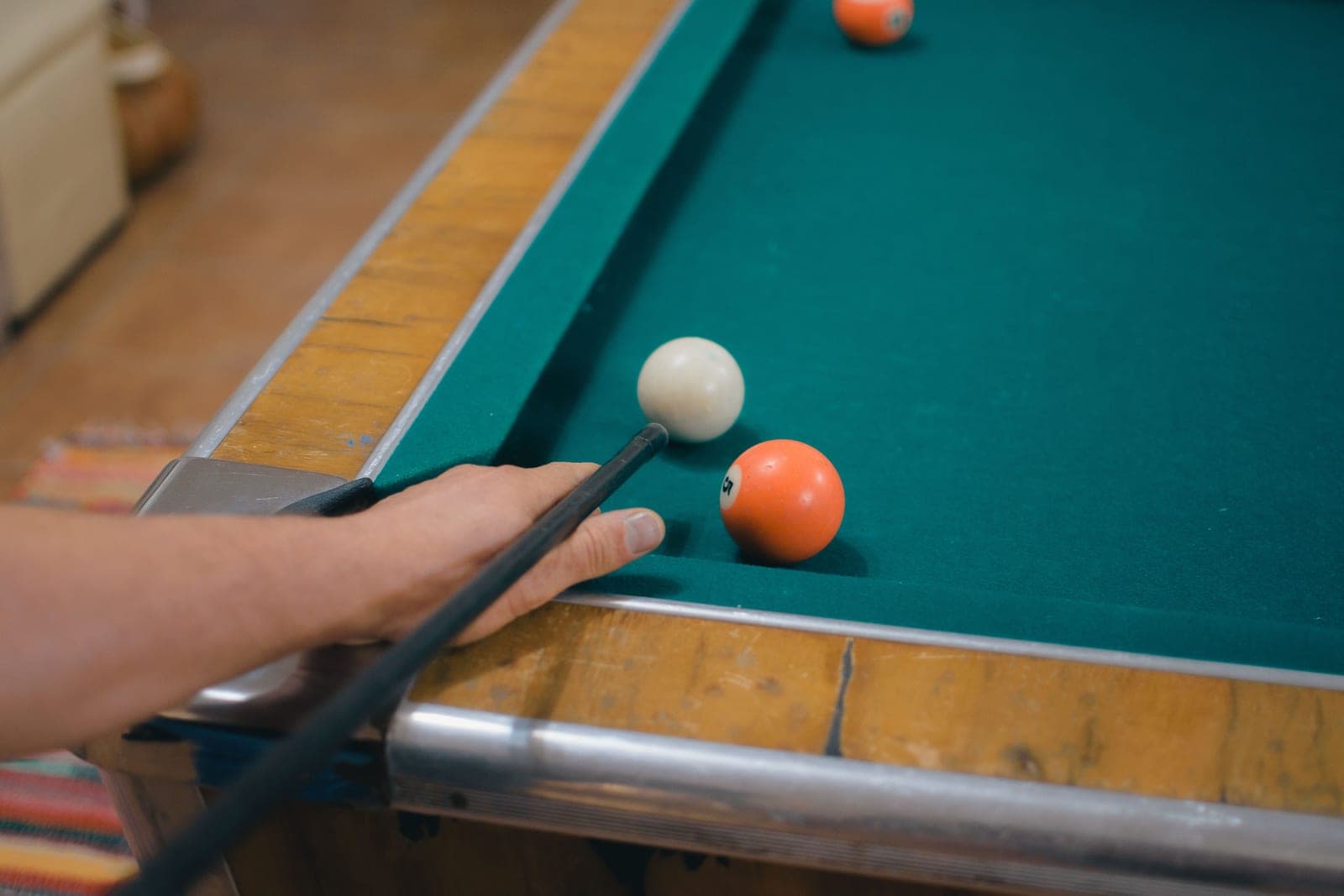
Hathaway Park Avenue 7 ft Pool Table with Dining Top
A 7-foot table that takes a dining top and ships with two storage benches. Hathaway lists a 3/4-inch MDF build with K66 rubber cushions.
If the honest answer to how often you will play is twice a month, a table that is also furniture is worth more than a better table that is in the way. Hathaway lists a 3/4-inch MDF build with K66 rubber cushions and two storage benches, and the dining top is what stops the room resenting it.
- What works
- The room keeps its other function
- Benches give the cues and balls somewhere to live
- What does not
- Dining top has to be lifted and stored to play
- Not a table a league player would choose
#3 · When the answer is probably no
Fat Cat Trueshot 6 ft Folding Billiard Table
A 6-foot folding table on a non-slate bed. The folding legs are the whole point: it is the one real pool table you can clear out of a room.
The option for a room that fails the clearance test or a household that is not sure. A 6-foot folding table is a smaller game and a reversible decision - if it turns out nobody plays, it folds against a wall instead of becoming a 700-pound reminder.
- What works
- Folds flat, so the decision is reversible
- Light enough to move alone with care
- What does not
- 6 feet is a noticeably different game
- Folding hardware wears before anything else does
Skip it if: your room clears a 7-footer. At that point buy the bigger game.
Does a pool table add value to a house?
Treat the table as a thing you buy for use, not as an investment. A pool table left behind in a sale is a feature for the small share of buyers who want one and an expensive removal job for everyone else - which is why so many used slate tables change hands cheaply with the house. If resale is part of your reasoning, the honest position is that a table holds some value as equipment and essentially none as a fixture.
The corollary is useful, though: the used market is full of slate tables from people who discovered the clearance problem after buying. If you have the room, the stairwell and the patience to arrange a professional move and re-level, that market is the cheapest route to a very good table.
The cheaper decision first
If you are not sure, there is a sequence that costs far less than guessing. Tape the footprint of the table plus its clearance on the floor and leave the tape there for two weeks. Walk around it, open the doors, move the furniture you would have to move. Most people learn what they need to know in the first week - either the shape of the room suddenly makes sense, or they keep tripping over the tape, which is the answer.
If the room fails, it is not the end of the game room. A 9-foot shuffleboard runs along a wall and needs no side clearance, a dart board needs a single wall, and bumper pool fits a 48-inch octagon. The narrow-room page covers rooms that no pool table suits, and the rooms it describes are often better than a compromised pool room.