Guide
Pool Table Room Size: Work Out What Fits
One formula, one chart, and the five obstructions that make a measured room smaller than it looks.
How these picks were made: from published manufacturer specifications, governing-body standards and the room arithmetic - not from first-hand use. We have not played on these tables. Read the method.
The formula
Required room = playing surface + 2 x (cue length + 6 inches), calculated separately for length and width.
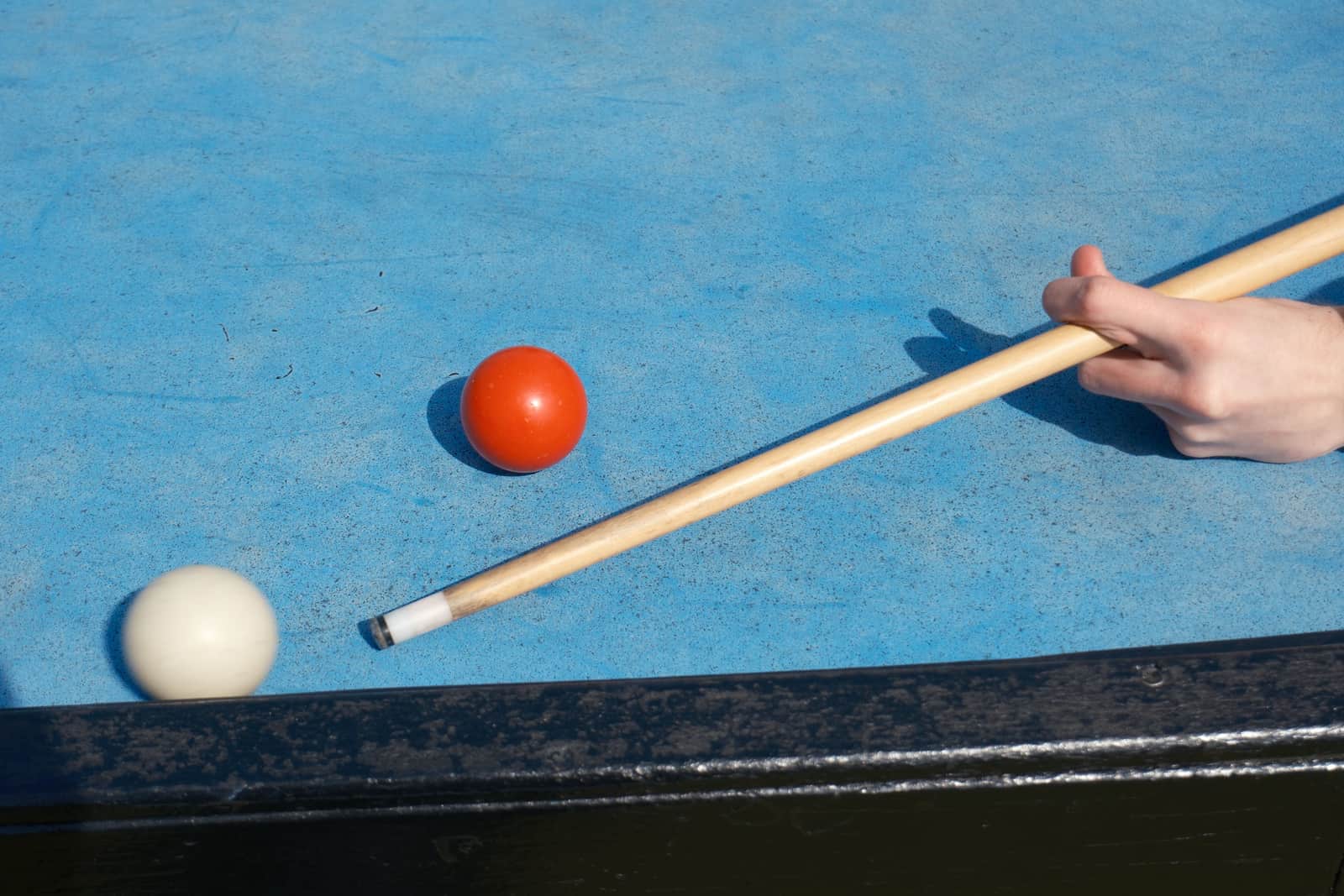
The reason is physical. To shoot a ball frozen against a cushion, the cue has to lie along the table with its butt clear of the wall, and you need roughly 6 inches behind that for the backswing. So each side needs the full cue length plus the stroke. Both ends need it, hence the doubling.
Worked example: an 8-foot table has an 88 by 44-inch playing surface. With a 58-inch cue, 58 + 6 = 64 inches per side. Length: 88 + 128 = 216 inches = 18 feet. Width: 44 + 128 = 172 inches = 14 feet 4 inches. That is the whole calculation.
The full chart
| Table | Playing surface | 58 in cue | 52 in cue | 48 in cue |
|---|---|---|---|---|
| 6 ft | 68 x 34 in | 12 ft 8 in x 9 ft 6 in | 11 ft 8 in x 8 ft 6 in | 10 ft 10 in x 7 ft 8 in |
| 6.5 ft | 72 x 36 in | 13 ft 0 in x 9 ft 8 in | 12 ft 0 in x 8 ft 8 in | 11 ft 2 in x 7 ft 10 in |
| 7 ft | 78 x 39 in | 17 ft 2 in x 13 ft 11 in | 16 ft 2 in x 12 ft 11 in | 15 ft 4 in x 12 ft 1 in |
| 7.5 ft | 82 x 41 in | 17 ft 6 in x 14 ft 1 in | 16 ft 6 in x 13 ft 1 in | 15 ft 8 in x 12 ft 3 in |
| 8 ft | 88 x 44 in | 18 ft 0 in x 14 ft 4 in | 17 ft 0 in x 13 ft 4 in | 16 ft 2 in x 12 ft 6 in |
| 8 ft oversize | 92 x 46 in | 18 ft 4 in x 14 ft 6 in | 17 ft 4 in x 13 ft 6 in | 16 ft 6 in x 12 ft 8 in |
| 9 ft | 100 x 50 in | 19 ft 0 in x 14 ft 10 in | 18 ft 0 in x 13 ft 10 in | 17 ft 2 in x 13 ft 0 in |
How to measure a real room
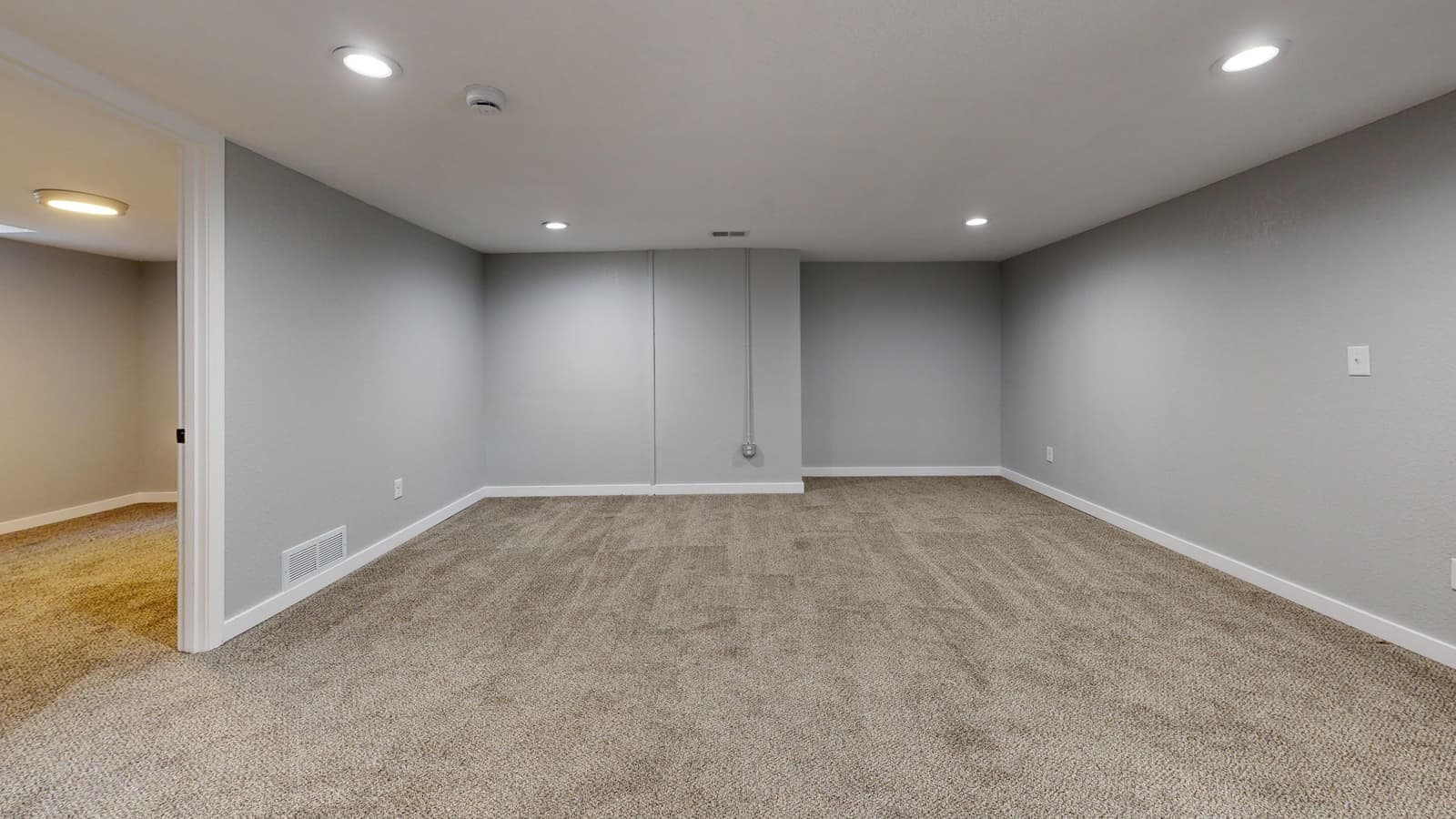
- Measure at table height, roughly 32 inches off the floor. A basement that is 14 feet at the ceiling is often less at waist height.
- Measure to the face of what projects, not to the wall: the support post, the stair stringer, the furnace housing, the water heater, the window well.
- Open every door fully and measure to the door edge. A door that swings into the room removes its own width from that side permanently.
- If the basement is unfinished and will be finished, subtract 4 to 6 inches per wall for framing, insulation and drywall.
- Write the two smallest numbers down. Those are your room dimensions. Everything else is optimism.
The five obstructions that ruin rooms
- The support post. Almost always dead center, almost always exactly where the table goes. It cannot move without an engineer.
- The stairs. The stringer and the headroom under it both intrude at exactly table height.
- The water heater and furnace. Both need service clearance by code, so you cannot simply build around them.
- The door swing. Re-hanging a door to swing the other way is a one-hour job that has rescued a lot of rooms.
- The chest freezer. The easiest to move and the last thing anyone thinks of.
Quick picks
| # | Product | Best for | Size | Price |
|---|---|---|---|---|
| 1 |  Players Short Pool Cue (48 in / 52 in) | Buying back clearance | 48 and 52 in | |
| 2 |  Mizerak Dynasty Space Saver 6.5 ft Billiard Table | When the chart says 6.5 ft | 6.5 ft | |
| 3 |  Barrington Urban Collection 7 ft Pool Table | When the chart says 7 ft | 7 ft |
What to buy once you have the number
#1 · Buying back clearance
Players Short Pool Cue (48 in / 52 in)
A short cue for the side of the table that lost its clearance to a wall. Two of these fix most tight-room tables.
The cheapest fix in this entire category. A pair of short cues on the tight sides turns a no into a yes, and costs less than a cover.
- What works
- 48 in buys back 10 in of required clearance per side
- Standard solution in good small-room setups
- What does not
- Less leverage and spin available from that side
#2 · When the chart says 6.5 ft
Mizerak Dynasty Space Saver 6.5 ft Billiard Table
A 6.5-foot table built specifically for rooms that fail the 7-foot clearance math. Short cues are still likely on at least one side.
Built around the small-room problem rather than scaled down from a larger table.
- What works
- Fits rooms a 7-footer cannot
- Light enough to reposition
- What does not
- Cut angles differ from a full-size table
#3 · When the chart says 7 ft
Barrington Urban Collection 7 ft Pool Table
A 7-foot table that ships with a pre-assembled playfield, which is the difference between a two-hour job and a weekend.
The most common answer the chart produces for a real basement.
- What works
- Pre-assembled playfield
- Full 7-foot geometry
- What does not
- Composite bed
If nothing fits
Then nothing fits, and that is a useful answer rather than a failure. A room under roughly 11 by 8 feet clear will not take any pocket table worth owning. Bumper pool works in 9 by 9. A shuffleboard table wants length and nothing else. A dart board needs 8 feet of floor and no width at all. Pick the game that fits the room instead of the table that nearly does.