Picks
The Best Dart Board Lights
A ceiling light behind the thrower puts the thrower's shadow on the segments they are aiming at. A dart board light exists to fix exactly that, and the only question is how it attaches to your wall.
How these picks were made: from published manufacturer specifications, governing-body standards and the room arithmetic - not from first-hand use. We have not played on these tables. Read the method.
Almost every complaint that a dart board is hard to score on is a lighting complaint wearing a disguise. The physics is simple and unforgiving: a ceiling fixture sits somewhere behind the throwing position, the thrower stands between it and the board, and their own body casts a shadow across the exact segments they are aiming at. Turning the ceiling light up makes the shadow sharper, not fainter. The fix is a fixture that lights the board from in front of it, and that is what every product on this page is for.
What separates the options is almost entirely how they attach. That sounds like a detail and it is actually the decision: a ring light needs prongs pushed into the board, a bar light needs holes in the wall, a clamp light needs a board over 1.37 inches thick, and a cabinet pod needs a cabinet. Pick the one your room allows before you compare brightness, because the brightest light you cannot mount is worth nothing.
Where a dart board light has to sit
In front of the board and above it, aimed down at the face - roughly 12 to 18 inches out from the wall and above the top of the board, so the beam crosses the board at a steep angle. The steep angle is the point. Light arriving nearly parallel to the wall grazes the board face and throws long shadows off the wires and the darts already in the board; light arriving steeply from in front puts the shadow of a dart behind the dart, where nobody is looking.
Mounted correctly, every light here achieves that geometry. The difference is how completely each one defeats the second shadow: the thrower's own arm, raised in front of the board at the moment of release. A 360-degree ring defeats it entirely, because there is no single light direction to block. A 120-degree arc or a bar handles the ceiling-light problem but can still let a high arm shade the top of the board. The lighting guide works through that geometry in full, including the improvised fixtures that also do the job.
Color temperature decides whether you can read the segments
A standard bristle board is a red, green, black and cream face, and the red and green are the two colors that light temperature pushes around hardest. Neutral white in the 3500 to 4000 K range renders them accurately, which is why the One80 bar's quoted 4000 K is a specification worth paying attention to rather than marketing noise. Very warm light flattens red and green towards each other, so a treble 19 and a treble 7 stop separating at a distance. Very cool light washes the whole board out and makes the cream segments glare.
Colored light on the board face is the one thing to rule out entirely. An RGB strip across a games room looks excellent and changes how a board reads in a way no amount of getting used to fixes - it is the same reason colored light is kept off a pool table bed. Keep the ambient color on the walls and the task light on the board white.
Quick picks
| # | Product | Best for | Coverage | Price |
|---|---|---|---|---|
| 1 | Target Corona Vision Dartboard Lighting System | The shadow-free answer, if you will do the install | 360 degrees, 125 LEDs | |
| 2 |  One80 Illumina Dartboard Lighting System | A permanent install in a dedicated darts corner | Horizontal bar, 4000 K | |
| 3 | 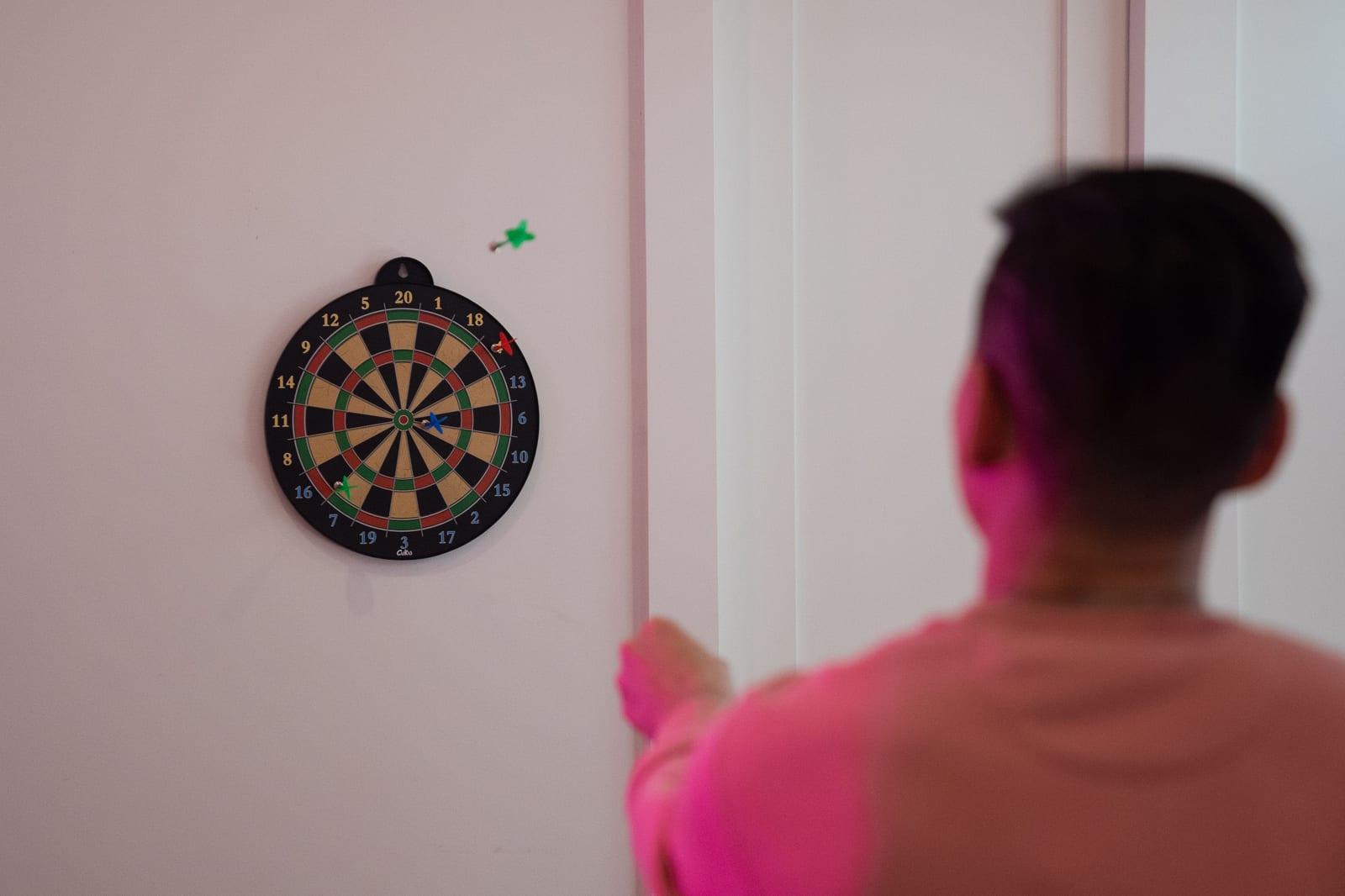 Winmau Polaris 120 Dartboard Light | Buying one off a shelf without a darts-shop order | 120 degrees, 1200 lumens | |
| 4 | 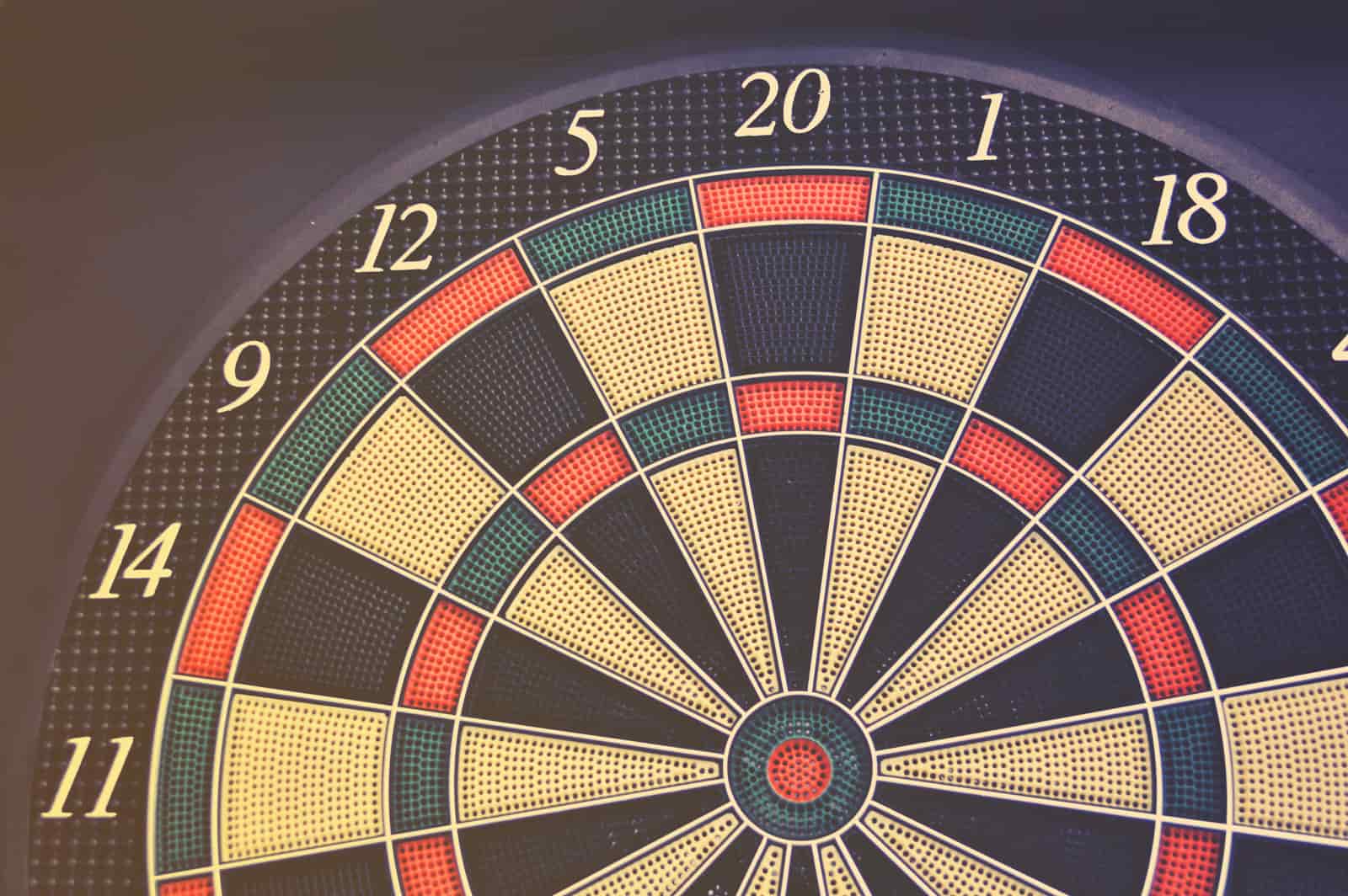 Target Arc Dartboard Light | A board you cannot drill around | 24 LEDs, clamp mount | |
| 5 |  Viper Shadow Buster Dartboard Light | A flat-topped cabinet, on a budget | Three LED pods, cabinet | |
| 6 | 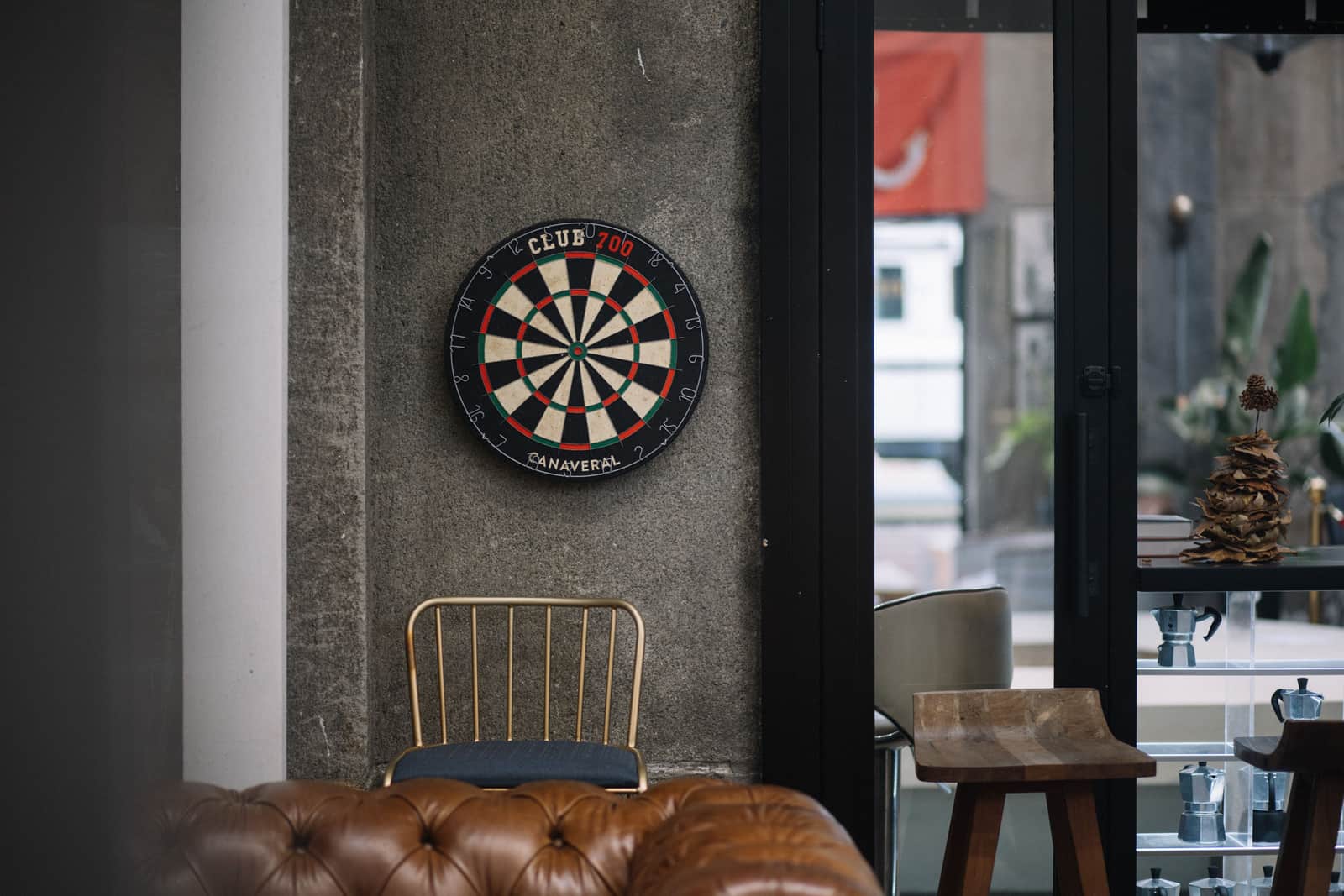 Viper Metropolitan Dartboard Cabinet with LED Light | Starting from scratch, with one purchase | Cabinet with integrated LED |
The lights
Five purpose-built dart board lights and the cabinet that has one built in, ordered by how completely each one defeats shadow rather than by price. Check what your room allows you to mount first - two of these need a second part to work at all.
#1 · The shadow-free answer, if you will do the install
Target Corona Vision Dartboard Lighting System
A full 360-degree LED ring that sits around the board on magnetic legs. US darts retailers list it with 125 LEDs in a cool white; the magnetic conversion kit it clips to is a separate purchase.
This is the light that solves the problem completely rather than mostly. Because the LEDs run all the way around the board on a ring, there is no single direction the light comes from, so there is no direction a dart, a hand or an elbow can cast a shadow from. US darts retailers list it at 125 LEDs in a cool, slightly blue white. The catch is the install: the ring sits on magnetic legs that grip four prongs you push into the board between the 9 and 12, 18 and 4, 15 and 2, and 16 and 7 segments - and those prongs are the Corona conversion kit, a separate purchase. Budget for both or the ring has nothing to hold on to.
- What works
- Genuinely shadow-free, because the light surrounds the board instead of pointing at it
- Nothing screws into the wall, so a rented room survives it
- Fits any standard bristle board once the prongs are in
- What does not
- The conversion kit is a separate purchase and the ring does not mount without it
- Magnetic legs let go if the ring takes a hard knock - a stray dart off the wire can do it
- The cool white is on the blue side of neutral, which is not every player's preference
- The most expensive non-cabinet option here once both parts are in the basket
Skip it if: you want one box, one price and one install. Two SKUs to make one light working is the honest trade here.
#2 · A permanent install in a dedicated darts corner
One80 Illumina Dartboard Lighting System
A horizontal 4000 K LED bar that screws to the wall rather than to the board. The separate mounting kit replaces the vertical back bar when it fouls a center-mount board.
A horizontal LED bar that screws to the wall above the board rather than clipping to the board itself, which is the right architecture if the board is staying put. The 4000 K color temperature is the number worth noticing: neutral white around 3500 to 4000 K is where the red and green segments read accurately, and it is where this sits, so trebles and doubles separate cleanly at a distance. Mounting goes one of two ways - the standard vertical back bar, or One80's separate mounting kit, which is a flat bracket plus a height guide and is the version you want if your board hangs on a center fixing that the back bar fouls.
- What works
- 4000 K neutral white renders red and green segments honestly
- Wall-mounted, so the board can come off the wall without disturbing the light
- Screwed down - it cannot be knocked off by a dart or a sleeve
- What does not
- A single light bar above the board still throws a directional beam, so a raised arm can shade the top of the board
- The mounting kit is a separate (cheap) purchase if the back bar fouls your board fixing
- Drilling the wall, which rules it out of a rental
Skip it if: the board moves - a cabinet that closes, a board that comes down when the room is used for something else.
#3 · Buying one off a shelf without a darts-shop order
Winmau Polaris 120 Dartboard Light
A magnetic-attachment light Winmau rates at 1200 lumens over a 120-degree warm-white spread, sold in the US through sporting-goods retail rather than specialist darts shops.
The easiest of these to actually buy in the US, because it is stocked through general sporting-goods retail rather than specialist darts shops. Winmau rates it at 1200 lumens over a 120-degree spread in a warm white, and it attaches magnetically, so the install is minutes rather than an afternoon. A 120-degree arc is not a 360-degree ring - it lights the board from above and in front, which handles the ceiling-light shadow problem but does not eliminate shadow from the throwing arm the way a full ring does.
- What works
- Available through mainstream US retail, with no import or specialist order
- Magnetic attachment: no drilling, no bracket, no conversion kit
- 1200 lumens is comfortably brighter than a cabinet pod light
- What does not
- 120 degrees, not 360 - a raised arm can still shade the top segments
- Warm white rather than neutral; red segments read slightly warmer than they are
- Magnetic mounts are the first thing to come loose over years of handling
Skip it if: you are chasing the no-shadow-at-all result. That is a ring light, and this is not one.
#4 · A board you cannot drill around
Target Arc Dartboard Light
Twenty-four bright white LEDs on an adjustable clamp that grips the top of the board above the 20, with no screws into the wall. Needs a board at least 1.37 in thick.
The clamp is the whole argument. The Arc grips the top edge of the board above the 20 segment with an adjustable clamp and needs no screws into anything - not the wall, not the board. For a rented room, a board on a cabinet door, or a board you move between rooms, that is the difference between a light you can have and a light you cannot. Twenty-four bright white LEDs is a modest output next to the ring and bar options, but it is pointed down the board face from a foot away, which is where output stops mattering. One real constraint: the clamp needs a board at least 1.37 inches (3.5 cm) thick, which most quality bristle boards are and some thin plastic boards are not.
- What works
- No fixings at all - the only genuinely renter-proof option here
- Moves with the board, including between rooms
- Cheaper than the ring and bar systems and needs no second part
- What does not
- Needs a board at least 1.37 in thick; measure before ordering
- A clamp sitting on the board edge can be nudged out of position and wants taping down in practice
- 24 LEDs is the lowest output of the purpose-built lights here
Skip it if: your board is thin, or sits inside a cabinet with no exposed top edge to clamp to.
#5 · A flat-topped cabinet, on a budget
Viper Shadow Buster Dartboard Light
Three adjustable LED pods on a hinge that screws to the top of a flat-topped cabinet and flips up out of the way. Runs on four AA cells or an optional 5 V adapter.
The cheapest real fix on this page, and the right one for a specific situation: a dart board inside a flat-topped cabinet with no light in it. Three adjustable LED pods sit on a hinged plate that screws to the top of the carcass with four screws, and the whole thing flips back so the cabinet doors still close. Power is four AA cells or an optional 5 V adapter - the adapter is sold separately, and if the board gets used more than once a week, buy it, because three LED pods on alkaline cells is a recurring cost disguised as a cheap purchase.
- What works
- The lowest price of anything on this page that is actually a dart light
- Pods aim individually, so you can push light into the corners of a wide cabinet
- Flips up out of the way, so the cabinet still shuts
- What does not
- Needs a flat-topped cabinet or a shelf - it does not mount to a bare board
- The AC adapter is a separate purchase and battery running costs add up fast
- Three small pods are dimmer and patchier than a bar or a ring
Skip it if: your board is on a bare wall. There is nothing for this to screw to.
#6 · Starting from scratch, with one purchase
Viper Metropolitan Dartboard Cabinet with LED Light
A cabinet with integrated lighting, which solves the real problem: a ceiling light behind you puts your own shadow on the board.
If you have not bought the cabinet yet, buy the cabinet with the light in it and skip this entire page. The lighting is built into the top of the carcass, aimed down at the board face at the offset the geometry wants, and it arrives already solved - no bracket, no conversion kit, no aiming. It also closes up with the board, which is the deciding feature in a room that is not solely a games room. The reason it is last rather than first is simply that most people reading a lighting roundup already own a board and a cabinet, and this is a different, larger purchase.
- What works
- One install, one power feed, and the light is correctly positioned by design
- Wall protection, storage and lighting in a single item
- Closes, so the room looks like a room again between games
- What does not
- A much bigger purchase than any light on this page
- Taller carcass than a plain cabinet - check headroom above the board
- Needs an outlet at mounting height
Skip it if: you already own a cabinet you like. Then this is a light you are buying a cabinet to get.
How these were chosen
We have not metered these lights, and this site publishes no scores, star ratings or review counts, because inventing them would be the easiest lie in this business. Every LED count, lumen figure, color temperature, mounting method and thickness limit below came from the manufacturer's or a stocking retailer's own published listing, each checked as currently sold in the United States while this page was written.
- It is sold in the US. This is where the shortlist got shorter. Several of the best-regarded dart lights in the world are UK and EU products with no US distribution - Winmau's 360-degree Plasma is explicitly listed as not available in the USA by its own retail channel, so it is not on this page however good it is.
- The mounting method is published. Ring on magnetic legs, wall bar, magnetic plate, clamp, cabinet hinge. A listing that will not say how a light attaches cannot be matched to a board.
- The hidden second purchase is named. Two of these do not work out of one box: the Corona ring needs its conversion kit, the Shadow Buster wants its adapter. Both are called out in the picks rather than discovered later.
- Output is a real number or it is not claimed. Lumens where the maker publishes lumens, LED count where that is all there is. Where neither exists we say so instead of estimating.
- No star ratings. Several lights here are ranked first by multiple affiliate sites on the strength of algorithmically summarized review scores. Those numbers are not evidence and are not repeated here.
Ring, bar, magnetic, clamp or cabinet
The five mounting types are not five flavors of the same thing. They suit different rooms, and the right one is usually decided for you by whether you can drill, what your board hangs on, and whether the board lives in a cabinet.
| Type | Example | Needs | Shadow result |
|---|---|---|---|
| 360 ring | Target Corona Vision | Prongs pushed into the board (separate kit) | No shadow from any direction |
| Wall bar | One80 Illumina | Screws into the wall above the board | No ceiling shadow; a high arm can shade the top |
| Magnetic | Winmau Polaris 120 | A magnetic mount, no drilling | 120-degree spread; same arm caveat |
| Clamp | Target Arc | A board at least 1.37 in thick | Lights the face from the top edge down |
| Cabinet pod | Viper Shadow Buster | A flat-topped cabinet or shelf | Good inside a cabinet, nothing without one |
If the board is already inside a cabinet, the cabinet decides it: a flat top takes a pod light, a shaped top usually takes nothing and you are looking at a wall bar mounted above the whole unit. The cabinet dimensions page has the figures to check that against before you order either.
Electronic boards are a different lighting problem
A soft-tip electronic board has its own scoring display and a plastic segment face rather than a sisal one, and the two change what the light has to do. The display is lit already, so you are not lighting it to score - you are lighting the segments so you can aim, and plastic segments are glossier than sisal, which means a bright directional light can bounce straight back at the thrower as glare. A diffuse ring or bar handles that better than a narrow spot.
Several electronic boards also come with a light built in or sold as a bundled option, which is worth checking before you buy anything separately. The electronic board roundup covers which models include lighting, and the steel-tip versus soft-tip page covers whether an electronic board is the right board in the first place.
What a dart board light does not fix
It does not fix a board hung at the wrong height or an oche at the wrong distance, which between them account for most of the rest of the complaints about a home setup. The bullseye center sits 5 feet 8 inches from the floor and the throw line 7 feet 9.25 inches out, measured horizontally, with a 9 foot 7.375 inch check diagonal between the two. If those numbers are wrong, nothing lights your way out of it - the height and distance page has the full setup.
It also does not protect your wall. A light above the board does nothing about the darts that miss wide, and a ring light actively gives near-misses something expensive to hit. A surround or a backboard is the other half of this purchase for a board on a bare wall, and the wall protection page covers which one suits which room.
Prices, and why there are none on this page
Dart lighting is a low-volume, specialist category where the same product carries different prices at a darts shop, a sporting-goods chain and a marketplace listing, and where the cheaper options go in and out of stock weekly. Printing a number would mean printing a number that is wrong next month, so every button here goes to the live listing instead. In rough brackets: a cabinet pod light is the cheapest thing on this page by a wide margin, a clamp light sits above it, magnetic and bar systems are a step up again, and the 360-degree ring plus its conversion kit is the most expensive non-cabinet option here.
What we have not done
We have not metered the output of these lights, measured their color accuracy, or run any of them long enough to see which magnetic mount gives up first. Every figure above is from a published manufacturer or stocking-retailer listing, checked as currently sold in the US while this page was written. The judgments - that a ring defeats arm shadow and an arc does not, that 4000 K reads red and green honestly, that a conversion kit you did not budget for is a real cost - follow from the geometry and from what the listings themselves say. Where a figure could not be verified, it is not on this page.