
Best Countercades
Arcade1Up PAC-MAN Countercade
Three PAC-MAN games on a 7-inch LCD with full-size real-feel controls. The controls being full size is the entire argument - a shrunk joystick would make this a toy and it is not one.
Arcade Cabinets & Multi-Game Tables
A home arcade cabinet takes less floor than a bar stool and more ceiling than most people check. Here is what each format actually needs.
What decides this purchase: Cabinet height and the power outlet it has to reach

The winner of each roundup in this section, with a direct link to Amazon.
Best Countercades
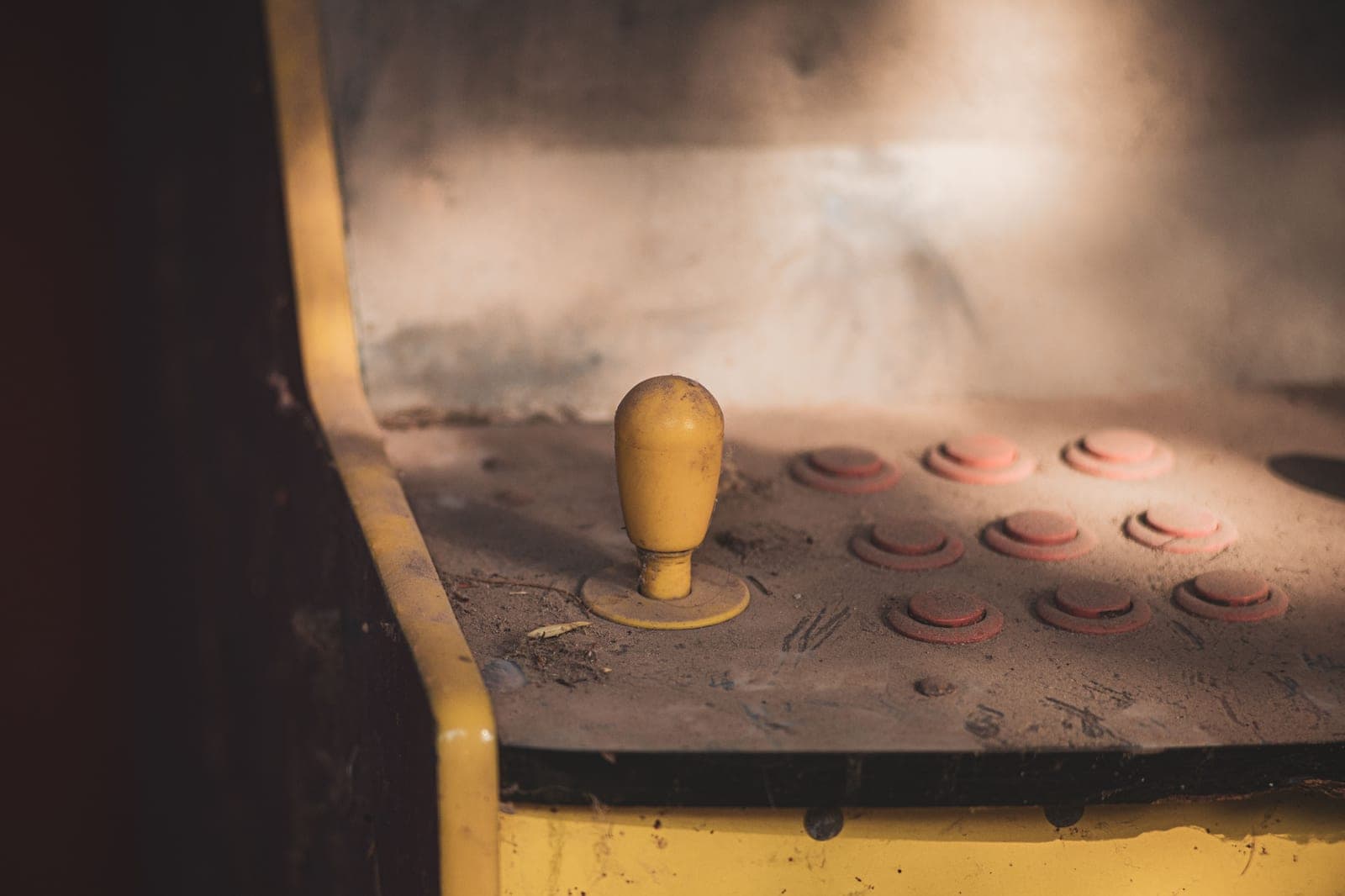
Three PAC-MAN games on a 7-inch LCD with full-size real-feel controls. The controls being full size is the entire argument - a shrunk joystick would make this a toy and it is not one.
Best Arcade Cabinets
A full-height Deluxe cabinet with fighting-game controls and 14 titles. The control panel is what you are buying - a fighting game on a bad stick is unplayable, and this is a cabinet built around the genre.
Best Multi-Game Tables
Pool, table tennis and air hockey on a swivel rather than a lift-off top. A swivel is more robust than lifting panels on and off, and it means the second game is thirty seconds away rather than a two-person job.
An upright home arcade cabinet occupies roughly 2 feet by 2 feet of floor. That is the easiest footprint in this entire site. The constraints are vertical and electrical instead, and they catch people out.
A full-height cabinet in the current home market stands about 5 feet tall before a riser, and 5 feet 9 inches to 6 feet with one. Add a marquee light and you are at the height of a tall door. In a basement with 7-foot ceilings and ductwork, that is a real measurement. Measure where the cabinet will actually stand, not the highest point of the room.
Then measure to the nearest outlet. A cabinet's cord is short - commonly 5 to 6 feet - and running an extension across a games room floor is how cabinets get knocked over. Plan the position around the socket, or plan to add one.
Full-height uprights are the ones that look like an arcade. They stand at playing height, two people can crowd around them, and the control panel is usually close to arcade width. This is what to buy if the point is the feeling of an arcade.
Countercades and bartops are the same electronics in a shortened cabinet that sits on a counter, table or shelf. They cost far less, they take almost no floor at all, and the controls on better ones are full size. The compromise is the screen, which is typically 7 to 12 inches instead of 17.
Cocktail cabinets put the screen into a tabletop with players sitting opposite each other. They double as furniture, which is the point: in a finished room that is not solely a games room, a cocktail cabinet is the format that does not look like a games machine when it is off.
Multi-game tables - the 3-in-1, 7-in-1 and 10-in-1 frames - are a different product that lands in the same searches. They are physical games, not arcade electronics: pool, air hockey, table tennis, sometimes basketball or bowling, in one frame with swappable or swivelling tops.
They are genuinely useful in one specific situation: a room that must serve several ages and has space for exactly one table. Outside that situation they disappoint, because every game inside the frame is a reduced version of itself. The honest version of the trade is laid out in what multi-game tables actually include, including the one that is usually worth buying on its own instead.
Cabinet listings quote a game count. Read it carefully: 14 licensed games on a brand cabinet and 412 titles on a generic multicade are not the same claim, and neither number tells you how many you will actually play. Licensed cabinets give you a handful of titles you recognize, properly emulated, with the right control layout. Large-library machines give you breadth and variable quality.
Measure first
Measure ceiling height at the exact spot the cabinet will stand - under the ductwork, not in the middle of the room - and measure to the nearest outlet. Those two numbers decide the format.

Picks
Countercades and bartops compared on control size, screen and the counter height each needs.

Picks
Home arcade cabinets ranked on height under a basement ceiling, control quality and game library.
Picks
Multi-game tables compared on what each game inside the frame gives up, and when a combo is genuinely right.

Compare
Curated licensed cabinets versus large-library platform cabinets - games, controls and what you will actually play.

Compare
Footprint, ceiling height, screen and posture compared between full-height cabinets and countercades.
Guide
Arcade cabinet dimensions by format, the height to check under ductwork, and the standing room each needs.
Guide
What a cabinet draws, why cord length matters more than amperage, and how to place cabinets safely.
Guide
An honest account of what a 3-in-1 or 7-in-1 contains, which games are real and which are filler, and when to buy anyway.