Guide
Cue Clearance Math
Every room-size chart on the internet comes from one line of arithmetic. Here it is, and here is how to apply it to your room.
How these picks were made: from published manufacturer specifications, governing-body standards and the room arithmetic - not from first-hand use. We have not played on these tables. Read the method.

The formula
Required room = playing surface + 2 x (cue length + 6 inches of stroke), calculated separately for length and width.
Every room-size chart you will find is this arithmetic with different numbers substituted in. Understanding it means you never need a chart again, and - more usefully - you can apply it to a room that does not match any chart.
Where each term comes from
- Playing surface. Not the cabinet. The cue reaches the ball, and the ball sits on the playing surface. A 7-foot table's playing surface is 78 by 39 inches.
- Cue length. The full length, because a ball frozen on the cushion requires the cue to lie along the table with its butt clear of the obstruction.
- 6 inches of stroke. The backswing. Some charts use 5 inches and some use 8; 6 is a sensible working figure and the differences are small.
- Times two. Because each dimension has two ends, and you will eventually shoot from both.
| Table | Playing surface | Length arithmetic | Width arithmetic |
|---|---|---|---|
| 7 ft | 78 x 39 in | 78 + 128 = 206 in = 17 ft 2 in | 39 + 128 = 167 in = 13 ft 11 in |
| 7.5 ft | 82 x 41 in | 82 + 128 = 210 in = 17 ft 6 in | 41 + 128 = 169 in = 14 ft 1 in |
| 8 ft | 88 x 44 in | 88 + 128 = 216 in = 18 ft 0 in | 44 + 128 = 172 in = 14 ft 4 in |
| 9 ft | 100 x 50 in | 100 + 128 = 228 in = 19 ft 0 in | 50 + 128 = 178 in = 14 ft 10 in |
Applying it to a real room
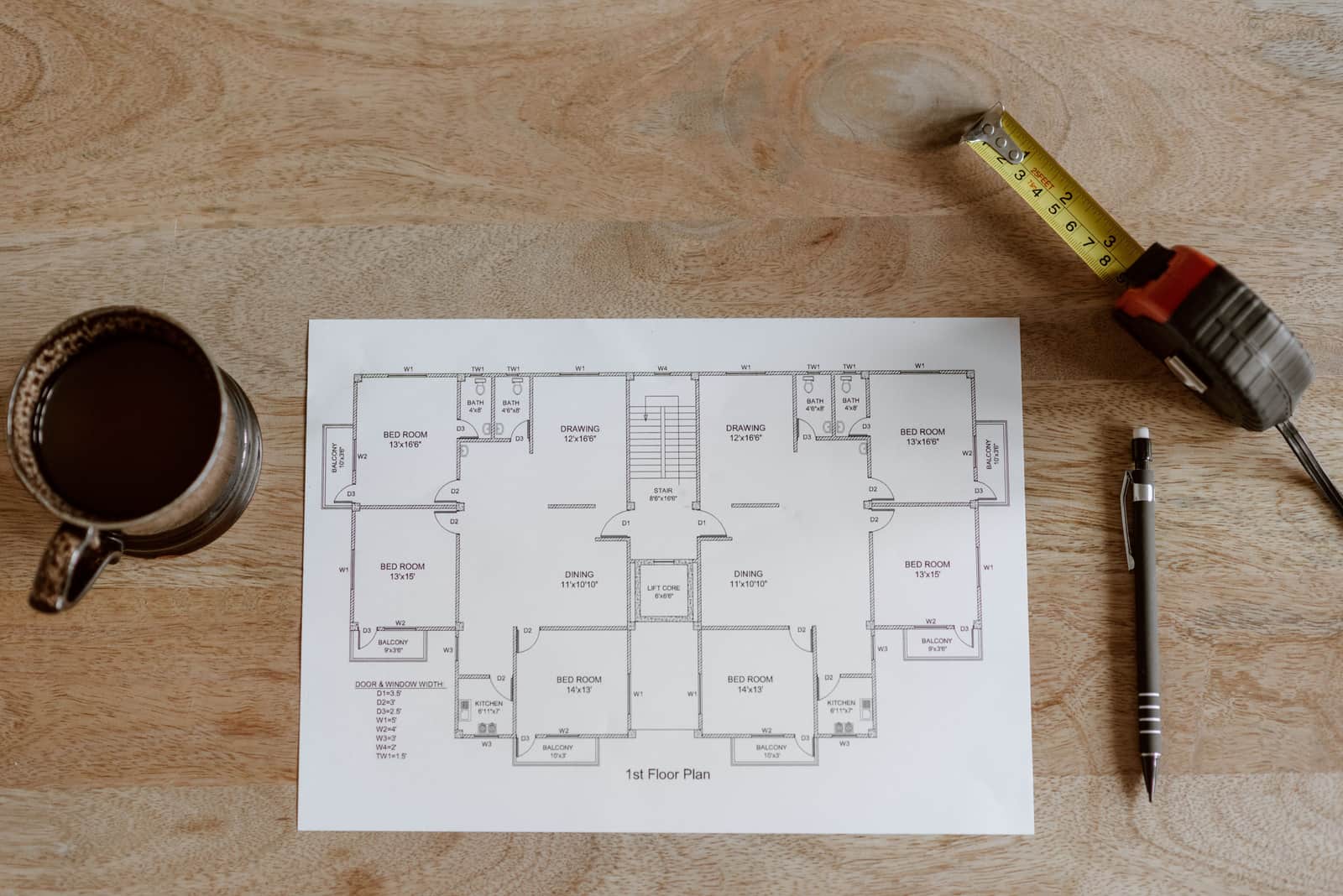
- Decide where the table goes and mark the playing surface rectangle on the floor with tape - not the cabinet, the playing surface.
- From each edge, measure outward at table height (about 32 inches) to the nearest obstruction: wall, post, stair stringer, open door, furniture.
- Write down four numbers - one per side.
- Any side at 64 inches or more takes a 58-inch cue. 58 to 64: a 52-inch cue. 54 to 58: a 48-inch cue. Under 54: that side is a problem.
- If two or more sides are under 54 inches, move the table or drop a table size.
What the formula does not cover
- Diagonal shots. The formula assumes a cue parallel to a rail, which is the worst case. Most shots need less.
- Mechanical bridges. A bridge lets you reach a shot you could not otherwise play, but it does not give you room behind the cue.
- Ceiling. Irrelevant to the cue; relevant to the light fixture. Separate problem.
- Circulation. Clearance for a cue is not the same as room to walk around comfortably. Add a bit if the table is in a route people use.
Quick picks
| # | Product | Best for | Key spec | Price |
|---|---|---|---|---|
| 1 |  Players Short Pool Cue (48 in / 52 in) | Changing the answer | 48 in / 52 in | |
| 2 | 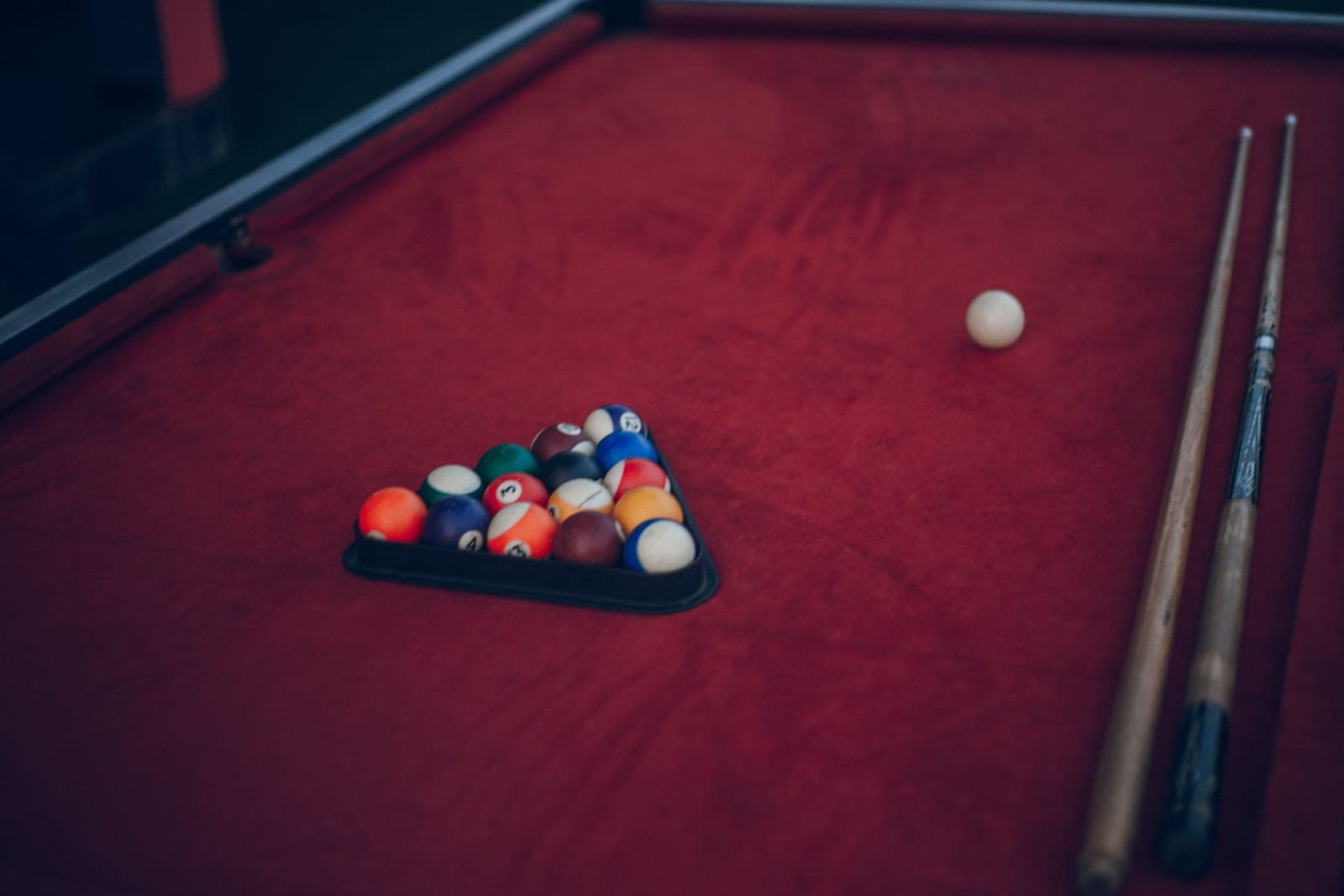 Barrington Urban Collection 7 ft Pool Table | When the math says 7 ft | 78 x 39 in play area | |
| 3 | 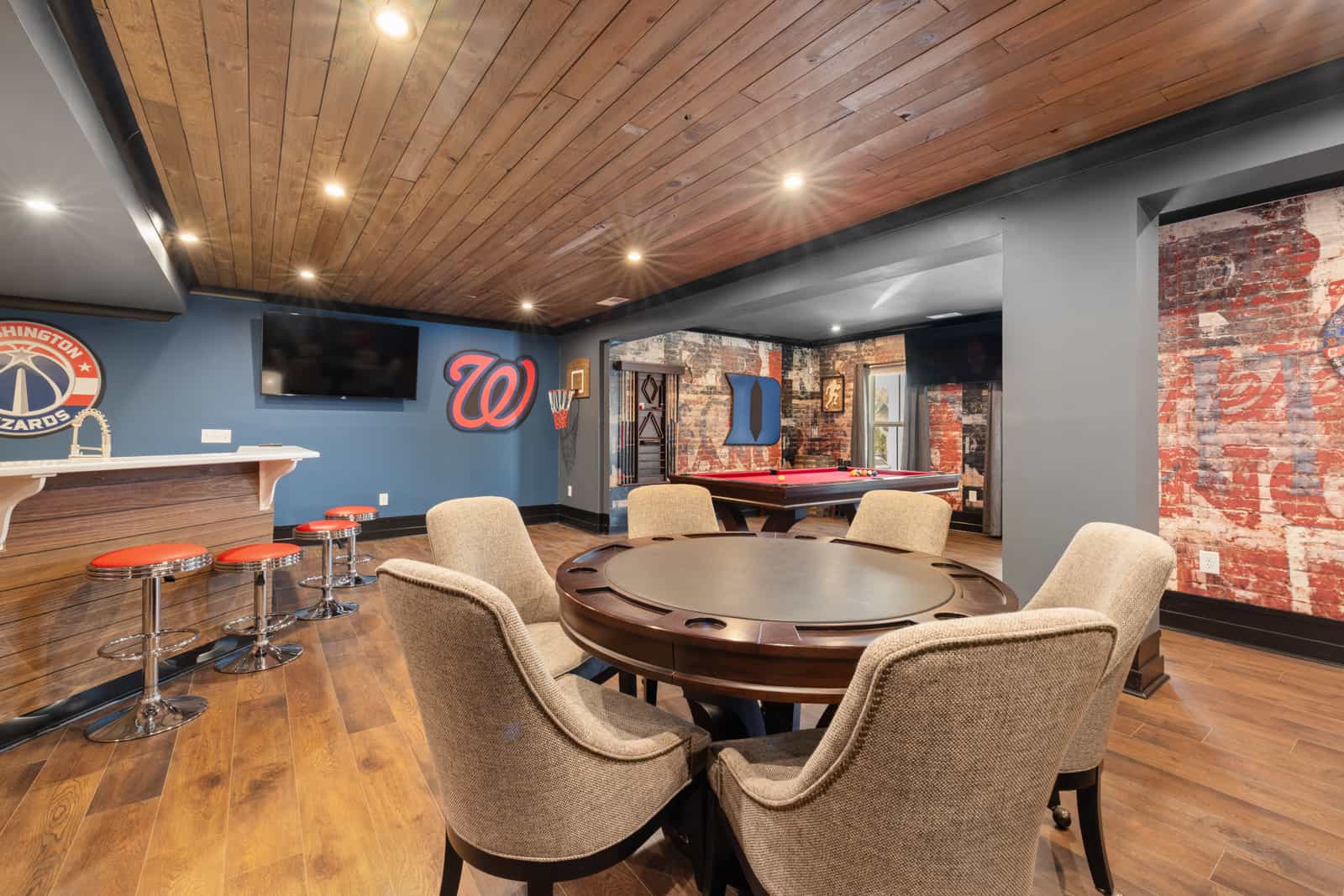 Mizerak Dynasty Space Saver 6.5 ft Billiard Table | When it says 6.5 ft | 72 x 36 in play area |
What the arithmetic points you to
#1 · Changing the answer
Players Short Pool Cue (48 in / 52 in)
A short cue for the side of the table that lost its clearance to a wall. Two of these fix most tight-room tables.
The only variable in the formula you can change after the table arrives.
- What works
- Changes the arithmetic for 20 dollars
- What does not
- Costs power and spin on that side
#2 · When the math says 7 ft
Barrington Urban Collection 7 ft Pool Table
A 7-foot table that ships with a pre-assembled playfield, which is the difference between a two-hour job and a weekend.
The most common answer the arithmetic produces for a real basement.
- What works
- Pre-assembled playfield
- What does not
- Composite bed
#3 · When it says 6.5 ft
Mizerak Dynasty Space Saver 6.5 ft Billiard Table
A 6.5-foot table built specifically for rooms that fail the 7-foot clearance math. Short cues are still likely on at least one side.
Built for rooms the 7-foot arithmetic rules out.
- What works
- Fits where a 7-footer does not
- What does not
- Different cut angles
Sources and method
Playing-surface dimensions are the standard published figures for each nominal table size. The formula is conventional cue-clearance arithmetic, shown in full so you can check and repeat it rather than take a chart on trust.