Picks
The Best Pool Table Felt
Cloth is sold on two numbers - ounce weight and wool percentage - and the maker whose cloth most tournaments use publishes neither. Here is what to buy on the specifications that do exist.
How these picks were made: from published manufacturer specifications, governing-body standards and the room arithmetic - not from first-hand use. We have not played on these tables. Read the method.
Billiard cloth is sold on two numbers. The ounce weight per square yard, which is usually in the product name, and the wool-to-nylon blend. Search for either and you will find both quoted confidently for every cloth on the market.
Then go to the maker. Iwan Simonis, whose cloth most tournament play runs on, publishes neither figure on its own product pages for the 760, the 860 or the 860HR. What it publishes instead is a speed order, a durability claim and a bolt width. So this page is built on those, because they are the specifications that actually exist - and on the one buying variable that decides whether the cloth you order even fits your table, which almost nobody checks.
Worsted or woolen is the only decision that changes the game
Worsted cloth is spun from long combed fibers and woven tight, so the surface has no raised nap. The ball rolls where you hit it, travels the same distance in both directions along the table, and the cloth does not pill. Woolen cloth is a shorter-fiber blend with a raised nap that has a direction you can feel with your hand, and a ball rolling against the nap behaves slightly differently from one rolling with it.
Everything else on this page - ounce weights, blend percentages, stain treatments, color ranges - is a second-order decision. If you are choosing between a worsted cloth and a woolen one, that is the choice; if you are choosing between two worsteds, you are choosing between fine distinctions that the manufacturers themselves largely decline to quantify. The felt guide is the explainer for the weave itself, how long each type lasts and what a recloth involves. This page is the product shortlist.
| Cloth | Weave | Published weight | Published blend | Maker's own claim |
|---|---|---|---|---|
| Simonis 860 | Worsted | - | - | Slightly slower than the 760; higher wool, reduced ball burning |
| Simonis 760 | Worsted | - | - | Higher-speed play for bank pool, straight pool and one pocket |
| Simonis 860HR | Worsted | Heavier than the 760 | - | Most durable commercial-grade billiard cloth made |
| Championship Tour Edition | Worsted | 24 oz, 2-ply | 70% wool / 30% nylon | Most divot-resisting tournament-grade fabric in billiards |
| Hainsworth Elite Pro | Worsted | - | - | Spill-resistant Spill Guard finish |
| Championship Invitational | Woolen | 20 oz | 75% wool / 25% nylon | DuPont Teflon stain treatment |
Quick picks
| # | Product | Best for | Weave | Price |
|---|---|---|---|---|
| 1 | 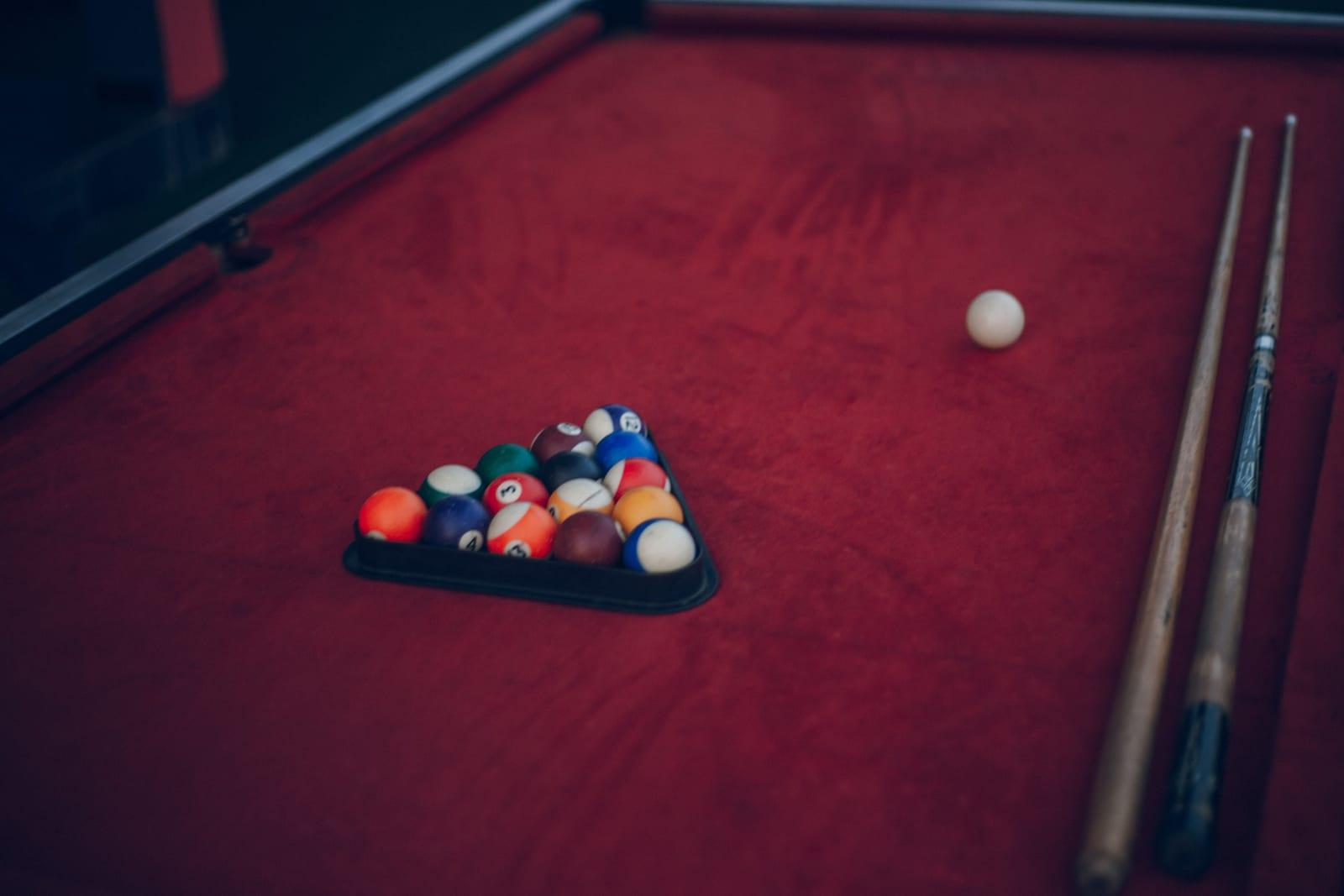 Iwan Simonis 860 Billiard Cloth | The default serious recloth | Worsted, 66 or 78 in bolt | |
| 2 | Simonis 760 Billiard Cloth | Straight pool, one pocket and a fast table | Worsted, higher speed | |
| 3 |  Iwan Simonis 860HR Billiard Cloth | A table that gets hammered | Worsted, heavier than 760 | |
| 4 |  Championship Tour Edition Billiard Cloth | The cheapest way onto a napless table | Worsted, 24 oz, 70/30 | |
| 5 |  Hainsworth Elite Pro Pool Table Cloth | A game room that doubles as a bar | Worsted, spill-resistant | |
| 6 |  Championship Invitational Pool Table Felt | A family table, and the budget pick | Woolen, 20 oz, 75/25 |
The cloths
Six cloths, ordered the way the decision runs rather than by price: the default serious recloth first, then the two Simonis variants for specific problems, then the value worsted, then the treated worsted, then the woolen blend that is the right answer for most family tables.
#1 · The default serious recloth
Iwan Simonis 860 Billiard Cloth
The cloth most tournaments run on. Simonis describes it as slightly slower than the 760 with higher wool content and reduced ball burning.
If you are reclothing a home table and you care how it plays, this is the one to buy, and the reason is boring: it is the cloth the rest of the category is measured against. Simonis describes the 860 on its own site as combed worsted wool with a high thread count and higher wool content than its stablemates, assuring long-lasting wear and reduced ball burning, and says plainly that it is slightly slower than the 760 and was initially developed for 9-ball. It sells in 66-inch and 78-inch bolt widths, though not every color comes in both. Napless, so the ball rolls the same direction you hit it in both directions along the table - which is the whole point of worsted and the thing a family table has never had.
- What works
- Simonis states the higher wool content and reduced ball burning itself, rather than leaving it to a retailer
- Napless, so there is no directional roll to learn and no pilling in the break area
- Sold in both bolt widths and in pre-cut bed-plus-rail sets by table size, so you can buy it either way
- What does not
- Simonis publishes no blend percentage and no ounce weight on its own 860 page - the 90/10 figure you see everywhere comes from retailer listings
- Several times the price of a woolen blend, before the mechanic's labor
- Shows chalk more readily than a treated woolen cloth, so the brush becomes a habit rather than an option
Skip it if: the table is a garage family table with kids and drinks around it. Worsted is wasted there and the Invitational is a third of the money.
#2 · Straight pool, one pocket and a fast table
Simonis 760 Billiard Cloth
Worsted cloth: a tight-woven surface with no nap, so the ball rolls straighter and the cloth lasts. The standard recloth upgrade.
The fast one, and Simonis is specific about who it is for: its own page recommends the 760 for higher-speed play in bank pool, straight pool and one pocket, and the 860's page describes itself as slightly slower than the 760. That is a manufacturer telling you the speed order without a chart, which is more than most of this category manages. Like the 860 it is combed worsted with a high thread count, nap-free, and sold in 66-inch and 78-inch widths. The practical read for a home room: a fast cloth is a reward on a 9 ft table and a nuisance on a 7 ft one, because the shorter the table the less you want the ball running.
- What works
- The only cloth here whose maker names the games it was built for
- Nap-free and stated by Simonis to not pill, fluff or shed
- The same two bolt widths as the 860, so a recloth plan does not change
- What does not
- Simonis positions the 860 as the higher-wool, lower-ball-burn cloth, so the 760 is the faster but not the tougher of the two
- A fast cloth on a 7 ft table makes position play harder, not easier - this is the wrong first worsted for a bar-box
- No published blend or ounce weight on Simonis's own page, same as the 860
Skip it if: your table is 7 ft. Buy the 860 and keep the pace that size of table is designed around.
#3 · A table that gets hammered
Iwan Simonis 860HR Billiard Cloth
Simonis calls it the most durable commercial-grade cloth it makes, and heavier than the 760. The bar-table and heavy-use option.
The one to buy when the table is going to take abuse - a basement table that hosts, a garage table, anything doing bar-table duty. Simonis's own words for it are that it is the most durable commercial-grade billiard cloth made, heavier than the 760, napless and tough as nails while still giving the true Simonis roll. Note what that sentence does and does not say: it is a durability claim and a weight comparison, not a speed claim. Simonis does not publish where the 860HR sits between the 760 and the 860 for pace, and the forums we read disagree about it, with several players saying they could not pick it out blind against an 860. Buy it for the wear, not for a speed you cannot verify.
- What works
- Simonis's own durability claim is the strongest it makes about any cloth in the range
- Heavier than the 760 by the maker's own statement, which is the specification that matters on a table that gets used hard
- Napless like the rest of the worsted range, so nothing about how the table plays is a compromise
- What does not
- Simonis publishes no bolt width on the 860HR page, unlike the 760 and 860 - check the listing against your table before ordering
- Sold in a narrower color range than the 860 - Simonis currently lists Simonis Green, Blue-Green, Tournament Blue and Royal Blue
- Costs more than the 860 for a durability margin a home table may never use up
Skip it if: the table lives in a quiet room and gets played on by the same two people. You are paying for commercial wear you will not reach.
#4 · The cheapest way onto a napless table
Championship Tour Edition Billiard Cloth
Championship's worsted cloth, listed as a 2-ply 24 oz 70/30 wool-nylon blend. The cheapest route onto a napless surface.
The value worsted, and the only cloth on this page whose maker's listing actually commits to the two numbers the category is named after: a 2-ply, 24-ounce construction blended 70 percent wool and 30 percent nylon. That is a lower wool share and a heavier cloth than the Simonis figures retailers quote, and the listings call it the most divot-resisting tournament-grade fabric in billiards - a claim about surface damage rather than speed. For a home player who wants a napless surface and does not want to spend Simonis money, this is the honest answer, and it makes the Simonis premium a choice rather than a requirement.
- What works
- Published 24 oz weight and 70/30 blend, so you can actually compare it to something
- A genuine worsted surface for noticeably less than the Simonis range
- The higher nylon share is what makes it a tougher, more divot-resistant cloth than its price suggests
- What does not
- Lower wool content than the Simonis cloths, which is the thing Simonis ties to reduced ball burning
- The 'most divot resisting in billiards' line is a seller's claim and we have not tested it against anything
- Does not have the reference status the 860 has, so if you ever play on a tournament table this will not be what you practiced on
Skip it if: you want the table to feel like the one at your league venue. That is a specific thing to want and the 860 is the cloth that delivers it.
#5 · A game room that doubles as a bar
Hainsworth Elite Pro Pool Table Cloth
The English worsted cloth, sold in the US through Holland Bar Stool with a spill-resistant finish Hainsworth calls Spill Guard.
The English worsted, sold in the US through Holland Bar Stool, and the pick for a room where a drink is going to go over at some point. Its listings describe a worsted cloth woven from combed yarn with the short fibers removed - the standard worsted argument - finished with a spill-resistant treatment Hainsworth calls Spill Guard. That combination is unusual: stain treatments normally live on cheap woolen cloth, so a treated worsted is a real niche rather than a marketing overlap. Sold by table size in 7 ft and 9 ft among others, in colors including Tournament Green and Mahogany.
- What works
- A spill-resistant finish on a worsted cloth, which the rest of this page does not offer
- A different look from the Simonis palette - the Mahogany is a genuinely furniture-like cloth
- Combed worsted construction, so the napless playing argument still applies in full
- What does not
- Sold through one US channel rather than broadly, so sizes and colors go in and out
- Neither the ounce weight nor the blend percentage is published on the listings we read
- Spill Guard is a treatment, not armor - it buys you time to get a towel, not immunity
Skip it if: nothing is ever set down on the rails. You are paying for a finish that solves a problem you do not have.
#6 · A family table, and the budget pick
Championship Invitational Pool Table Felt
A woolen-blend cloth with a stain treatment. Cheaper than worsted, naps up faster, perfectly sensible on a family table.
The budget pick, and the right cloth for most home tables rather than a compromise on the right one. The listings put it at a 20-ounce woolen fabric blended 75 percent wool and 25 percent nylon, treated with DuPont Teflon for stain resistance. It is woolen, which means it has a nap: run a hand along the bed and you can feel the direction, and a ball rolling against it behaves slightly differently from one rolling with it. On a table where people play after dinner with a drink in hand, nobody notices and the slower table is more forgiving. It is also a fraction of the money, which on a composite-bed table is the correct place for that money to go.
- What works
- Published 20 oz weight and 75/25 blend plus a named stain treatment, which is more disclosure than the worsted cloths give
- A slower, more forgiving table, which is the right table for mixed-ability play
- Costs a fraction of any worsted here, so a recloth stops being a project
- What does not
- Woolen, so it naps up over time and the table develops a direction
- Pills in the break area faster than worsted under the same use
- The Teflon finish helps with spills, and does nothing at all about chalk ground into the nap
Skip it if: you practice alone and care about position. The nap is exactly the thing that will annoy you.
How these were chosen
We have not reclothed a table with any of these, rolled a ball across them or measured a single thing, and this site publishes no scores, star ratings or review counts, because it has not tested anything and will not imply that it has. The criteria below are about what is verifiable from the makers' own pages and from stocking US retailers, because in this category the gap between those two sources is unusually wide.
- Weave first, always. Worsted or woolen is the one specification that changes how the table plays, and it is stated by every maker without exception. Every entry names it in the spec column.
- Maker's claims and retailer figures are kept apart. Where a number appears on the manufacturer's own page it is quoted as the maker's. Where it only appears on a retailer listing - the Simonis 90/10 blend, the Hainsworth construction - the entry says so.
- Bolt width counts as a spec. Simonis publishes 66-inch and 78-inch widths on two of its three cloths and none on the third. That is a buying variable, not trivia, and it is the one most likely to cost you a return.
- A cloth with no published numbers is not disqualified. Simonis's reference status in tournament play is a fact about the category, and it is a better reason to buy the 860 than an ounce figure a retailer typed in.
- No speed charts. Simonis states that the 860 is slightly slower than the 760 and that the 860HR is heavier than the 760. It does not place the 860HR on the speed scale, and the players we read disagree about where it sits, so this page does not publish a ranking it cannot source.
Why nobody will give you an ounce chart
Partly because the figure is less useful than it looks. Weight per square yard is a proxy for thickness and density, and it correlates with durability within one maker's range - Simonis says the 860HR is heavier than the 760 and also the most durable cloth it makes, which is the correlation stated out loud. Across makers it travels badly: the Championship Tour Edition's published 24 ounces is heavier than anything Simonis quotes anywhere, and nobody argues it is the more durable cloth.
And partly because the blend matters more and is harder to compare. Simonis ties the 860's reduced ball burning to its higher wool content without saying what that content is. Championship publishes 70/30 on the worsted Tour Edition and 75/25 on the woolen Invitational - which, read naively, says the cheaper woolen cloth has more wool in it than the worsted one. Both things can be true, because the spin and the weave do more than the ratio does. That is why the honest version of this page leads with weave and treats the percentages as supporting detail.
Table size changes which worsted you want
This is the part most cloth roundups skip. Cloth speed interacts with table length: on a 9 ft table a fast cloth lets the ball reach the far rail and come back, which is what the game is built around, and on a 7 ft table the same cloth means every missed shot runs too far and position play gets harder. Simonis names bank pool, straight pool and one pocket on the 760's page - all games historically played on long tables.
So if your table is a 7 ft bar-box, the 860 is the right Simonis and the 760 is not, regardless of which is more expensive where you are shopping. If it is an 8 ft, either works and the 860 is still the safer default. Pool table sizes covers what each size actually measures and 7 ft vs 8 ft is the page for deciding between them in a real room.
Composite beds: buy the cheap cloth
A worsted cloth on a non-slate bed is money in the wrong place. Worsted buys you a true, consistent roll, and the bed underneath is what determines whether a true roll is available at all - a composite bed that has taken on any moisture has a shape, and no cloth corrects for it. Slate vs MDF sets out what the bed does and does not do.
On a composite table, the Invitational or any treated woolen blend is the correct buy, and the money saved is better spent on a fitted cover that keeps the bed dry - which on that kind of table extends the life of the whole thing rather than just the surface.
What a recloth actually costs you
The cloth is not the bill. On a slate table the rails come off, the old cloth is stripped, the new bed cloth is stretched and the rail cushions are re-covered, and that is skilled work most owners pay for. Budget roughly a third more material and labor for an 8 ft table than a 7 ft. Buying a pre-cut bed-plus-rails set by table size rather than yardage off a bolt saves the mechanic time and saves you the width problem entirely.
Which is the argument for buying the better cloth when you do it: the labor is the same either way, so the cloth upgrade is the cheapest part of the only recloth you will do this decade. How long does a pool table last sets out the service life of the cloth against the cushions, pockets and bed, and the brush that extends all of it is in the accessories roundup.
Color, briefly
Green exists because it gives the best contrast against every ball color under warm light, and that is still true. Tournament blue is the standard alternative and works as well. Dark cloths - black, burgundy, deep gray - look superb in a finished room and make the dark-numbered balls genuinely harder to read at night, which is a real cost rather than a purist complaint.
If you want a dark cloth anyway, the fix is the light rather than the cloth: a cooler fixture in the 3500 to 4000 K range restores the contrast a warm bulb takes away. Pool table light height covers the hanging height and the light roundup covers the fixtures. Note also that the color range narrows as you go up: Simonis currently lists the 860HR in four colors against the 860's much wider palette, so a specific color may decide which cloth you can have.
Prices, and why there are none on this page
Cloth is priced by size and by format in a way that makes a single printed number meaningless. The same cloth sells as a pre-cut bed-only piece, as a bed-plus-rails set, and by the yard off a 66-inch or 78-inch bolt, in 7, 8 and 9 ft cuts, in a dozen colors that do not all cost the same. Every button here goes to the live listing instead. In rough brackets: a treated woolen blend is the entry point by a wide margin, the Championship worsted sits well above it, and the Simonis cloths and the Hainsworth sit above that again - with the 860HR the dearest of the three Simonis options.
What we have not done
We have not reclothed a table, measured roll distance, weighed a bolt or compared two cloths side by side, and nothing on this page is presented as a test result. Every figure above is attributed where it came from: the speed order, the durability claim, the bolt widths and the 860HR color range are from Iwan Simonis's own product pages; the 24 oz and 70/30 on the Tour Edition, the 20 oz and 75/25 and the DuPont Teflon on the Invitational, the Spill Guard finish on the Hainsworth and the 90/10 figure quoted for the 860 are from stocking US retailer listings, each checked as currently sold while this page was written. Where the two disagree, the maker wins and the page says so. Where neither publishes a figure, the cell is blank rather than filled in.
Questions people actually ask
What is the best pool table felt for home use?
Is Simonis 760 or 860 better?
What does the number in pool cloth names mean?
Is Simonis 860HR faster than 860?
What is the difference between worsted and woolen pool table cloth?
What bolt width of pool table cloth do I need?
Is expensive pool table felt worth it on a cheap table?
How much pool table felt do I need for an 8 foot table?
Sources
- World Pool-Billiard Association - Rules of Play (equipment and lighting specifications)
- Iwan Simonis - Simonis 760 (higher-speed play for bank pool, straight pool and one pocket; combed worsted wool; nap-free; 66 in and 78 in widths)
- Iwan Simonis - Simonis 860 (slightly slower than the 760; higher wool content and reduced ball burning; initially developed for 9-ball; 66 in and 78 in widths)
- Iwan Simonis - Simonis 860 HR (most durable commercial-grade billiard cloth made; heavier than 760; napless; color range)
- Amazon - Iwan Simonis 860 Pool Billiard Table Cloth, authorized dealer listing (retailer-stated 90% wool / 10% nylon; printed side faces up; sold in 7, 8 and 9 ft)
- Amazon - Championship Tour Edition Billiards Pool Table Felt (retailer-stated 2-ply 24 oz, 70% wool / 30% nylon worsted)
- Amazon - Championship Invitational Pool Table Felt (retailer-stated 20 oz woolen, 75% wool / 25% nylon, DuPont Teflon treatment)
- Amazon - Hainsworth Elite Pro Pool Table Cloth via Holland Bar Stool Co. (worsted, combed yarn, Spill Guard spill-resistant finish; 7 ft and 9 ft sizes)