Picks
The Best Ping Pong Balls
A box of balls is the cheapest thing on this site and the only piece of equipment every player on the table touches. It is also the category with the most marketing per gram.
How these picks were made: from published manufacturer specifications, governing-body standards and the room arithmetic - not from first-hand use. We have not played on these tables. Read the method.
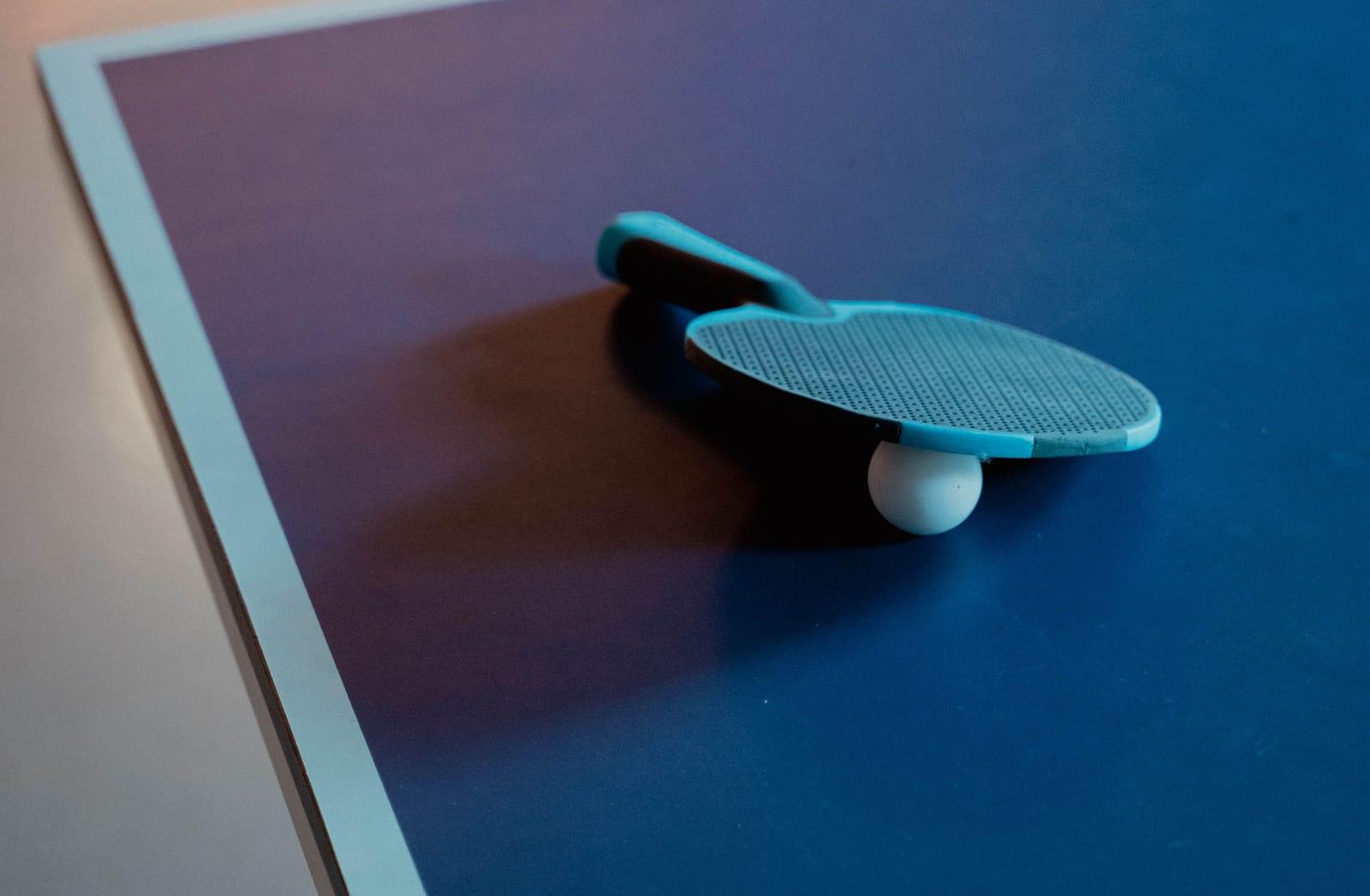
Balls are the one piece of table tennis equipment that is shared. Everyone brings their own paddle preferences to a table and nobody argues about the ball, which is why the ball is usually whatever came free in the box with the paddles - and that ball is usually a 1-star celluloid-era leftover that has been stood on at least once.
The good news is that this is a cheap problem to fix. The bad news is that the category is almost entirely marketing: stars, plus signs, seam counts and the word 'professional' printed on bags of balls that have never been near a tournament. So before the picks, here is what the printing on the box legally means and what it only implies.
What the ITTF actually specifies
The International Table Tennis Federation's equipment rules describe the ball itself in one short clause: spherical, 40 mm in diameter, 2.7 grams in weight, made of celluloid or similar plastics, and white or orange with a matt finish. That is the whole legal definition. There is no rule about stars, no rule about seams, and no rule that distinguishes a $3 ball from a 30-cent one.
What the ITTF does run is an authorization process: a specific ball model from a specific maker is approved for sanctioned play, and approved models carry the ITTF mark printed on the ball alongside the brand. That mark is the only claim on a ball that is granted by anybody other than the company selling it.
| Marking | Who defines it | What it tells you |
|---|---|---|
| ITTF approved | The ITTF, per ball model | Legal for sanctioned play; the model has been through authorization |
| 3-star / 2-star / 1-star | The manufacturer | That maker's own top, middle and bottom grade - not comparable between brands |
| 40+ | Industry convention | A plastic-era ball rather than an old celluloid one; the legal diameter is still 40 mm |
| ABS / poly / plastic | The manufacturer | The material family that replaced celluloid; ABS is the common one now |
| Seamless / seamed | The manufacturer | How the ball is molded. Both are approved; neither is a grade |
The one thing that separates a cheap ball from a good one
It is not bounce height and it is not spin. It is consistency between the balls in the box. A premium ball is a ball that is round to a tighter tolerance and the same weight as the ball next to it, so the twentieth rally behaves like the first. Cheap balls are not uniformly bad - they are unevenly good, and the unevenness is what you notice. One ball out of a bag of fifty wobbles, and because it was the one that happened to come out of the drawer, the whole table feels wrong for an evening.
That is also why the correct number of ball purchases for most homes is two: a box of match-grade balls for when people are actually playing, and a cheap bulk pack for everything else. The bulk pack absorbs the losses, the children and the dog. The good box stays in the drawer.
Quick picks
| # | Product | Best for | Grade | Price |
|---|---|---|---|---|
| 1 | Nittaku 3-Star Premium 40+ Table Tennis Balls | The ball to measure the others against | 3-star, ITTF approved | |
| 2 |  Butterfly R40+ 3-Star Table Tennis Balls | A match ball that is easy to buy | 3-star, ITTF approved | |
| 3 |  DHS 3-Star Dual D40+ Table Tennis Balls | Real 3-star balls without the premium price | 3-star, 10-ball box | |
| 4 | STIGA 3-Star Perform 40+ Table Tennis Balls | Multiball practice and robot hoppers | 3-star, up to 100 per box | |
| 5 | JOOLA Advanced Training ABS 3-Star Table Tennis Balls | The ball to actually keep in the drawer | 3-star ABS, 12 / 60 / 120 | |
| 6 | JOOLA Spinballs Dual-Colored Table Tennis Balls | Seeing what your own spin is doing | Two-tone ABS, training |
The balls
Six balls, ordered by the job rather than the price: three ITTF-approved match balls, a bulk 3-star box for drills, the cheap pack to keep in the drawer, and one training ball whose only purpose is to show you your own spin.
#1 · The ball to measure the others against
Nittaku 3-Star Premium 40+ Table Tennis Balls
An ITTF-approved seamed plastic ball that US retailers list as made in Japan. The reference ball in the category, and priced like it.
If you want to know what a correct table tennis ball feels like, this is the one to buy a dozen of once. US retailers list it as ITTF approved and made in Japan, which is unusual - most plastic balls, including the other premium ones on this page, are made in China. What you get for the money is consistency between balls in the box rather than a single ball that does something special: pull six out and they bounce the same, which is exactly what you cannot assume at the bottom of the market. It is sold in packs of 3, 6 and 12, and the per-ball price is the highest here by a wide margin.
- What works
- ITTF approved, so it is legal for sanctioned play and held to the published ball tolerances
- Listed as made in Japan, which is rare in a category that has consolidated into Chinese production
- Box-to-box consistency is the thing you are actually paying for, and it is the thing that matters
- What does not
- By far the most expensive ball on this page per ball
- Carried by table tennis specialists rather than every general retailer, so stock comes and goes
- On a family table with a 15 mm top, nobody in the room will be able to tell
Skip it if: the table lives in a garage and gets played at barbecues. You will lose four of these in the first week.
#2 · A match ball that is easy to buy
Butterfly R40+ 3-Star Table Tennis Balls
Butterfly's current ITTF-approved 3-star ball, listed as made in China and used as the official ball at recent international events.
Butterfly's current 3-star plastic ball and the one most US clubs have a box of somewhere. It is ITTF approved, it has been used as the official ball at recent international events, and Butterfly lists it as made in China - the company is Japanese, the ball is not, and the brand does not hide that. Practically, this is the easiest premium ball to actually get hold of: it is stocked by the general sporting-goods retailers as well as the specialists, usually in a 12-ball box. Worth knowing if you are searching for the older A40+: that ball has been showing as out of stock at retailers, and the R40+ is the model Butterfly currently sells.
- What works
- ITTF approved and used as an official ball at recent international events
- The widest retail availability of any premium ball here, including non-specialist sellers
- Sold in a 12-ball box, which is the sensible quantity for a home table
- What does not
- Costs about the same per ball as the Nittaku without the Japanese production
- The naming is confusing - A40+, R40+ and WTT special editions all exist side by side
- A 3-star ball is wasted on a table that is not level or on a top thinner than about 18 mm
#3 · Real 3-star balls without the premium price
DHS 3-Star Dual D40+ Table Tennis Balls
The event-grade ball from the Chinese maker, sold in 10-ball boxes - which is why it is usually the cheapest way into a true 3-star ball.
The value pick among genuine 3-star balls, and the reason is the pack size: DHS sells the Dual D40+ in boxes of ten, so the per-ball number lands at roughly half what the Japanese-branded dozens cost. DHS is the Chinese manufacturer whose balls have been used at the top level of the sport for decades, so this is not a budget brand reaching upward - it is the mainstream brand of the largest table tennis market in the world. For a home table where someone practices seriously but nobody is playing sanctioned matches, this is the ball we would buy.
- What works
- Roughly half the per-ball cost of the Japanese-branded 3-star dozens
- From the maker whose balls have been used at the highest level of the sport for decades
- 10-ball boxes mean you can leave a few in the drawer and still have a full set out
- What does not
- DHS's own naming across D40+, Dual D40+ and the Cell-Free lines is genuinely hard to follow
- Available in white far more reliably than orange
- Less consistently stocked by general retailers than the Butterfly
#4 · Multiball practice and robot hoppers
STIGA 3-Star Perform 40+ Table Tennis Balls
A 3-star plastic ball STIGA also sells in a 100-ball box, which is the pack size a robot or a multiball drill actually needs.
The same 3-star plastic ball story, with one difference that matters: STIGA sells this one in a 100-ball box as well as a 3-pack. If you own [a robot](/game-room-gear/best-ping-pong-robots), run multiball drills, or coach two children who lose a ball every third rally, the pack size is the entire specification. A hopper takes 100 balls and you do not want to fill it a dozen at a time. The honest framing is that nobody buys a 100-box because the ball is better than the Butterfly - they buy it because a drill needs a bucket, and 3-star balls in a bucket are a nicer drill than 1-star balls in a bucket.
- What works
- Sold in a 100-ball box, which is the pack a robot or a multiball drill actually needs
- Still a 3-star plastic ball rather than a bag of training seconds
- Also available in a 3-pack if you want to try it before committing to a hundred
- What does not
- The 100-box is a real outlay compared with a dozen, and it is a lot of ball if you never drill
- You will dent and lose these faster than you expect once there are a hundred on the floor
- A 3-star ball is more than a basic robot needs - the bucket, not the grade, is the reason to buy
Skip it if: you play doubles on a Saturday and that is it. A 12-pack lasts a year and a 100-pack lasts forever in the wrong way.
#5 · The ball to actually keep in the drawer
JOOLA Advanced Training ABS 3-Star Table Tennis Balls
JOOLA's 3-star ABS training ball, sold in 12, 60 and 120-ball packs in white or orange. The cheap ball that is still round.
The budget pick, and the one most home tables should have a box of. JOOLA lists it as a 3-star ABS training ball in packs of 12, 60 and 120, in white or orange, at a per-ball price that is a small fraction of the match balls above. It is a training ball and JOOLA says so - it does not carry an ITTF approval claim - and that is exactly the right purchase for a basement table where balls get stood on, lost behind the furnace and handed to visiting children. The orange option is genuinely useful: on a dark blue top in a dim basement, an orange ball is easier to track than a white one.
- What works
- Cheap enough per ball that losing one is not an event
- 12, 60 and 120-ball packs cover a family table and a drill session alike
- Available in orange, which is easier to see on a dark top in a dim room
- What does not
- No ITTF approval claim, so it is not legal for sanctioned play
- Box-to-box consistency is not what the match balls offer - expect the odd ball that bounces oddly
- ABS training balls go out of round sooner once they have been trodden on
#6 · Seeing what your own spin is doing
JOOLA Spinballs Dual-Colored Table Tennis Balls
A two-tone ABS ball that makes rotation visible in flight. A coaching tool rather than a match ball.
A coaching tool rather than a match ball, and on this site's logic the direct equivalent of the spotted cue ball in the pool ball sets - a piece of equipment whose whole job is to show you your own stroke. The ball is molded in two colors, so rotation that is invisible on a plain white ball becomes obvious in flight. Spend twenty minutes with one and you learn two things quickly: how much spin you are genuinely generating, and how much of your opponent's spin you have been failing to read. It is not legal for match play and it is not meant to be.
- What works
- Rotation is visible in flight, which is feedback no single-color ball gives you
- Useful for the receiving player as much as the server - you can finally see what is coming
- Cheap enough to buy alongside a proper match ball rather than instead of one
- What does not
- Not an ITTF-approved ball and not for match play
- The two-tone molding is a visual aid, not a performance feature - it will not make you hit better on its own
- Novelty wears off faster than the ball does for players who are not actively working on spin
Skip it if: nobody in the house is trying to improve. It is a teaching ball and it needs someone being taught.
How these were chosen
We have not bounce-tested these balls, weighed them, or run roundness measurements, and this site publishes no scores or star ratings of its own because inventing them would be the easiest lie in this business. Every grade, material, pack size and approval claim below came from the manufacturer's own listing or a stocking US retailer's product page, each checked as currently sold while this page was written.
- Approval is stated, not implied. ITTF approved or not, in those words. A ball described only as 'tournament quality' or 'professional grade' has told you nothing.
- Pack size is treated as a specification. In this category it is often the deciding one - a 100-ball box and a 3-pack of the same ball are different products for different rooms.
- Material is named. ABS or plastic, and the 40+ generation rather than old celluloid stock.
- One ball per job, not one ball per price bracket. A match ball, a value 3-star, a bulk drill box, a cheap family pack and a coaching ball. Five jobs, five answers.
- No bounce-height or spin numbers. Those figures circulate widely and have no published testing behind them that we could verify, so they are not on this page.
White or orange is a lighting decision
Both colors are legal and the choice has nothing to do with quality. It is about contrast against two things: the table top and the background behind the far end. A standard dark blue or dark green top gives a white ball excellent contrast, which is why white is the default. But a basement with one overhead fixture, a light-colored wall at the far end, or a room where afternoon sun lands on the table can all flatten a white ball into its background.
Orange is the fix, and it is a genuine one - several of the balls here are sold in both colors at the same price. If anyone in the house loses track of the ball in the last three feet, buy one box of each and settle it in an evening. It is the cheapest lighting upgrade in a game room, because it is not a lighting upgrade at all. The game room lighting plan covers the actual fixture side of the same problem.
What the table does to the ball choice
A match ball on a flimsy table is money spent in the wrong place. The ball can only be as consistent as the surface it lands on, and the surface is set by top thickness: a 12 to 15 mm top gives a lower, deader bounce that varies across the table, while 18 mm and up starts behaving the same everywhere. If your table is at the thin end, the upgrade that changes your game is a thicker top, not a better ball - table thickness explained is the page for that decision, and the main table roundup lists what each model's top actually measures.
Outdoor tables are a separate case. An aluminum-composite outdoor top plays faster and harder than an indoor top, and any ball will get blown around once there is wind - no ball is weighted for outdoors, because the legal weight is 2.7 grams whatever the weather. Buy the cheap bulk pack for the patio and accept that some of them are going in the hedge. Indoor versus outdoor covers what else changes.
How long a ball lasts and what kills it
Plastic balls do not wear out so much as they get damaged, and almost all of the damage comes from three things: being stood on, being hit against the edge of the table, and being closed in a door. A ball that has taken a dent is finished - the dent changes the weight distribution and the ball will curve for the rest of its life. There is no reliable way to fix one; the old trick of warming a dented ball works on celluloid and does very little on modern plastic.
What does help is storage. Balls kept loose in a drawer pick up grit that scuffs the matt finish, and balls left on a sunny windowsill yellow. Keep them in the box or tube they came in, keep that in the cabinet with the paddles, and a box of 3-star balls will outlast several sets of rubber - the pool side of the room has the same problem and solves it with a floor rack that has cups for the small items, which is covered in the cue rack roundup. The paddle roundup covers the rubber side, which is the consumable that genuinely does wear out on a schedule.
Where a box of balls sits in the spending order
After the table and after the paddles, but ahead of almost everything else - and that ordering is deliberate. The table sets the bounce, the paddle sets what you can do to the ball, and the ball sets whether the first two behave the same way twice. Spending on balls before you have a table with a decent top is the equivalent of buying phenolic pool balls for a folding table: the money is real and the improvement is not.
Once the table and paddles are sorted, though, a dozen good balls is the cheapest thing left that everyone in the room will feel. The same logic runs across the game room - the pool ball sets page makes exactly this argument about the one purchase that changes every shot on a pool table, and the dart board lights roundup makes it about the fixture over a board.
Prices, and why there are none on this page
Pack sizes in this category run from 3 to 120 balls, which makes a printed price meaningless without the quantity attached, and the quantities change by seller. Every button here goes to the live listing instead. In rough brackets: a 12-pack of ABS training balls is the cheapest item on this entire site, a 10-ball box of event-grade 3-star balls is a low two-figure purchase, a dozen Japanese or Butterfly match balls is a mid two-figure one, and a 100-ball box is a three-figure outlay you only make if you own a robot.
What we have not done
We have not bounce-tested, weighed or measured these balls, and we have not run the long comparison it would take to show which brand stays round the longest. Every star grade, material, pack size and ITTF approval claim above is from a manufacturer's or stocking US retailer's published listing, checked as currently sold while this page was written; the 40 mm and 2.7 gram figures are the ITTF's own equipment specification. The judgments - that consistency between balls is what the money buys, that pack size is the real specification, that orange is a lighting fix rather than a downgrade - follow from those published facts and from how the equipment is used. Where a figure could not be verified, it is not on this page.