Guide
A Game Room in an Apartment
An apartment adds four constraints a house does not have: the floor you are standing on belongs to somebody's ceiling, the elevator has a door, and the lease has an opinion.
How these picks were made: from published manufacturer specifications, governing-body standards and the room arithmetic - not from first-hand use. We have not played on these tables. Read the method.
In an apartment, buy a game that is light, quiet and reversible: a 6-foot folding pool table, a conversion top that stacks in a closet, or a soft-tip electronic dart board. The four constraints that decide it are floor load (your floor is somebody's ceiling and it is joists, not a slab), noise transmission downwards, whether the thing fits through an elevator door and a hallway, and what your lease says about fixing anything to a wall.
Floor load: the difference between a slab and a joist
A basement slab carries anything. An apartment floor is a joisted structure, and the load from a heavy table is concentrated on however many legs it has - six on a slate pool table, each one pressing into a small area of floor. Residential floors are generally designed for a distributed live load of around 40 lb per square foot, and a slate pool table is a point-load problem rather than a distributed one: the table itself does not exceed the floor's capacity, but the legs put a lot of that load through a handful of spots.
In practice this rules out three-piece slate in almost any apartment, rules it in only if the legs can be sited across joists rather than between them and a structural engineer has said so, and rules nothing else out at all. A non-slate 6-footer, a conversion top, a dart board and a tabletop game are all unremarkable loads. The weight and floor support page has the figures per table type, including the upstairs case in a house.
| Game | Floor load | Noise down | Through an elevator? | Wall fixing? |
|---|---|---|---|---|
| Slate pool table | A structural question | Low | No | No |
| 6 ft folding pool table | Fine | Low | Yes | No |
| Conversion top | Fine | Low | Yes | No |
| Folding ping pong table | Fine | Moderate - footfall | Usually | No |
| Soft-tip electronic darts | Fine | Low - a click | Yes | Yes, one bracket |
| Steel-tip sisal darts | Fine | High - percussive | Yes | Yes, into a stud |
| Foosball table | Fine | High - the goal bang | Usually | No |
Noise travels down, and it travels structurally
The noise an apartment neighbor hears is not the noise you hear. Airborne sound - voices, a television - is attenuated reasonably well by a floor assembly. Impact sound is not: a dart thudding into a board mounted on a wall, a foosball ball slamming into the back of a wooden goal, a player's footfall as they lunge at a wide ball, all couple directly into the structure and arrive downstairs as a thump with no high frequencies and no obvious source.
This reorders the games completely. Foosball, which is almost silent to airborne measurement, is one of the worst offenders downstairs because of the goal impact. Steel-tip darts are worse than they sound for the same reason. Soft-tip electronic darts are genuinely quiet. Pool is quiet: the balls are loud in the room and the impacts are small and horizontal. A rug or interlocking tiles under anything you play standing up does more than any other single intervention.
Three games that survive all four constraints
The folding cue table, the conversion top that lives in a closet, and the quiet dart board that does not hole a wall you do not own.
#1 · A cue game that folds away
Fat Cat Trueshot 6 ft Folding Billiard Table
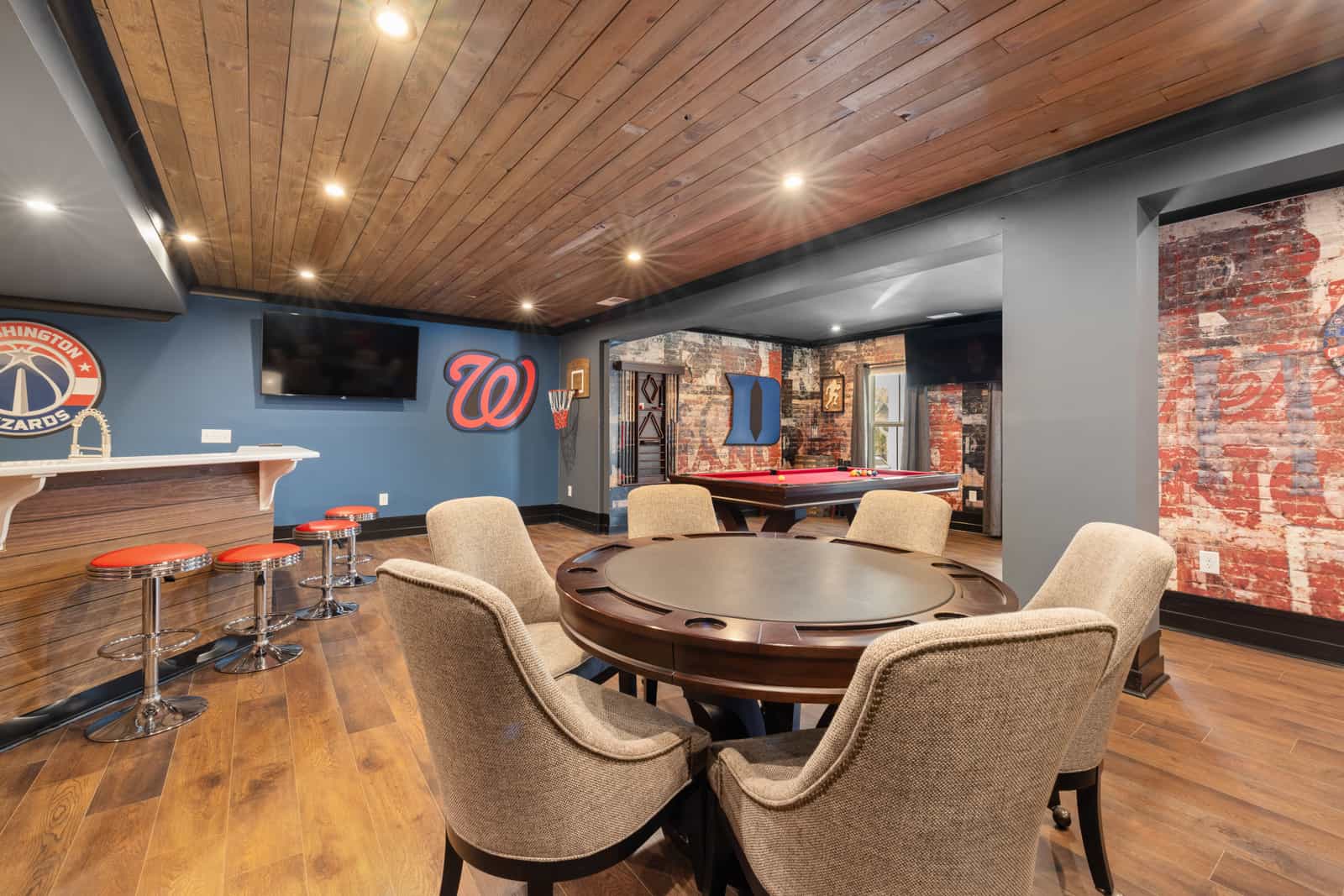
A 6-foot folding table on a non-slate bed. The folding legs are the whole point: it is the one real pool table you can clear out of a room.
A 6-foot folding table on a non-slate bed. The folding legs are the whole point: it is the one real pool table you can clear out of a room. In an apartment that property is worth more than it is anywhere else, because an apartment room is almost always doing another job as well, and because a table that folds is a table that can leave when the lease does. It is also light enough to carry up a stair or into an elevator without a crew.
- What works
- Folds flat, so the living room is a living room again
- Light enough for two people, an elevator and a hallway
- Reversible - it leaves when you leave
- What does not
- 6 feet is a noticeably smaller game than a pub table
- The folding hardware is the part that wears
#2 · Table tennis with no table
JOOLA Tetra 4-Piece Ping Pong Conversion Top
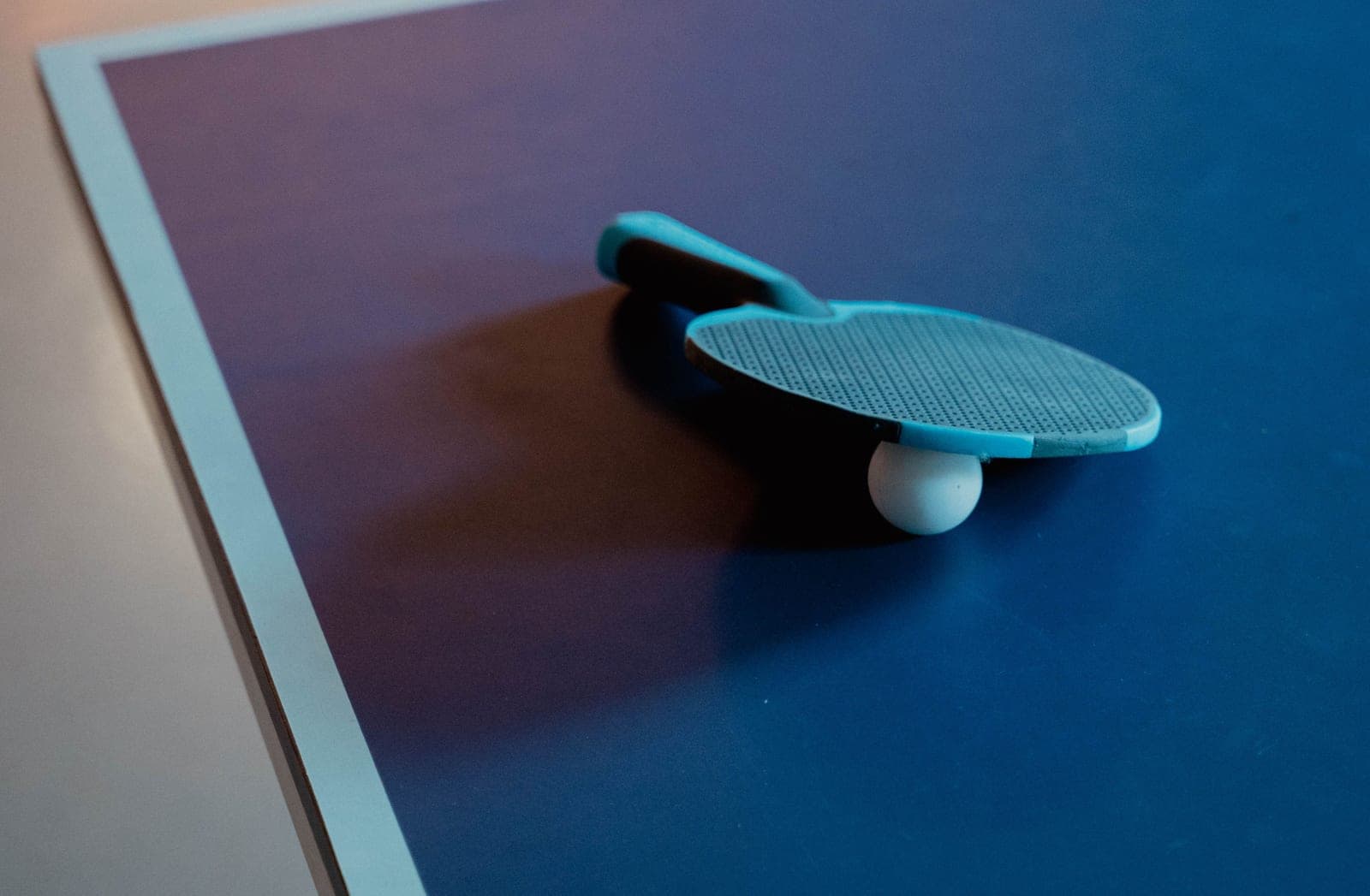
Four panels that turn a pool table into a table tennis table and stack behind a door afterwards. The storage story is the product.
Four panels that turn a pool table into a table tennis table and stack behind a door afterwards. The storage story is the product. In an apartment, read that as: four panels that stack in a closet and turn a dining table into a game, with nothing permanent and nothing heavy. Four lighter panels also beat two heavy ones when the storage spot is behind a door rather than in a garage.
- What works
- Stacks flat in a closet - the smallest storage footprint of any table game
- No permanent furniture and no floor load question
- Panels are light enough to handle alone
- What does not
- Needs a sturdy table of roughly the right size underneath
- Panel seams are visible and the bounce across a seam is not identical
#3 · Darts without the noise complaint
Gran Board 3s Bluetooth Electronic Dartboard
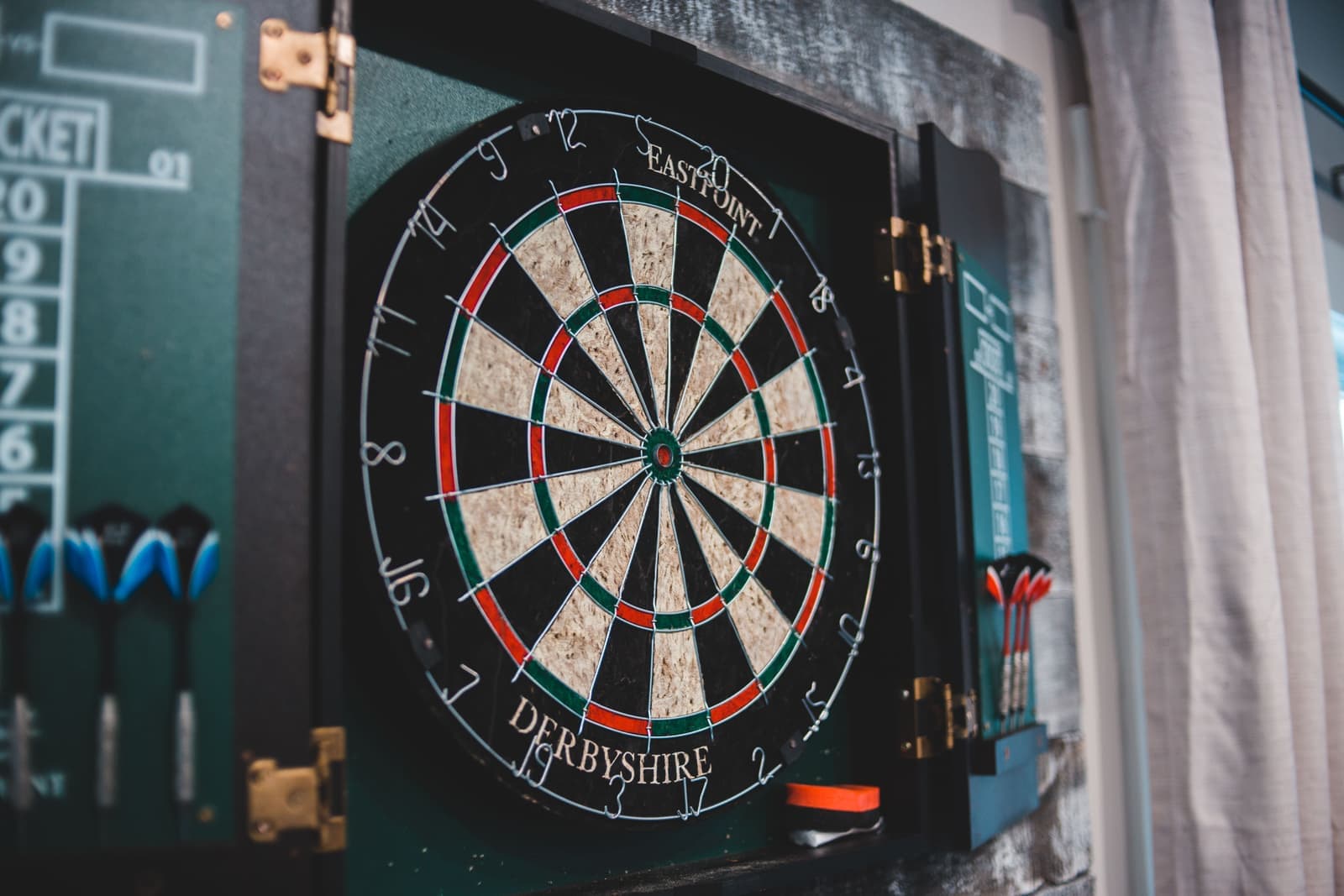
Bluetooth scoring to a phone app with online play. Also the quietest electronic board most people have thrown at.
Bluetooth scoring to a phone app with online play. Also the quietest electronic board most people have thrown at. That last sentence is the entire reason it is the apartment dart board. A steel-tip dart hitting sisal on a mounted backboard is a repeated percussive thud straight into a shared wall; a soft tip into a plastic electronic board is a click. The app scoring also means no chalkboard and no second wall fixture.
- What works
- Soft tip into plastic is dramatically quieter than steel tip into sisal
- No holes in a wall you do not own
- App scoring removes the need for a second wall fixture
- What does not
- Soft tip is a different throw from steel tip
- Needs power and a phone to get the most out of it
Getting it in: the elevator, the hallway and the turn
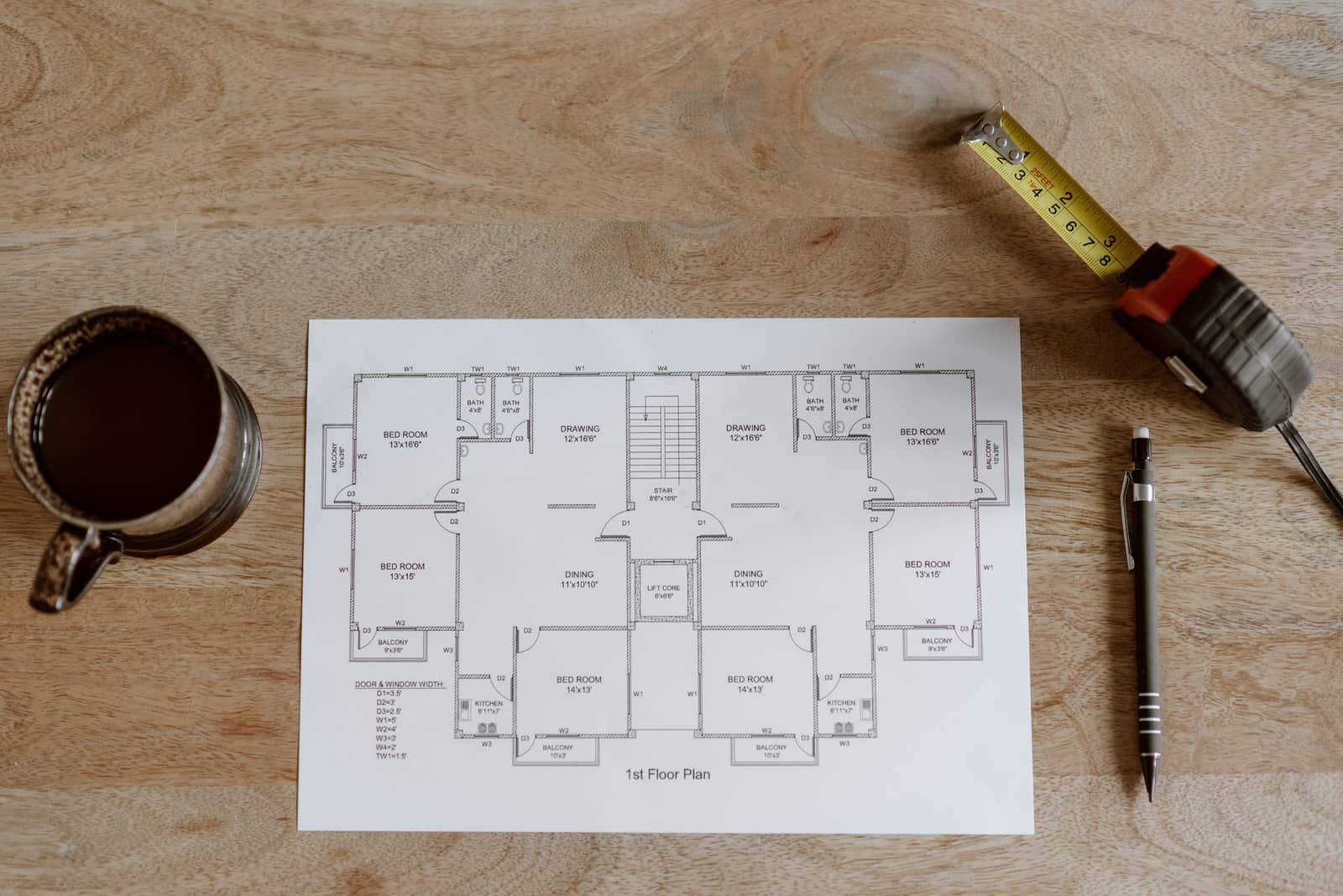
A house has a front door and a hallway. An apartment has a sequence: the building entrance, the elevator or the stairwell, the landing, the apartment door, and the turn from the hall into the room. The narrowest point in that sequence is the real constraint, and it is usually the elevator door or the turn at the apartment door rather than anything that sounds dramatic. Measure the elevator's door width and its internal depth, and measure the diagonal of the turn at the end of your hallway.
Flat-pack is the obvious mitigation, and it is worth checking whether a table ships knocked down or assembled - a pre-assembled playfield that saves two hours of building is the wrong feature when the box will not go through the elevator. A folding table is the best of both: it arrives in a manageable box and it folds again if you move.
The space itself: one room doing two jobs
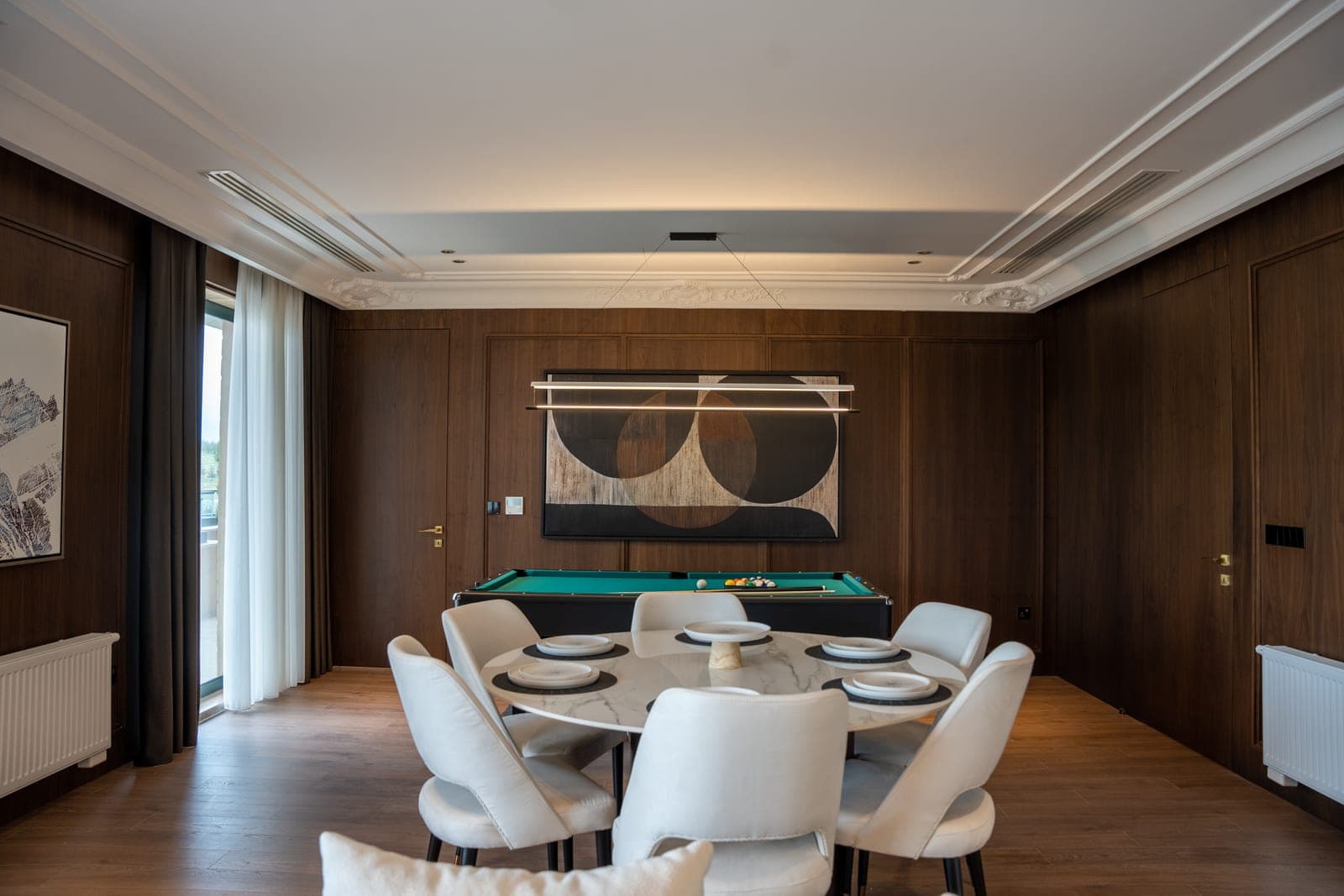
The defining feature of an apartment game room is that it is not a game room. It is a living room, or a dining area, or a bedroom, with a game in it. That means the single most valuable property of any table here is how fast it clears - not how small it is. A small table that lives permanently in the middle of a living room is worse than a bigger one that folds against a wall in ninety seconds.
Measure the clearance for play and the parking spot separately. A 6-foot folding table needs 11 ft 8 in by 8 ft 6 in of clear floor to play on with 52-inch cues, and about 2 feet by 6 feet against a wall when folded - and those two requirements can be met by different parts of the same room at different times of day, which is the whole trick. The cue clearance math covers the play figure for every cue length.
Sources and method
Table dimensions and the clearance arithmetic come from the published equipment specifications cited below, plus each manufacturer's listed figures. The 40 lb per square foot residential live load is the standard figure used in residential design and is quoted here for context only - it is not structural advice, and a slate table in an apartment is a question for a qualified engineer and your building, not for a website. The noise reasoning is the standard distinction between airborne and impact sound transmission, not our own measurement.