Skip to content
Cue&Cabinet

Cues, Lighting & Furniture

Cues, Lighting and the Furniture Around the Table

The gear around a table is where a game room is won or lost - usually by something standing where a cue needs to swing.

What decides this purchase: Cue length against your wall clearance, and fixture height above the bed

Pool cues racked on a wall beside chalk and a ball rack in a dark games room

Start with these

The winner of each roundup in this section, with a direct link to Amazon.

Everything in this hub is bought after the table, which is why so much of it is bought wrong. The gear has to fit around a thing that is already in the room, and the measurements that matter are the ones left over.

Cues: 58 inches is a specification, not a default

A standard pool cue is 58 inches long. Add about 6 inches of stroke behind it and that is the clearance a shot needs from the cushion to whatever is behind you. Short cues are sold at 48 and 52 inches, and they buy back 10 and 6 inches respectively on every shot taken from that side.

In a tight room, two short cues racked alongside the full-length ones is not a compromise - it is the standard solution, and it is what good tables in small rooms actually have on the wall. The clearance arithmetic is worked through here.

Beyond length, the useful specs are weight and shaft material. Weight runs 18 to 21 ounces and is pure preference; 19 is the usual starting point. Maple shafts feel traditional and are what most players learn on. Fiberglass and composite shafts shrug off humidity, which is the practical answer for a garage or an unconditioned basement where a wooden cue will warp.

Lighting: height, color temperature and shadow

A pool table light hangs 30 to 36 inches above the playing surface. Higher and the light spreads and flattens; lower and it is in the eyeline of anyone shooting down the table. The World Pool-Billiard Association specifies 520 lux - about 48 foot-candles - of uniform light at every point on the playing surface for tournament play, which is a useful target even at home because the word that matters is uniform.

Uniform is why a three-shade fixture exists. One pendant over the center of an 8-foot table leaves both ends dim and puts a bright spot in the middle. Three shades on a bar, or a single linear LED, cover the length evenly.

Color temperature should sit between 3000 K and 4000 K. Warmer than 3000 K and the balls lose color separation - the reds and the browns converge, which matters on a table full of solids and stripes. Cooler than 4000 K and the room reads clinical. And keep colored LED strip lighting on the walls, never on the table.

Furniture: everything in this room has to move

The rule for game room furniture is that it must either be outside the cue swing or be able to move in two seconds. Backless stools tuck fully under a rail or counter; stools with backs do not. Modular sofas can be pulled apart to clear a break shot; a large fixed sectional in a basement cannot.

Flooring is the part people regret skipping. A bare concrete slab telegraphs every dropped ball through the whole house, chips a dropped cue tip, and is cold enough that nobody stays in the room. Interlocking rubber tiles handle a garage; carpet tiles handle a basement and let you replace one 18-inch square after a chalk spill instead of a whole floor.
Measure first

Start with your room, not the gear

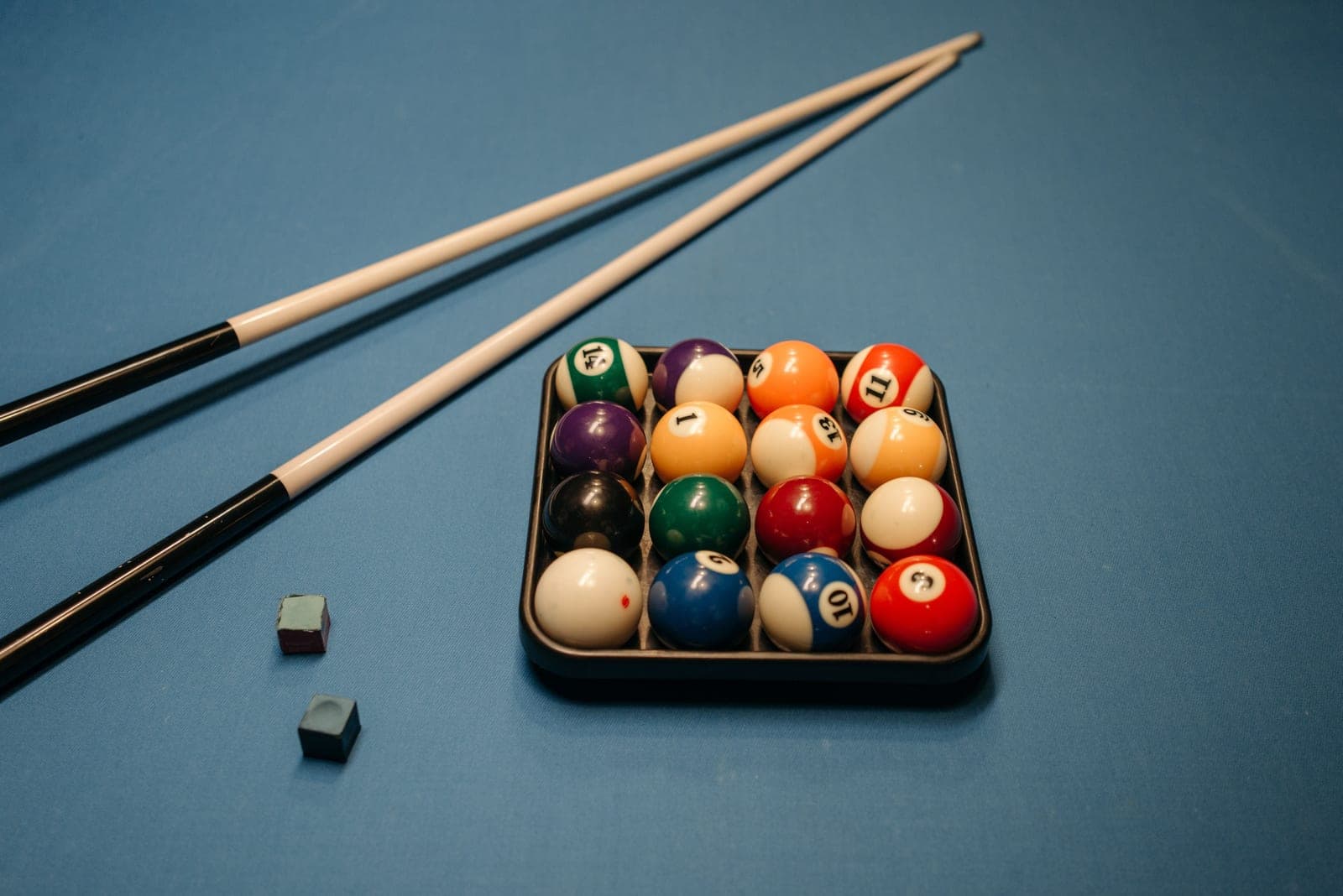
Walk each side of the table with a 58-inch cue before you buy anything else. Wherever it hits a wall, a post or a sofa, you have found a short-cue side - or a piece of furniture that needs to go elsewhere.

A wall-mounted cue rack holding full-length and short cues side by side

The picks

Interlocking rubber floor tiles laid across a concrete slab

Picks

The Best Game Room Flooring

Flooring that survives dropped cues, chalk and a damp slab - rubber tiles, carpet tiles and what to avoid.

Dark bar stools lined up against a wall in a low-lit lounge

Picks

The Best Game Room Seating

Seating that stays out of the cue swing - backless stools, modular sofas and where each one belongs.

A multi-shade pendant fixture hanging low over a pool table

Picks

The Best Pool Table Lights

Pool table lights compared on even coverage, hanging height and color temperature, including low-ceiling options.

Head to head

A short cue and a full-length cue laid together across a table rail

Compare

58-Inch vs Short Pool Cues

What a short cue buys back in clearance and what it costs in power and spin - and when to rack one.

Guides

A wall-mounted cue rack holding full-length and short cues together

Guide

Cue Clearance Math

The clearance arithmetic behind every room-size chart, how to measure it in a real room, and how short cues change it.

LED strip lighting running along a dark ceiling line in a basement

Guide

A Game Room Lighting Plan

A three-layer lighting plan for a basement or garage game room, and what never to put over a playing surface.

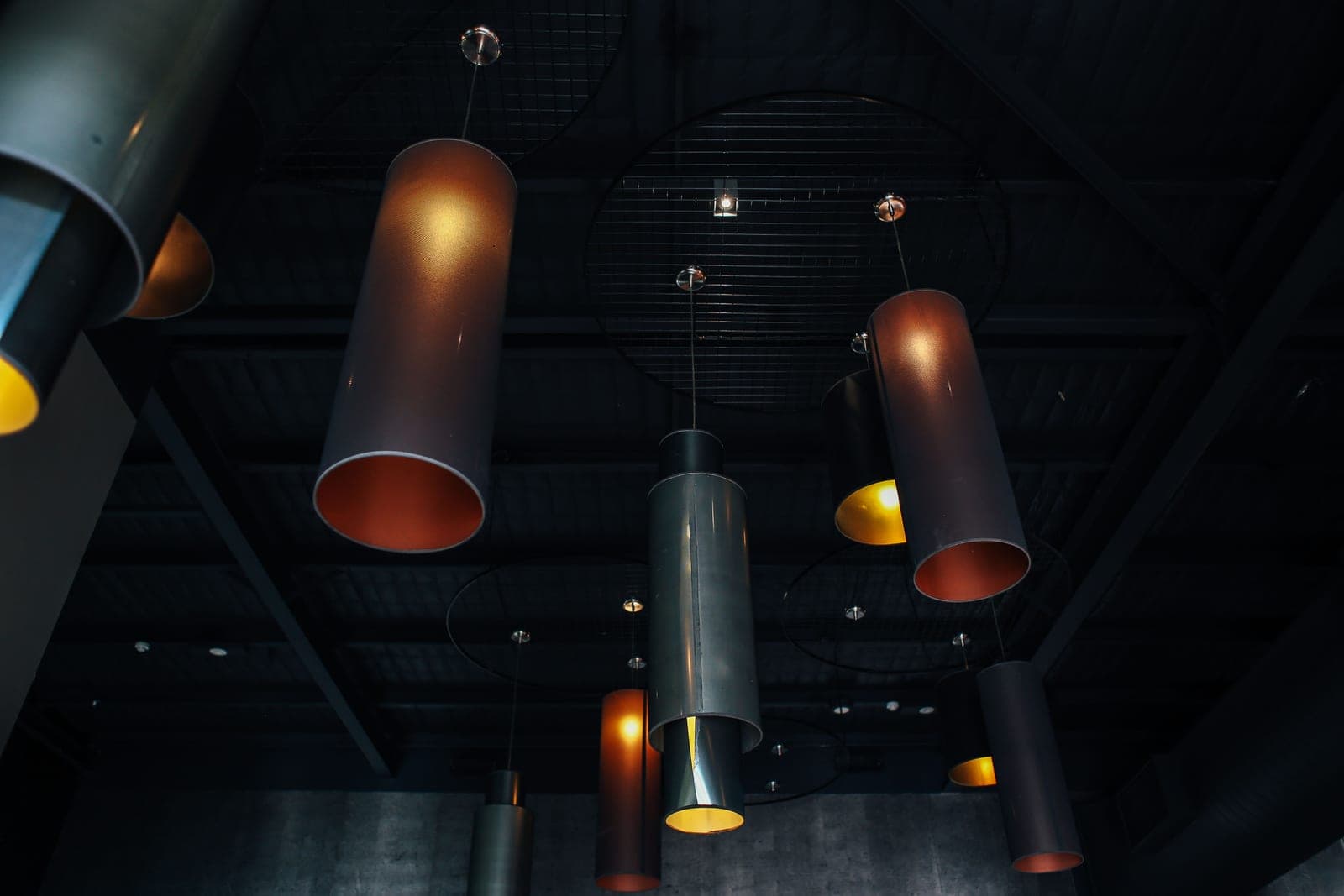
Pendant lamps hanging low over a dark interior with warm pools of light

Guide

Pool Table Light Height

How high to hang a pool table light, measured from the cloth, and what to do under a low basement ceiling.

Questions people actually ask

How high should a pool table light hang?
30 to 36 inches above the playing surface. Higher flattens the light; lower puts the fixture in the eyeline of anyone shooting the length of the table. Measured from the cloth, not the floor.
What length pool cue do I need?
58 inches is standard and needs about 64 inches of clearance behind the cushion once you allow for the stroke. If any side of your table is tighter than that, buy a 52 or 48-inch short cue for that side. It is the normal fix, not a compromise.
What color temperature is best for a pool table light?
3000 K to 4000 K. Warmer and the ball colors start to converge; cooler and the room reads like an office. The WPA target for tournament play is 520 lux of uniform light on the surface.
What is the best pool cue weight for a beginner?
19 ounces is the usual starting point, with the range running 18 to 21. It is genuinely personal preference - try a heavier and a lighter cue on a house table before committing.
What flooring works best in a game room?
Interlocking rubber tiles in a garage, where the slab is uneven and things get dropped. Carpet tiles in a basement, because you can replace a single square after a spill. Avoid bare slab: it is loud, cold and unforgiving.

Sources

By Brijon M.Last updated October 6, 2026Published October 6, 2026