Compare
Sisal vs Plastic Dart Boards
One material closes up around the dart. The other has a hole already waiting. That difference explains everything else.
How these picks were made: from published manufacturer specifications, governing-body standards and the room arithmetic - not from first-hand use. We have not played on these tables. Read the method.

What sisal is
Sisal is a plant fiber, taken from the agave family, cut into short lengths and compressed end-on into a disc so that every fiber runs front-to-back. A dart point pushes between the fibers rather than cutting them, and when the dart is pulled out the compressed fibers spring back and close the gap. That is the self-healing everybody refers to, and it is a mechanical property of the material rather than a treatment applied to it.
Density is what separates a good sisal board from a poor one. Denser fiber closes more completely, holds the dart more firmly, and wears more slowly. It is also why cheaper boards go soft in the treble 20 first - that is where the density is being tested hardest.
What to avoid: paper-wound boards
Some very cheap boards are coiled paper rather than sisal. They look similar, they cost much less, and they do not self-heal at all - the holes stay open and the surface degrades within weeks. If a bristle board's price looks too good, check the material explicitly.
How plastic segments work
An electronic board's face is a molded plastic grid with thousands of small holes. The dart's soft tip wedges into a hole and a sensor behind the segment registers the hit. Nothing closes around the dart - the hole was already there.
The consequences follow directly:
- Holes widen with repeated use, especially in the trebles, and grip reduces until the segment faces are replaced.
- Bounce-outs happen when the tip hits the solid plastic between holes rather than a hole.
- Dividers are plastic, not wire, so a dart hitting one is deflected rather than wedged.
- The faces are replaceable, which is the plastic board's compensating advantage: a worn electronic board is a parts purchase, not a new board.
| Sisal | Plastic | |
|---|---|---|
| Mechanism | Fibers close around the point | Pre-molded holes grip the tip |
| Self-healing | Yes, inherent to the material | No |
| Wear point | Treble 20 goes soft first | Treble holes widen first |
| Repair | Rotate the board to even wear | Replace segment faces |
| Dart retention | Firm | Depends on hole wear and tip condition |
| Typical life | Years | Until electronics or faces fail |
| Wire | Thin steel - thinner is better | Molded plastic dividers |
Quick picks
| # | Product | Best for | Board type | Price |
|---|---|---|---|---|
| 1 |  Winmau Blade 6 Triple Core Dartboard | Dense sisal | Triple-core sisal, thin wire | |
| 2 | Viper Shot King Sisal Dartboard | Sisal on a budget | Self-healing sisal | |
| 3 |  Viper 787 Electronic Soft-Tip Dartboard | Plastic segments | Electronic, replaceable faces |
A board for each material
#1 · Dense sisal
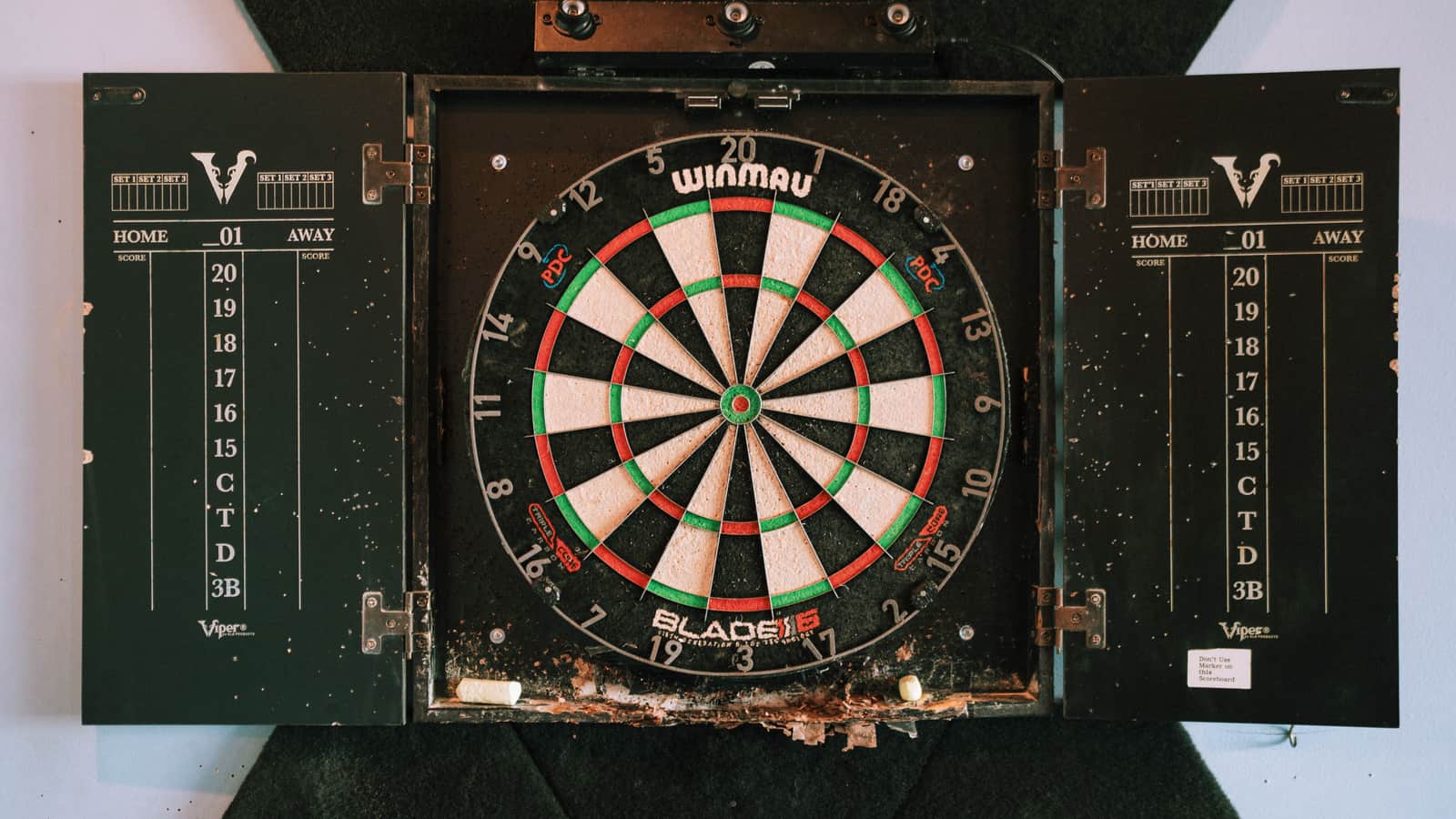
Winmau Blade 6 Triple Core Dartboard
The league standard. Dense sisal and very thin wire, so bounce-outs drop and the segments stay tight after a season of use.
The densest sisal in common home use, which is why it closes cleanly and lasts.
- What works
- Self-heals well for years
- What does not
- Price
#2 · Sisal on a budget
Viper Shot King Sisal Dartboard
A self-healing sisal board at a fraction of the league-board price. The right first board for a garage.
Real sisal rather than paper-wound, at a price that makes it a sensible first board.
- What works
- Genuine sisal construction
- What does not
- Thicker wire than a league board
#3 · Plastic segments
Viper 787 Electronic Soft-Tip Dartboard
An entry electronic board with the usual pile of game modes. Soft-tip darts mean no holes in the drywall behind it.
The plastic side of the comparison: holes that are already there, and segment faces you replace rather than heal.
- What works
- Segment faces are replaceable
- What does not
- Holes widen with use
Wire gauge, on sisal boards
The wire separating the segments is the other half of a sisal board's quality. Thinner wire means less surface for a dart to hit and bounce off, and more effective scoring area. Modern league boards use very thin wire set into the board rather than stapled on top, and the staple-free bullseye on some boards removes the single most common bounce-out point.
Sources and method
Material behavior is described from how sisal and molded plastic boards are constructed and from manufacturers' published descriptions of their own boards. We have not conducted wear testing.