Picks
The Best Air Hockey Tables for Kids
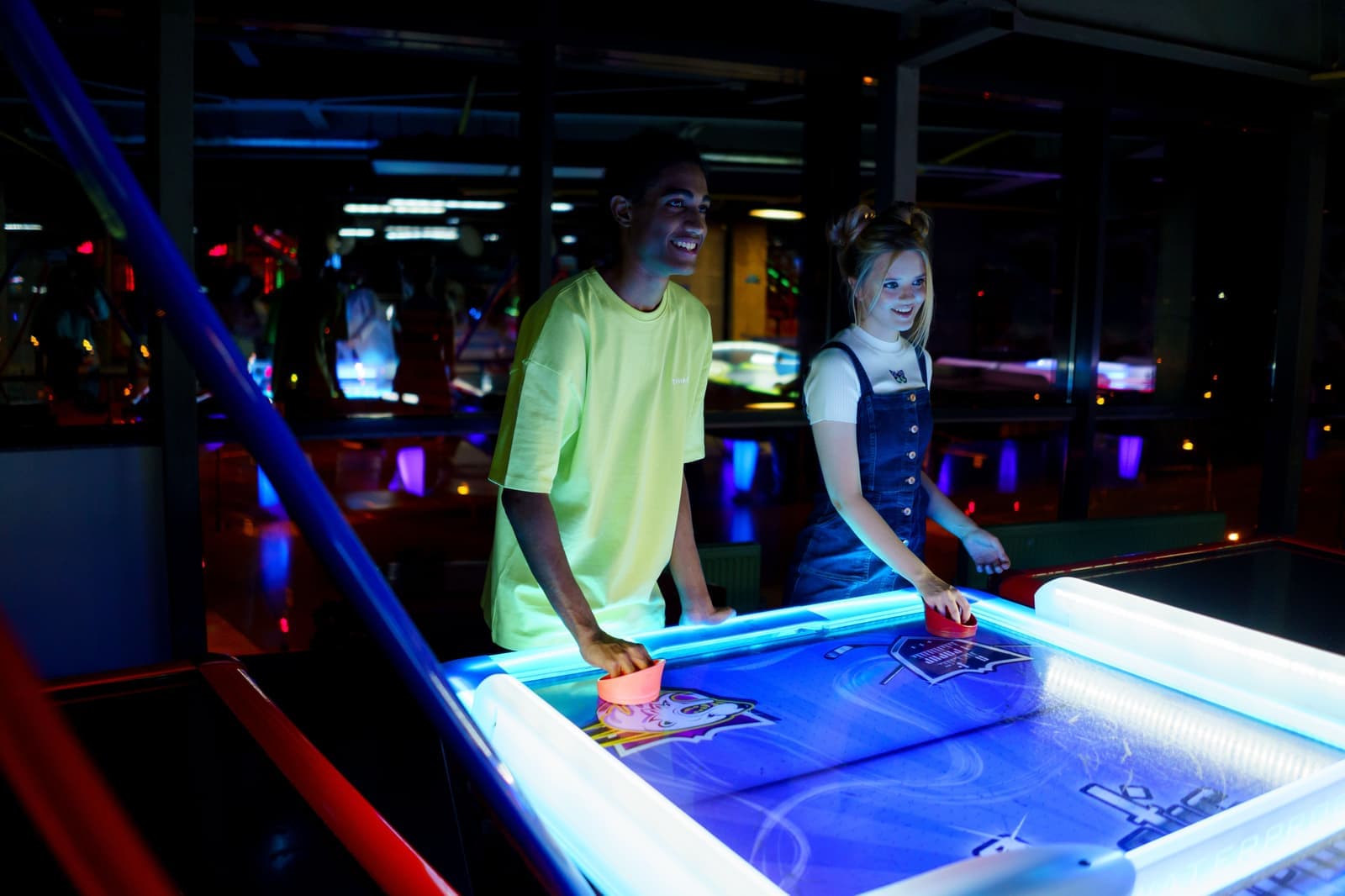
Children do not care about airflow numbers. They care that the puck floats and the table lights up - and one of those two things is a spec you can check before buying.
How these picks were made: from published manufacturer specifications, governing-body standards and the room arithmetic - not from first-hand use. We have not played on these tables. Read the method.
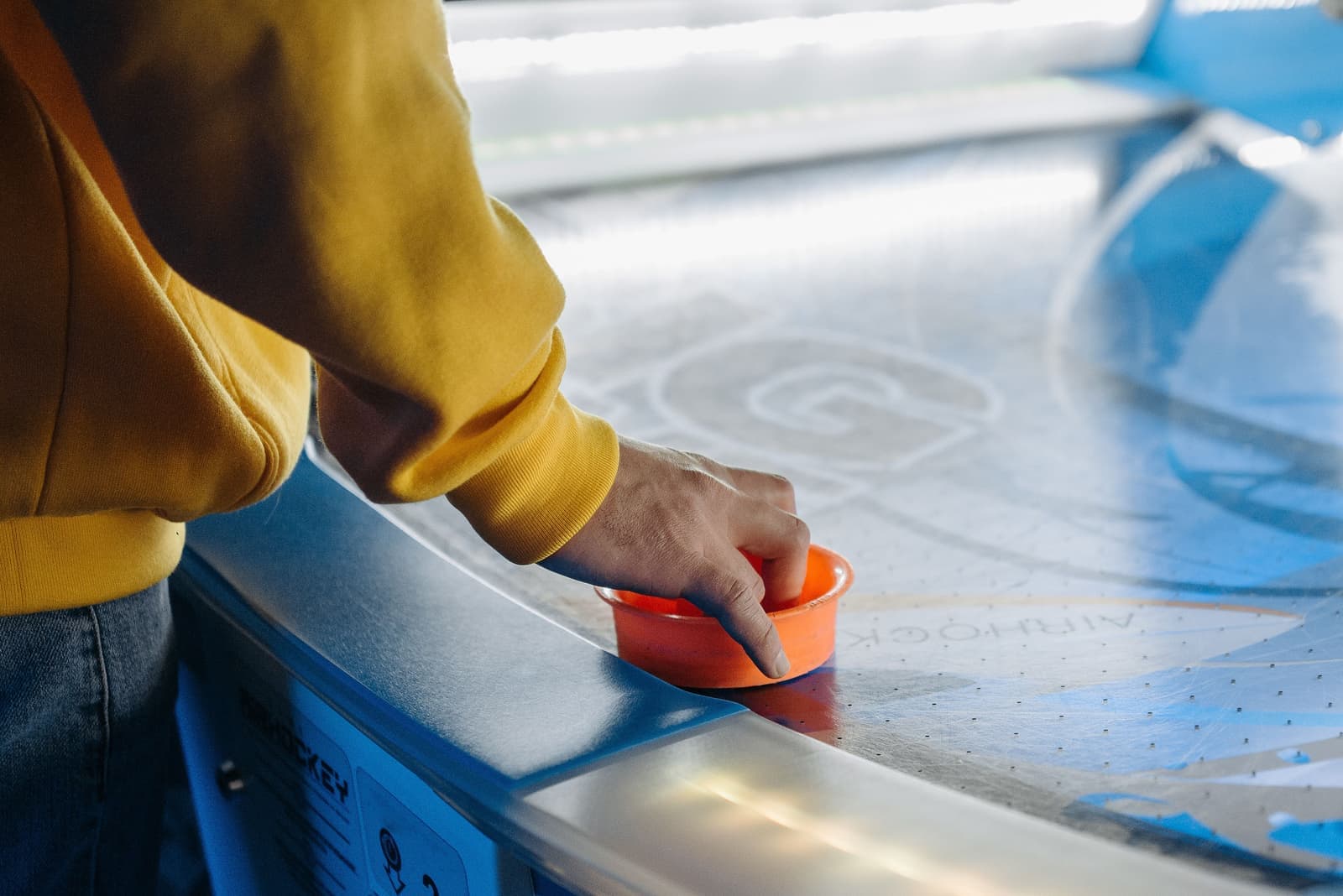
For a child under seven, buy the Sport Squad HX40 tabletop and put it on a surface that brings the rails to their waist. For six to ten, the MD Sports 5-foot table with its 12-volt, 80 CFM blower is the first floor table that makes sense, because it is quiet and it levels. From about seven upward, if the room has to earn its keep, the EastPoint 80-inch combo buys a second game for the same floor space.
The blower rating is the only spec that predicts the game
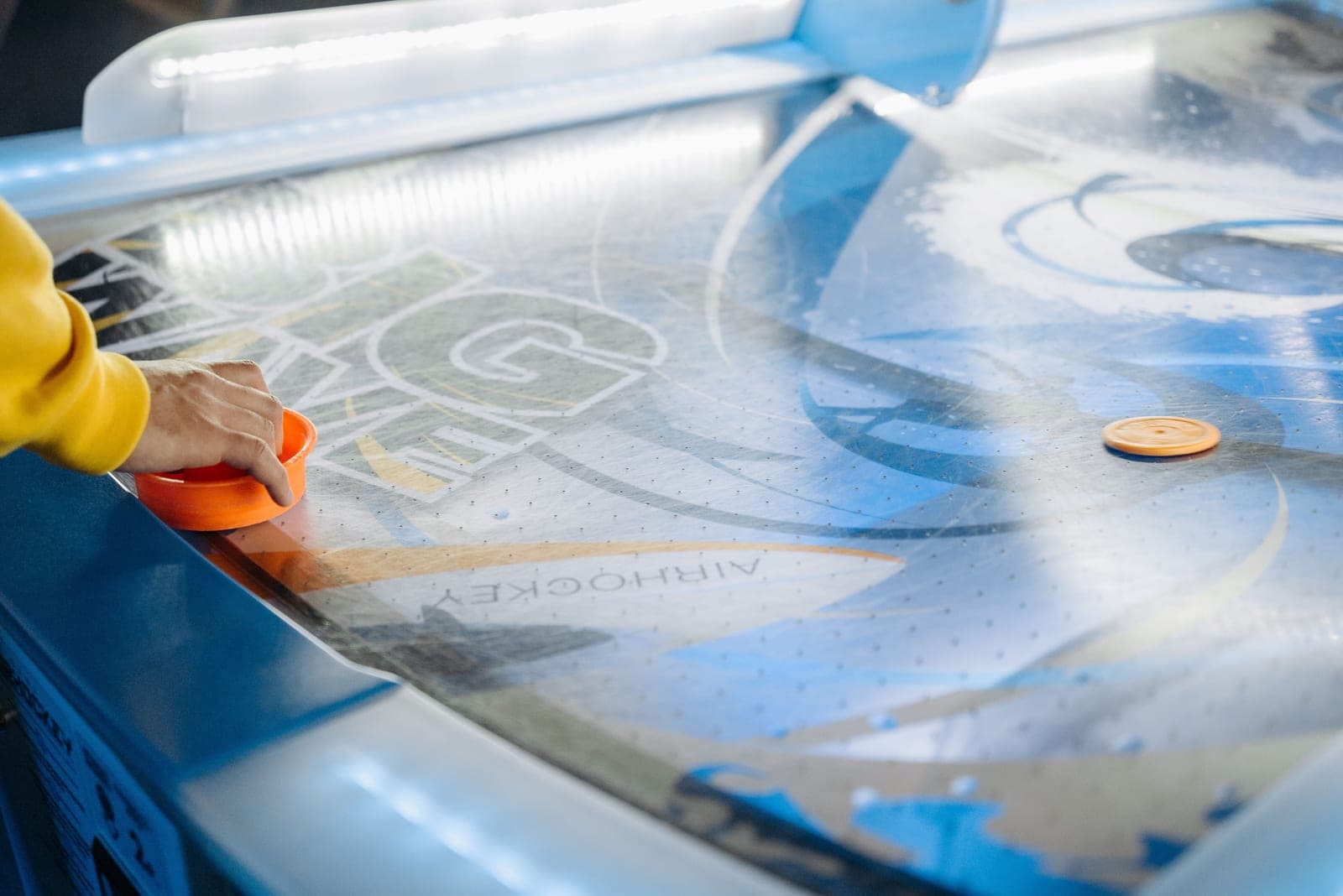
Air hockey is one game where a published number genuinely maps onto how fun the table is. The blower pushes air up through thousands of small holes, the puck rides on that cushion, and the volume of air - quoted in CFM, cubic feet per minute - decides whether the puck glides or scuffs. A 12-volt motor around 80 CFM floats a puck adequately on a clean surface. A 120-volt arcade-style blower floats it hard enough that beginners cannot control it.
That inversion is why this page exists. For an adult, more airflow is better. For a six-year-old, a slower puck is the difference between a rally and a tantrum, and the quieter 12-volt motor is also the difference between a table that gets used on a weeknight and one that does not. The airflow and durability page explains what the numbers mean in detail.
| Blower class | Puck behavior | Noise | Suits |
|---|---|---|---|
| Tabletop fan | Slow, drags on dust | Quiet | Ages 4-7, apartments |
| 12 V, around 80 CFM | Floats on a clean surface | Quiet | Ages 6-10, shared walls |
| Dual 12 V fans | Even float along a long table | Noticeable | Ages 7-12, basements |
| 120 V high-output | Fast, arcade-like | Loud | Teens and adults |
Size, and the age it stops being fun
A 40-inch tabletop is a two-year purchase. A 5-foot table carries a child from about six to about ten. A 7 or 7.5-foot table is the first size where the game stops being a reflex contest and starts rewarding angles off the rails, and it is the last table you buy. If the budget allows one table rather than two, the honest advice is to buy the biggest one the room takes and put a step platform on each side for the small years.
Quick picks
| # | Product | Best for | Key spec | Price |
|---|---|---|---|---|
| 1 |  Sport Squad HX40 Tabletop Air Hockey Table | Ages 4 to 7, and apartments | 40 in tabletop | |
| 2 | MD Sports 5 ft Air Hockey Table | Ages 6 to 10, as the first floor table | 5 ft, 12 V / 80 CFM | |
| 3 |  Triumph Sports Fire 'n Ice LED Air Hockey Table | Ages 7 to 12, and the lighting | LED puck, dual fans | |
| 4 | EastPoint NHL Power Play 80-in Air Hockey / Table Tennis Combo | One footprint, two games | 80 in combo |
The picks
Youngest-first, with the combo table last because it is a room decision rather than an age one.
#1 · Ages 4 to 7, and apartments
Sport Squad HX40 Tabletop Air Hockey Table
A 40-inch tabletop table that stores on a shelf. Buy it knowing the blower is small and the puck floats accordingly.
A 40-inch tabletop table that stores on a shelf. The blower is small and the puck floats accordingly, which for a four-year-old is a feature rather than a fault - a slow puck is a puck they can actually hit. Set it on a coffee table and the rails land at the right height for a preschooler.
- What works
- You choose the play height by choosing the surface
- Quiet enough to use in the same room as a television
- Puts away completely, so it survives in a house with no game room
- What does not
- Small blower means the puck drags on a dusty surface
- Not a game anyone over about eight stays interested in
#2 · Ages 6 to 10, as the first floor table
MD Sports 5 ft Air Hockey Table
A 12 V, 80 CFM blower with an LED scorer and 4-inch leg levelers. The 12 V motor is why it is quiet and why the puck is slower.
A 12-volt, 80 CFM blower with an LED scorer and 4-inch leg levelers. The 12-volt motor is why it is quiet and why the puck is slower, and both of those are the right trade for a six-year-old in a basement next to a bedroom. The levelers matter more than they sound: an unlevel air hockey table sends every puck to the same corner.
- What works
- Quiet motor, which decides whether it gets played on a school night
- Leg levelers, so a sloped basement slab does not ruin the game
- 5-foot length fits rooms that cannot take a 7-footer
- What does not
- 80 CFM is modest - the surface needs wiping to keep the puck floating
- Short table means short rallies for older children
#3 · Ages 7 to 12, and the lighting
Triumph Sports Fire 'n Ice LED Air Hockey Table
Light-up pucks, dual fans and LED corners. Bought for the lighting, and the lighting is genuinely the fun part with kids.
Light-up pucks, dual fans and LED corners. Bought for the lighting, and with children the lighting is genuinely the fun part - a dark basement with a glowing puck is a different experience from a lit room with a white one. Dual fans also mean a more even cushion of air across a long table than a single blower manages.
- What works
- Dual fans give more consistent float along the table's length
- Lit puck and corners make a dim room the point rather than the problem
- Scoring is visible from across the room, which ends disputes
- What does not
- Lit pucks are a consumable - batteries and lost pucks both happen
- Two fans are two fans' worth of noise
Skip it if: the table is going in a room that shares a wall with a bedroom. Dual-fan tables are the loudest format here, and the fan runs the whole time the game does.
#4 · One footprint, two games
EastPoint NHL Power Play 80-in Air Hockey / Table Tennis Combo
Air hockey with a table tennis top over it, plus light-up corners. One footprint, two games, both compromised.
Air hockey with a table tennis top over it, plus light-up corners. One footprint, two games, both compromised - and in a family room that is frequently the right answer, because the alternative is one game and a lot of unused floor. Treat the table tennis top as a bonus rather than as a ping pong table.
- What works
- 80 inches of air hockey is a real table, not a tabletop
- The second game extends the useful age range by years
- Light-up corners without the lit-puck consumable
- What does not
- Neither game is as good as a dedicated table at the same size
- The table tennis top has to live somewhere when it is off
Noise is the spec parents forget
A blower runs continuously for as long as the game lasts. A 12-volt motor is a background hum. A 120-volt high-output blower in a hard-surfaced basement is loud enough that conversation in the room changes volume. If the game room shares a wall or a floor with a bedroom, and children will be playing at 7pm rather than 2pm, the quieter motor is worth more than the faster puck.
There is a second, unobvious noise source: the surface. Pucks on a hard laminate playfield crack loudly against the rails. Nothing fixes that, and it is part of the game - but it is worth knowing before the table goes directly above a nursery.
Maintenance a child can do
- Wipe the surface before each session. Dust blocks the air holes, and blocked holes are the real cause of a dragging puck on a low-CFM table.
- Vacuum the holes monthly. A crevice tool over the playfield pulls out what wiping pushes in.
- Keep spare pucks and mallets. Both get lost or cracked, and a table with one mallet is a table nobody plays.
- Never wax or polish the playfield. It is meant to be dry and clean, not slick - polish attracts dust and makes the problem worse.
- Switch the blower off between games. The motor is the part most likely to fail, and its life is measured in running hours.
What we checked, and what we did not
CFM figures, voltages and table lengths are the manufacturers' published specifications. The age bands are our reasoning from table height and puck speed, not test results, and the noise descriptions follow from motor class rather than from measurement. We have not played on these tables and publish no scores or ratings for them.