Guide
How to Choose a Pool Cue
Four specifications decide a cue, and only one of them is set by your room. The rest are preferences you can only discover by playing.
How these picks were made: from published manufacturer specifications, governing-body standards and the room arithmetic - not from first-hand use. We have not played on these tables. Read the method.
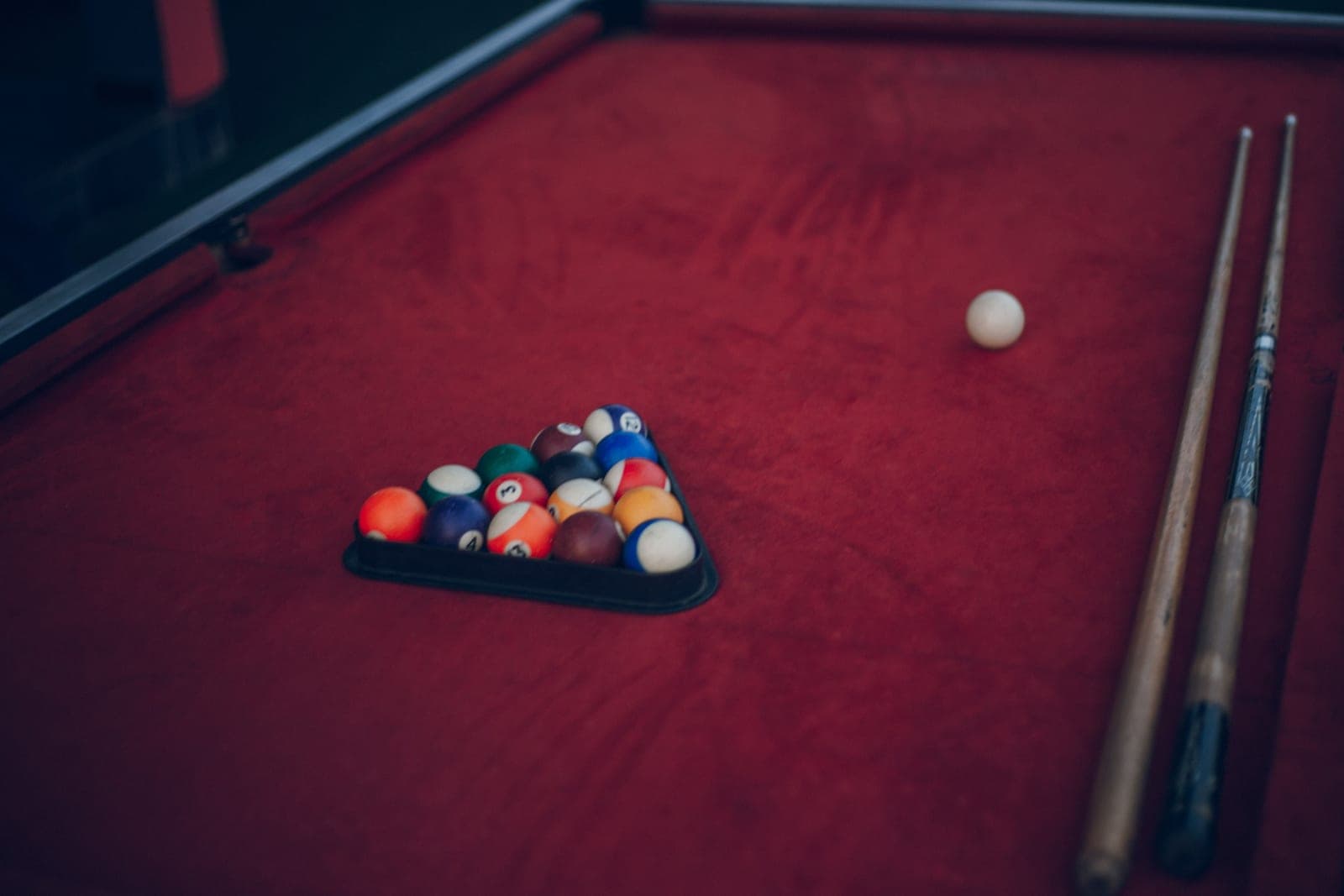
Choose a cue in this order: length, set by the clearance in your room; weight, which for most players lands between 19 and 20 ounces; tip hardness, where medium is the right default; and shaft material, where maple is standard and a composite shaft is the answer for a damp room. Everything else - the wrap, the joint, the inlays, the brand - affects how the cue feels in your hand and not how the ball behaves.
Length comes first, because your room decides it
A standard cue is 58 inches. Taking a shot needs the cue length plus roughly 6 inches of backswing behind the ball, which means a full cue wants about 64 inches of clear space behind the rail on the side you are shooting from. Measure the clear distance at table height on all four sides, to whatever actually projects - the post, the stair stringer, the water heater, the door at full swing.
| Cue | Clearance needed per side | What it costs you |
|---|---|---|
| 58 in (standard) | 64 in | Nothing - full stroke, full control |
| 52 in | 58 in | Slight loss of leverage on long shots |
| 48 in | 54 in | Noticeably less power and English available |
| 36 in (jab cue) | 42 in | Emergency use only on a frozen ball |
You do not need short cues on every side - work out which sides are tight and keep two short cues on the wall for those. That is what tables in real rooms look like. The clearance math page has the measuring method, and the 58-inch against short cues comparison covers what the shorter cue actually changes about a shot.
Weight, and why 19 ounces is the honest default
Cues are sold from about 17 to 21 ounces, and the preference is genuinely personal and unteachable. A heavier cue transfers more energy for a given stroke speed, which makes the break easier and makes fine position play slightly harder to feel. A lighter cue is easier to accelerate and rewards a smooth stroke. The one thing that is not true is that a heavier cue is a better cue.
If you have no preference yet, start at 19 ounces, which is the middle of the band most players settle into, and play with it for a few months before concluding anything. Many cues also take weight bolts in the butt, so a 19-ounce cue can be nudged either way later without buying another cue - worth checking before you order.
Tip hardness, the cheapest thing you can change
The tip is the only part of the cue that touches the ball, and it is a consumable. Soft tips grip the ball for longer and generate spin more easily, but they mushroom and need shaping often. Hard tips last far longer, transfer energy more efficiently and are less forgiving of a slightly off-center hit. Medium is the default for a reason: it does both adequately.
- Soft: most spin, most maintenance, favored by some players for finesse shots.
- Medium: the default. Buy this unless you already know you want something else.
- Hard: longest life, best for a break cue or a house cue that guests will use.
- Any tip, replaced: a new tip on an old cue plays better than a tired tip on an expensive one. It is the cheapest upgrade in the sport.
Three cues that cover most rooms
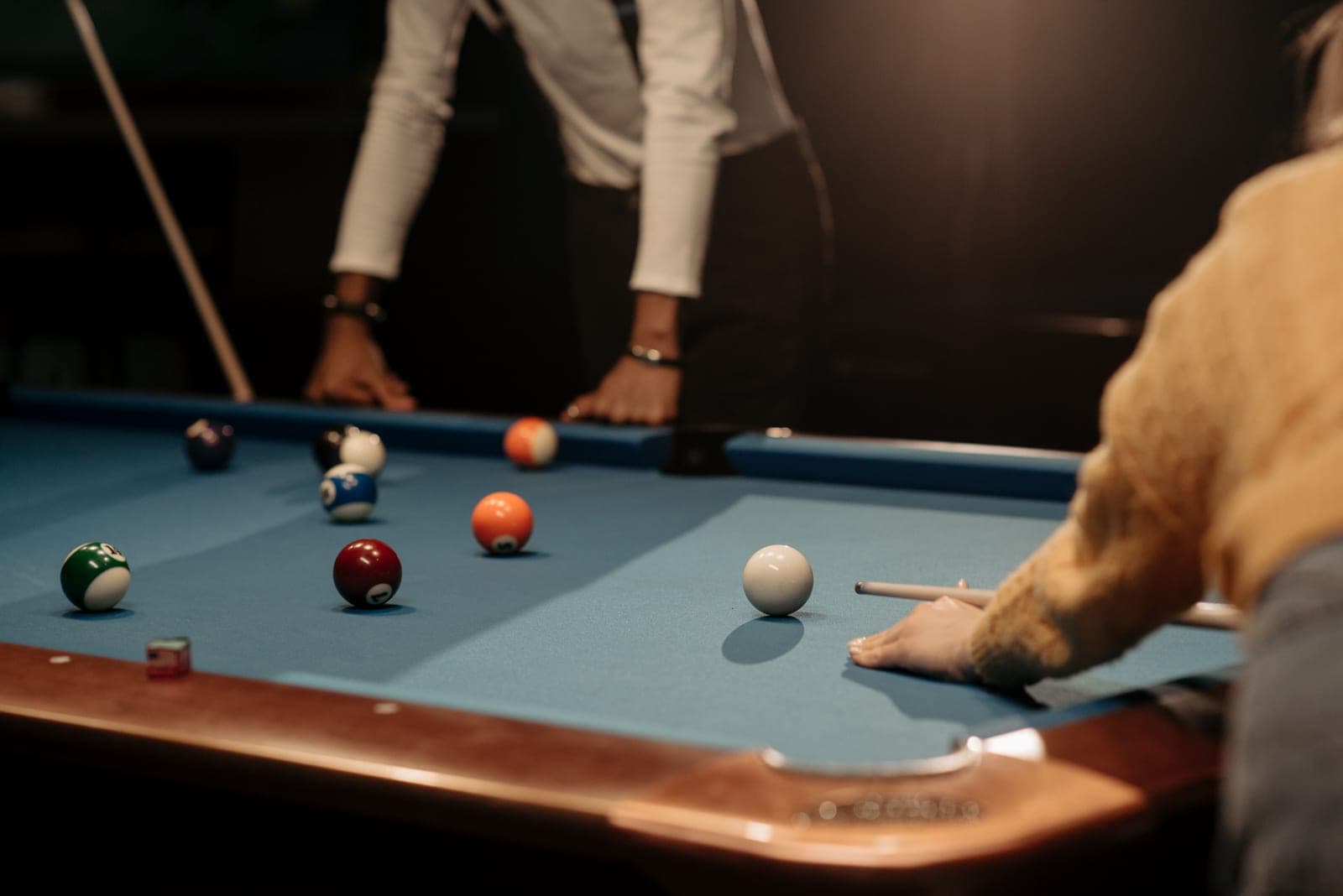
#1 · The default first cue
Players C-960 Pool Cue
A maple two-piece with an Irish linen wrap at a price that makes buying two sensible. The usual first serious cue.
A maple two-piece with an Irish linen wrap at a price that makes buying two sensible. The usual first serious cue, and the right starting point for a standard 19 to 20-ounce setup - which is the weight band most players end up preferring anyway.
- What works
- Linen wrap handles a damp hand better than a bare shaft
- Priced so a second cue for guests is reasonable
- What does not
- Stock tip is a starting point rather than a destination
#2 · A garage or damp basement
Cuetec Avid Series Pool Cue
A fiberglass-wrapped shaft that shrugs off humidity. The practical answer for a garage or a damp basement.
A fiberglass-wrapped shaft that shrugs off humidity. The practical answer for a garage or a damp basement, where a bare maple shaft is the component most likely to warp - and a warped shaft is not repairable.
- What works
- Humidity-stable shaft in a room that swings
- Takes knocks without marking
- What does not
- Feels different from wood, which some players dislike immediately
#3 · The side with a wall on it
Players Short Pool Cue (48 in / 52 in)
A short cue for the side of the table that lost its clearance to a wall. Two of these fix most tight-room tables.
A short cue for the side of the table that lost its clearance to a wall. Two of these fix most tight-room tables, and they are not a compromise so much as the correct tool for a shot that cannot be taken with a full cue.
- What works
- Makes the unplayable side playable
- Cheap relative to the problem it solves
- What does not
- Less leverage and less spin available
- Not a cue to learn the game on
Skip it if: your room clears 58-inch cues on all four sides. Then you never need one.
Shaft material and the humidity question
A maple shaft is the standard and it is what most players prefer the feel of. Maple is also wood, which means it responds to moisture: a cue left leaning in a corner of a damp garage, or stored flat in a humid basement, can take a set and warp. A warped shaft cannot be straightened, so this is a storage question as much as a buying one. Store cues vertically in a rack, or flat in a case, and keep them out of the sun and off exterior walls.
If the room is genuinely unconditioned - a garage, an unheated basement - a fiberglass or composite-wrapped shaft removes the problem entirely. The feel is different, and some players dislike it on the first stroke, which is worth knowing before ordering. The one-piece against two-piece page covers the other durability trade in the category.
What does not matter as much as the listing suggests
Inlays, veneers and finish. These are why two cues with identical specifications can be priced an order of magnitude apart. They are craftsmanship and they are lovely; they do not affect the shot.
The joint. Stainless, wood-to-wood, piloted or flat-faced - joint type changes the feedback through the cue slightly and divides players sharply. It is a preference to develop, not a specification to shop on for a first cue.
Tip diameter, within the normal 12 to 13 mm range. A smaller tip makes spin easier to apply and miscues easier to achieve. For a first cue, take whatever the cue comes with. The beginner cue roundup covers the sensible starting points, and the main cue roundup covers the full range.
What we checked, and what we did not
Clearance figures are cue length plus 6 inches of stroke, per side - arithmetic you can repeat with a tape. Weight bands, tip hardness behavior and shaft materials are standard equipment facts, and cue specifications are the manufacturers' published figures. We have not played with these cues and publish no ratings or scores for them; the preferences described are the generally understood trade-offs, not test results.