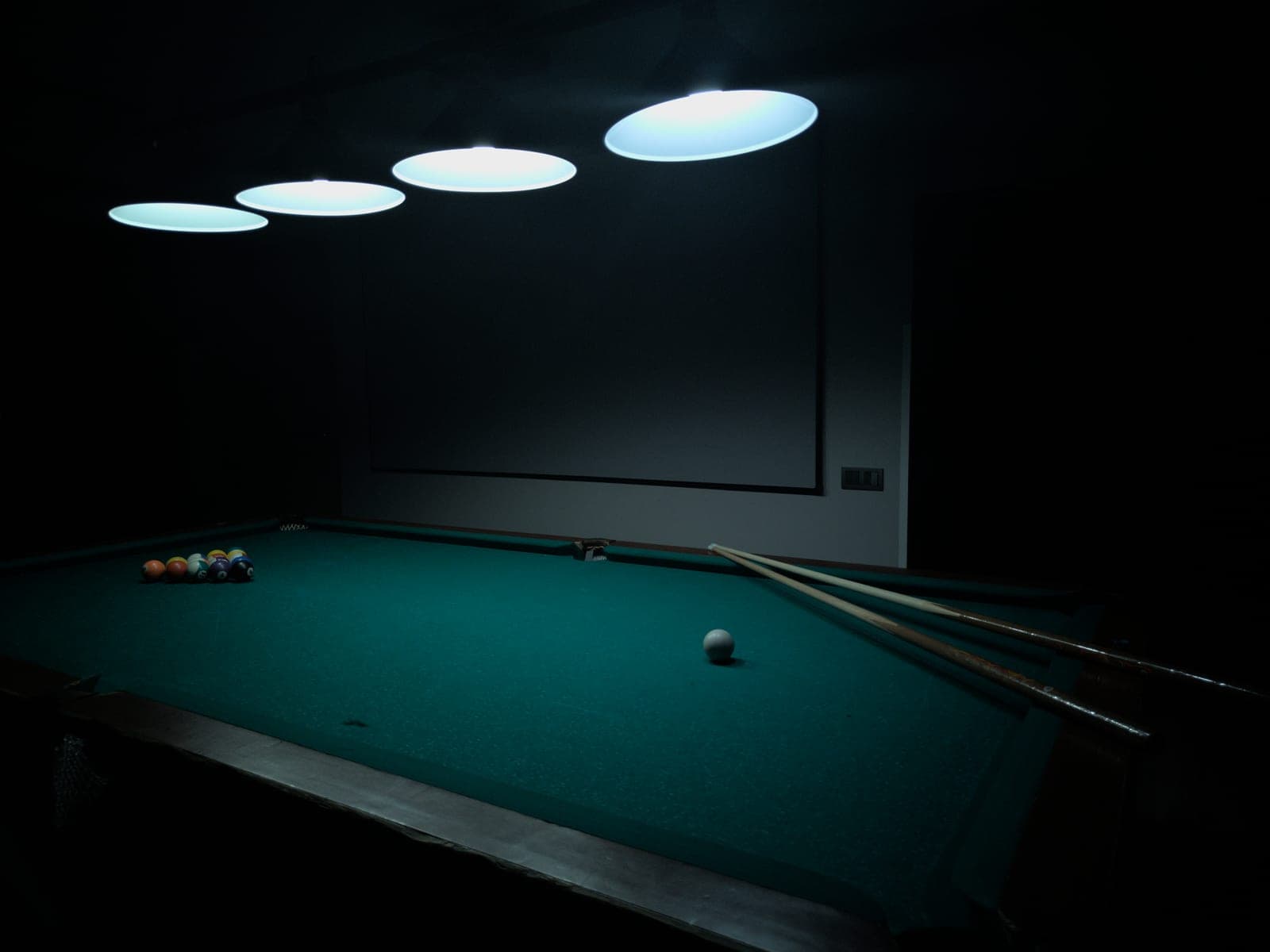
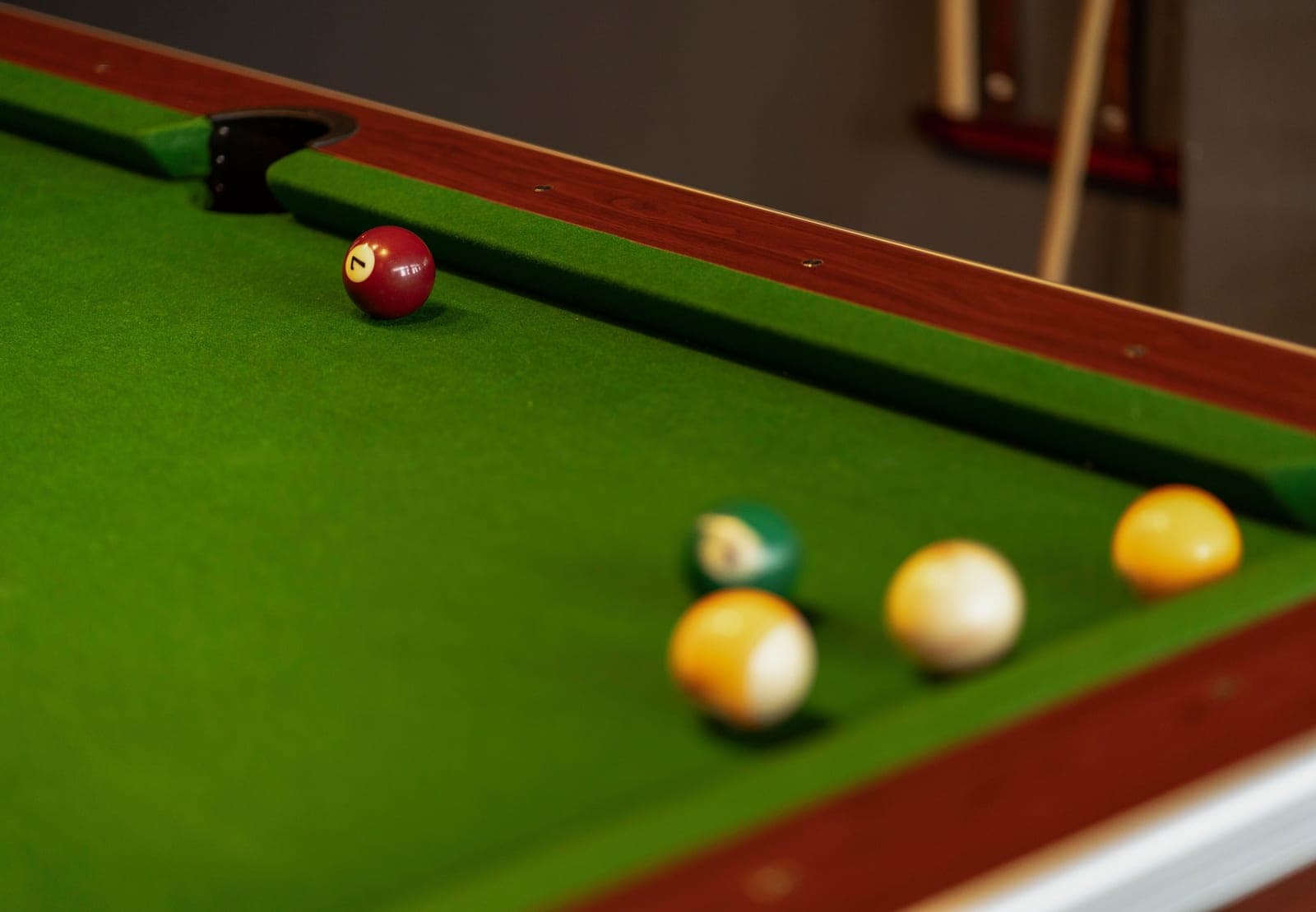
A pool table is the only thing in a game room that cannot be fixed by rearranging the furniture. If a 58-inch cue cannot clear the wall behind the cushion, every shot along that rail is played with a short cue for the life of the table. That is why this hub leads with arithmetic instead of brands.
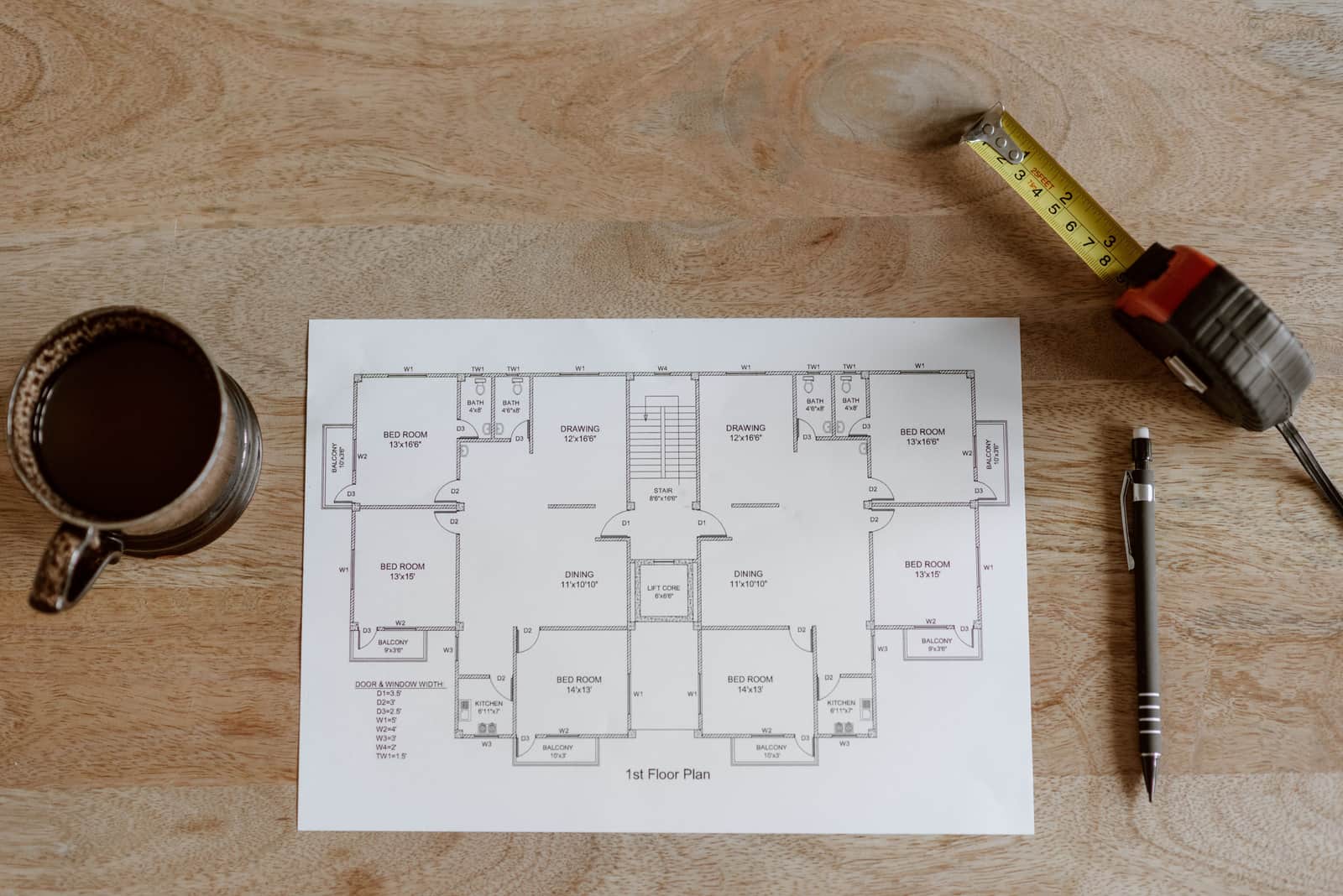
The arithmetic is simple and it never changes: room = playing surface + 2 x (cue length + 6 inches of stroke), applied separately to length and to width. A 7-foot table has a 78 by 39 inch playing surface, so with a standard 58-inch cue it wants roughly 17 feet 2 inches by 13 feet 11 inches. An 8-foot table (88 by 44 inches) wants about 18 feet by 14 feet 4 inches. Those are not showroom numbers; they are the floor you need for a full stroke with the cue ball frozen on a rail.
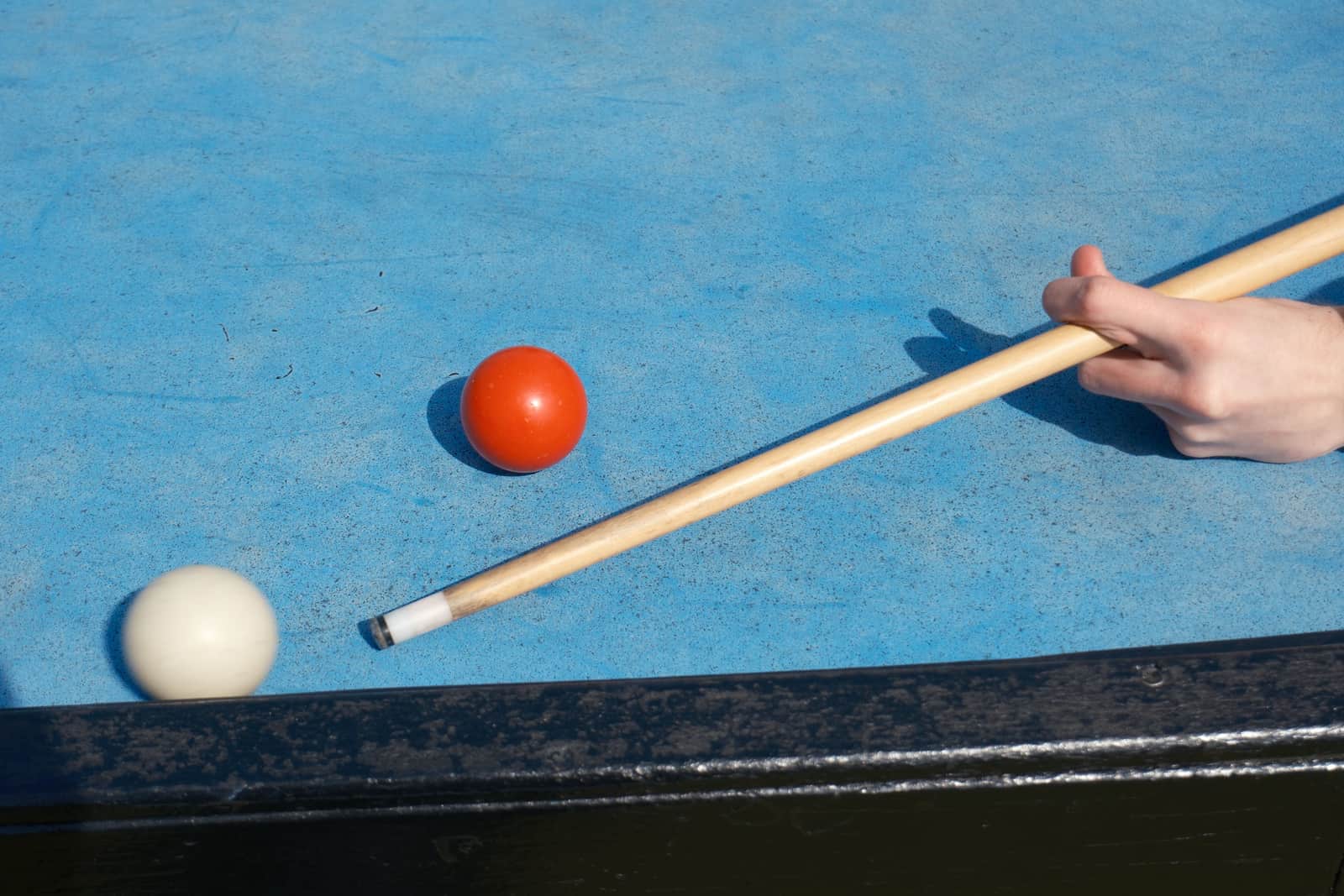
Most basements fail that test, and that is fine. The honest answer is one of three things: drop a size, accept a short cue on one or two sides, or buy a different game. A 48-inch cue costs about twenty dollars and buys back nearly two feet in each direction. A lot of good home tables are played with two 58s and two 48s racked on the wall, and nobody minds.
Slate or MDF: the one spec that actually divides the category
Slate is a stone bed, usually three pieces, machined flat and leveled during install. It holds that flatness for decades, it does not swell in a damp basement, and it is the reason a serious table rolls true. It is also why a slate table weighs 600 to 900 pounds, arrives in pieces, needs a professional installer and a stairwell it will actually go down, and is not something you move on a whim.
MDF, which manufacturers variously call Accuslate, honeycomb or engineered bed, is a wood-composite sheet. It is a fraction of the weight, it ships flat-packed, two people can assemble it in an afternoon, and it costs far less. It is also sensitive to moisture and it will develop a roll over years in a garage or an unconditioned basement. For a family table that gets played on weekends, that trade is often the right one. For a table you expect to practice on, it is not.
There is no third answer and no clever middle ground. Decide the bed first, then the size, then look at finishes. Choosing a finish first is how people end up with a table that does not fit.
Who should skip pool entirely
If your room is narrower than about 12 feet in either direction, no pool table will play properly in it, including the 6-footers sold for exactly that situation. You will spend the next ten years making compromises on every third shot. A shuffleboard table is long and narrow and loves a room like that; a dart board needs 8 feet of straight floor and nothing else. Both are covered on this site, and both are a better time in the wrong-shaped room.
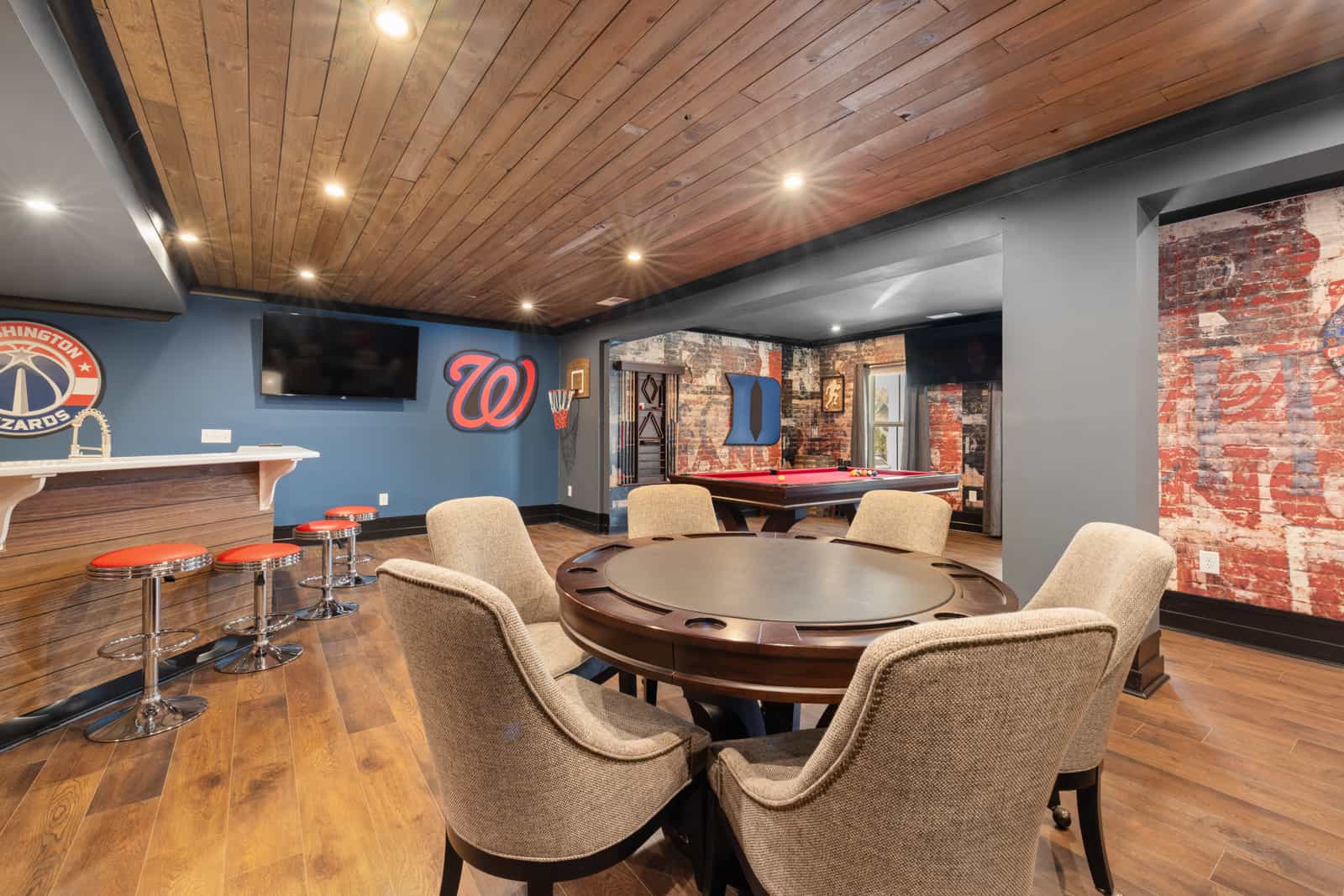
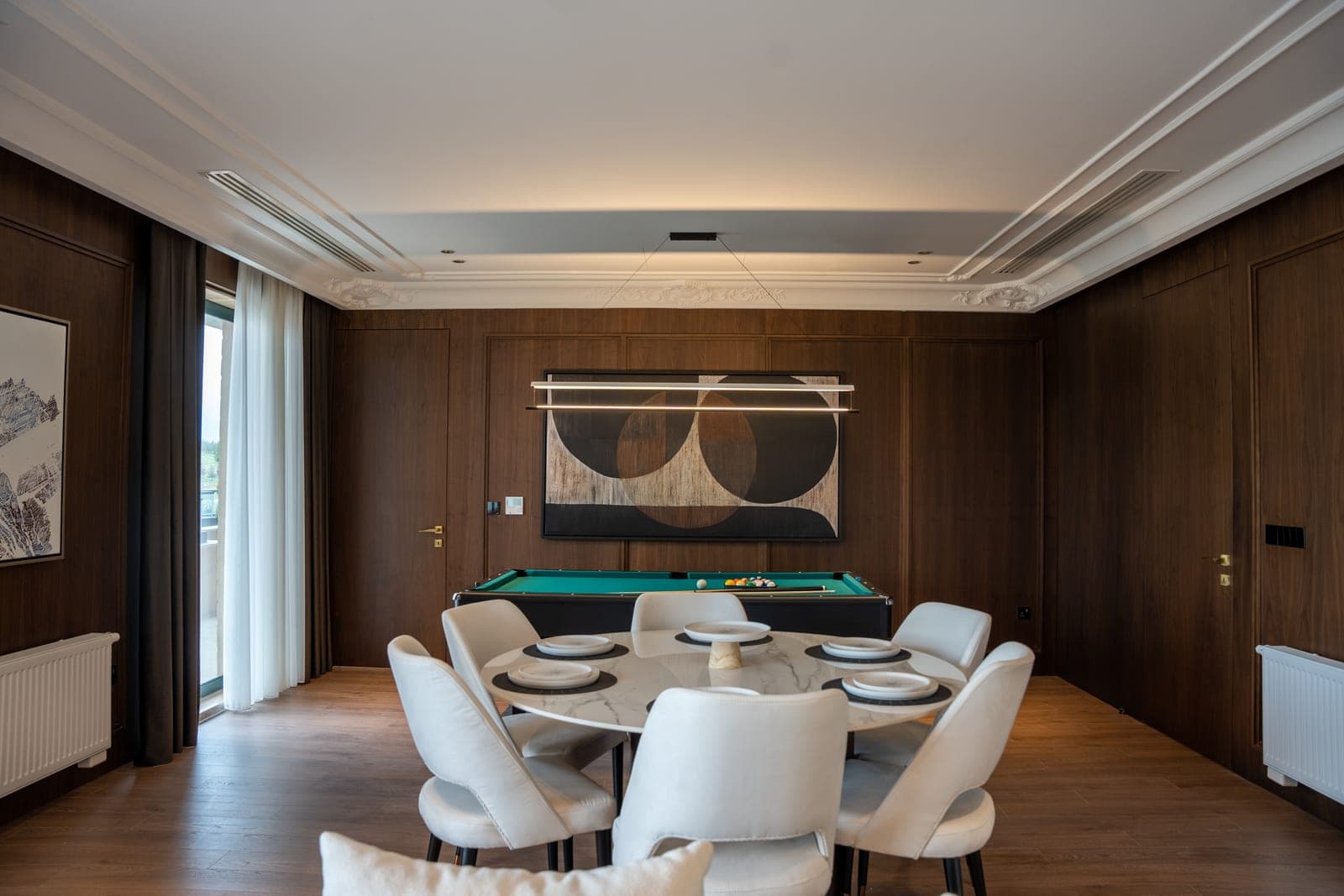
If your ceiling is under 7 feet 6 inches, a pool table still fits but the light does not. A standard three-shade fixture hangs 30 to 36 inches above the bed, which puts it in your eyeline at a low ceiling. Plan for a flat LED bar instead, and plan for it before the table arrives.
What you will spend beyond the table
Budget for delivery and installation on anything with slate; it is frequently a four-figure line item and it is not optional. Budget for a cue rack, a set of balls worth playing with, and a cover if the room is a garage. Budget for a recloth in five to ten years on a family table, sooner if the room is damp or the table is also used as a workbench, which it will be.