Picks
The Best Game Room Flooring
A bare slab is loud, cold and unforgiving. Here is what to put on it, and what not to.
How these picks were made: from published manufacturer specifications, governing-body standards and the room arithmetic - not from first-hand use. We have not played on these tables. Read the method.

Game room flooring has to do four things that normal flooring does not: survive dropped hard objects, tolerate a slab, deaden noise, and be repairable in sections. That shortlist rules out most of what a flooring shop will suggest.
What each option does
| Flooring | Dropped cue tip | Damp slab | Noise | Repair |
|---|---|---|---|---|
| Bare concrete | Chips the tip | Fine | Loud | n/a |
| Interlocking rubber | Absorbs it | Tolerant | Quiet | Swap one tile |
| Carpet tiles | Absorbs it | Needs a dry slab | Quietest | Swap one square |
| Rolled carpet | Absorbs it | Needs a dry slab | Quietest | Whole floor |
| Vinyl plank (LVP) | Dents | Tolerant | Medium | Difficult mid-floor |
| Laminate | Chips | Poor | Loud and hollow | Difficult |
| Epoxy | Chips the tip | Good | Loud | Professional |
Quick picks
| # | Product | Best for | Key spec | Price |
|---|---|---|---|---|
| 1 | Interlocking Rubber Floor Tiles | A garage | Interlocking tiles | |
| 2 | 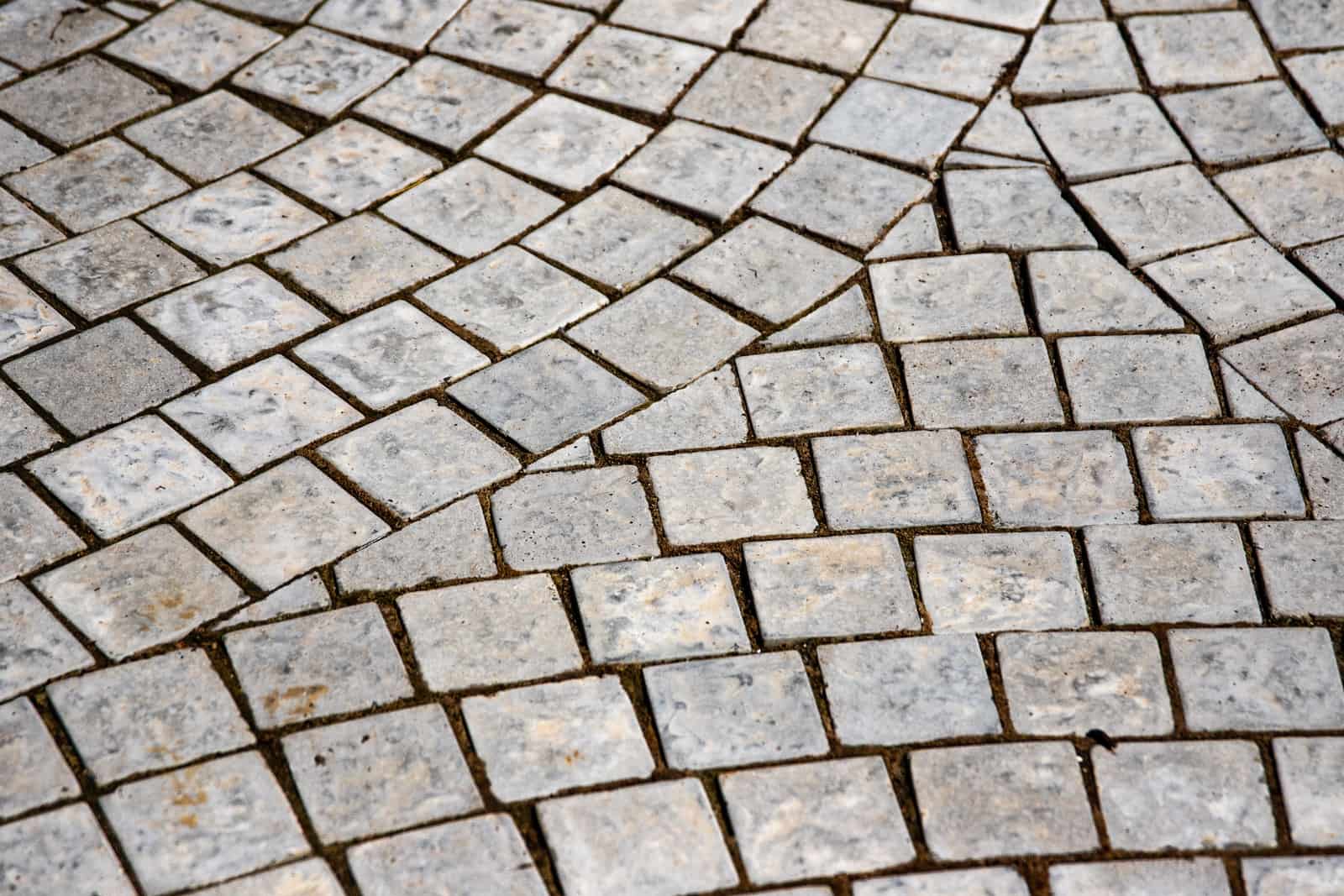 Peel-and-Stick Carpet Tile Squares | A finished basement | Replaceable squares | |
| 3 | 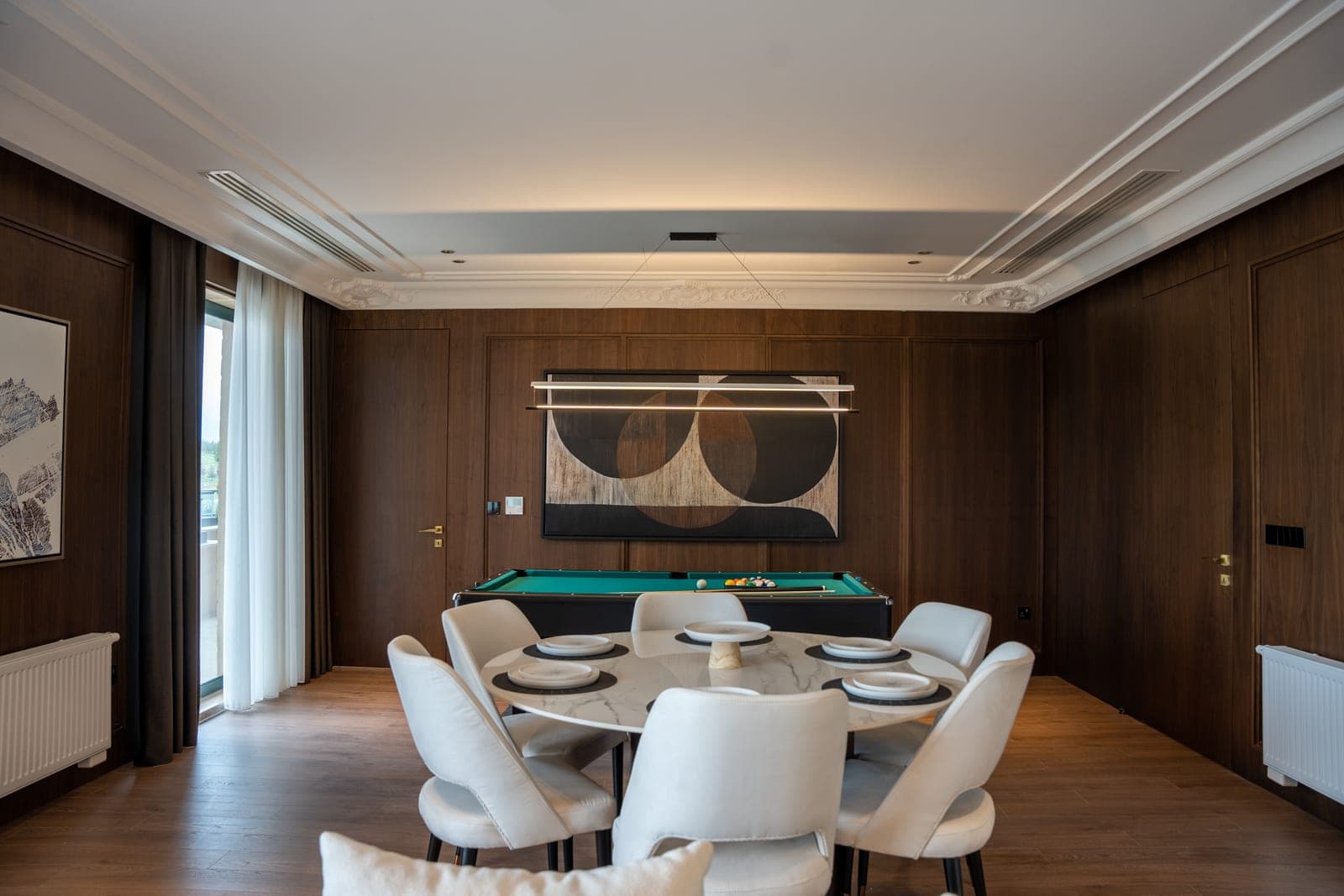 Fitted Pool Table Cover | Protecting the table instead | Fitted cover | |
| 4 |  Pool Table Brush and Rail Cleaning Kit | The other half of the job | Brush and rail cloth |
The picks
#1 · A garage
Interlocking Rubber Floor Tiles
The garage-floor answer. Rubber takes a dropped dart or a dropped cue and does not telegraph slab cracks the way vinyl plank does.
Rubber takes a dropped cue tip, a dropped puck and a dropped dart without chipping, and it tolerates the moisture a garage slab produces. It also does not telegraph the slab's cracks the way vinyl plank does.
- What works
- Survives dropped objects
- Tolerates a damp slab
- Warmer and quieter than bare concrete
- Interlocking, so no adhesive
- What does not
- Industrial appearance
- Heavy rolls or tiles to carry downstairs
- Can smell for the first weeks
#2 · A finished basement
Peel-and-Stick Carpet Tile Squares
Carpet tiles let you replace one 18-inch square after a chalk spill instead of a whole room. The practical basement floor.
The right logic for a room with chalk, drinks and dropped things: when one square is ruined you replace that square. A rolled carpet in the same room is a whole-floor problem the first time somebody tips a drink.
- What works
- Individual squares replaceable
- Warm and quiet
- Lies over a flat slab without adhesive on many systems
- What does not
- Seams are visible at an angle
- Needs a dry subfloor - carpet over damp concrete is a mold problem
#3 · Protecting the table instead
Fitted Pool Table Cover
Dust is what kills cloth in a garage. A fitted cover is the cheapest item on this site and the one that pays back fastest.
Included because in a garage the floor is only half the problem. Dust is what kills cloth, and a fitted cover is the cheapest protection on this entire site.
- What works
- Keeps dust off the cloth
- Costs very little
- What does not
- Only works if it goes on
#4 · The other half of the job
Pool Table Brush and Rail Cleaning Kit
Brush along the nap, not across it. A two-minute habit that adds years to a woolen cloth.
A floor that generates dust means a table that collects it. Brushing along the nap is the two-minute habit that offsets a hard room.
- What works
- Extends cloth life substantially
- What does not
- Requires doing it
Leveling matters more than you think
A pool table, a shuffleboard and an air hockey table all need to be level, and all three are leveled with leg adjusters that have limited range. A thick, compressible floor under a heavy table will compress unevenly over months and the table will go out of level - which reads as a table fault and is a floor fault.
Under a heavy table, either use a firm floor covering or put load-spreading pads under each foot. Thick foam tiles under a 700-pound slate table are a slow-motion leveling problem.
What to avoid, and why
- Laminate in a basement. It chips when hard objects land on it, it sounds hollow, and its core swells if the slab passes moisture.
- Thick foam puzzle mats under heavy tables. They compress unevenly and the table drifts out of level.
- Rolled carpet over an untested slab. Mold under carpet is discovered by smell, months later.
- Polished concrete with no covering, unless noise genuinely does not matter. Everything dropped chips, and the room is cold.
- Area rugs under a table's legs. The edge creates a step the leg adjusters have to compensate for.
How these were chosen
On impact tolerance, moisture tolerance, acoustic behavior and whether a damaged section can be replaced in isolation. We have not installed these products; the comparisons follow from material properties.