Guide
Dart Board Lighting
If your board is hard to score on, it is almost always the lighting. A ceiling fixture sits behind the thrower, which puts the thrower's own shadow across the exact segments they are aiming at.
How these picks were made: from published manufacturer specifications, governing-body standards and the room arithmetic - not from first-hand use. We have not played on these tables. Read the method.
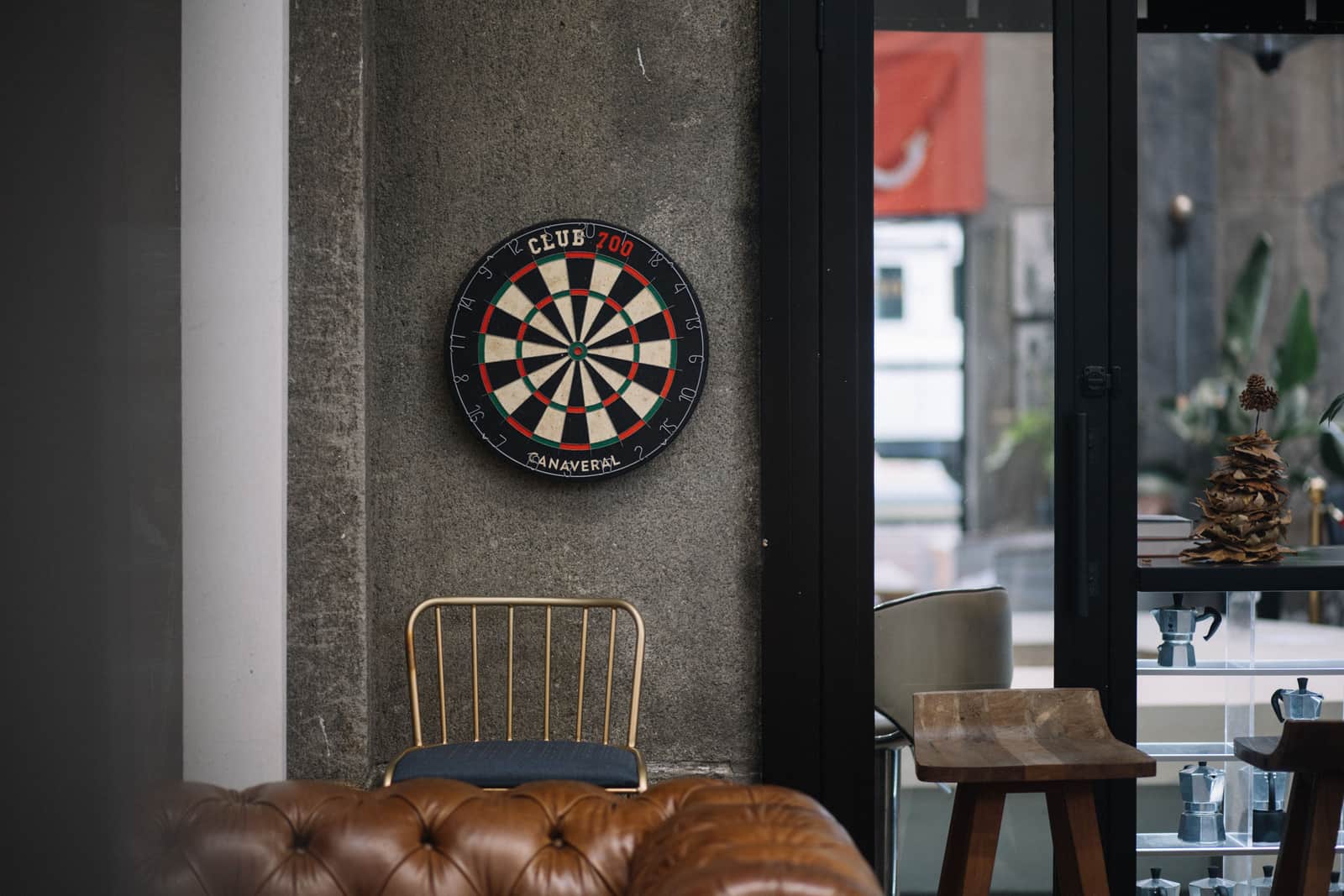
The light has to sit in front of the board and above it, aimed down at the face - roughly 12 to 18 inches out from the wall and above the top of the board, so the beam crosses the board at a steep angle. A ceiling fixture anywhere behind the throwing position is the wrong light, because the thrower's own body blocks it and casts a shadow on the segments they are aiming at. That single geometric fact is behind almost every complaint that a board is hard to score on.
The shadow problem, precisely
Stand at the oche, 7 ft 9.25 in from the board, and look at where the light in your room comes from. In a typical basement or garage it comes from one or two fixtures in the middle of the ceiling - which is to say, from above and behind you. Your head and shoulders sit directly between that fixture and the board. The result is a soft shadow across the board, darkest in the middle where you are aiming, and it moves with you so it never resolves.
What makes this so persistent is that the room does not feel dark. The light level in the room is fine; it is the light level on the board face that is poor, and people do not naturally separate those two things. They conclude the board's numbers are hard to read, or that they need glasses, or that the board is low quality. Put a lamp on a shelf bracket in front of the board for five minutes and the problem disappears, which is a cheap way to confirm the diagnosis before spending anything.
| Where the light is | What happens on the board | Verdict |
|---|---|---|
| Ceiling, middle of room | Thrower's shadow across the center | The usual setup, and wrong |
| Ceiling, directly above the board | Top-lit, deep shadow in the wires below | Better, still poor |
| 12-18 in in front, above board | Even face lighting, no thrower shadow | Correct |
| Integrated in a cabinet top | Even face lighting, aimed by design | Correct, and tidy |
| Behind the board / strip around it | Glare into the thrower's eyes | Actively bad |
Why the angle matters more than the brightness
A dart board is not a flat surface. It is a grid of raised wires standing a couple of millimetres above the sisal, and those wires cast their own small shadows. Light arriving from almost directly above throws a long shadow from each wire down across the segment below it, which is why a board lit from straight up still reads badly - the triple ring in particular disappears into its own shadow lines.
Light arriving from in front and above at a steeper angle shortens those shadows and lights the faces of the wires themselves, so the segment boundaries read as bright lines rather than dark ones. That is the real reason the purpose-built solution is a ring or a cabinet-top fixture rather than a brighter ceiling bulb: it is an angle problem dressed up as a brightness problem.
Three ways to get light on the board
The cabinet that has it built in, the linear fixture you mount in front of the board, and the ambient strip for the room - which is the one that does not fix a shadow.
#1 · The one-purchase fix
Viper Metropolitan Dartboard Cabinet with LED Light
A cabinet with integrated lighting, which solves the real problem: a ceiling light behind you puts your own shadow on the board.
A cabinet with integrated lighting, which solves the real problem: a ceiling light behind you puts your own shadow on the board. This is the cleanest answer available because the light is built into the top of the carcass, aimed down at the board face, at exactly the offset the geometry wants - and it arrives already solved, with no bracket to fabricate and no fixture to aim. One wall install, one power feed, done.
- What works
- Light is positioned and aimed correctly by design
- No separate fixture, bracket or mounting point to work out
- Closes up with the board, so the room is tidy between games
- What does not
- Taller carcass than a plain cabinet - check headroom above the board
- Needs a power outlet at mounting height
#2 · A board with no cabinet
Linear LED Pool Table Light Bar
A single linear LED bar instead of shades. Cheaper, brighter, and a better fit under a low basement ceiling.
A single linear LED bar instead of shades. Cheaper, brighter, and a better fit under a low basement ceiling. Listed here because a short linear LED fixture mounted on the ceiling a foot or two in front of the board, aimed back at the face, is the standard improvised answer for a bare board - and it works. Say plainly what it is: this is a pool table fixture doing a darts job, not a purpose-built dart light. It does the job because the requirement is the same one, which is light in front of the board rather than behind the thrower.
- What works
- Flat profile, so it sits close to a low ceiling without being in the way
- Even output along its length covers the whole board face
- No bulbs to replace at head height
- What does not
- A pool table fixture used for darts - it is not sold for this
- You are mounting and aiming it yourself, which means getting the offset right
#3 · The room, not the board
Govee RGBIC LED Strip Light
Perimeter or cove lighting for the room, not the table. Keep color off the playing surface — it changes how the balls read.
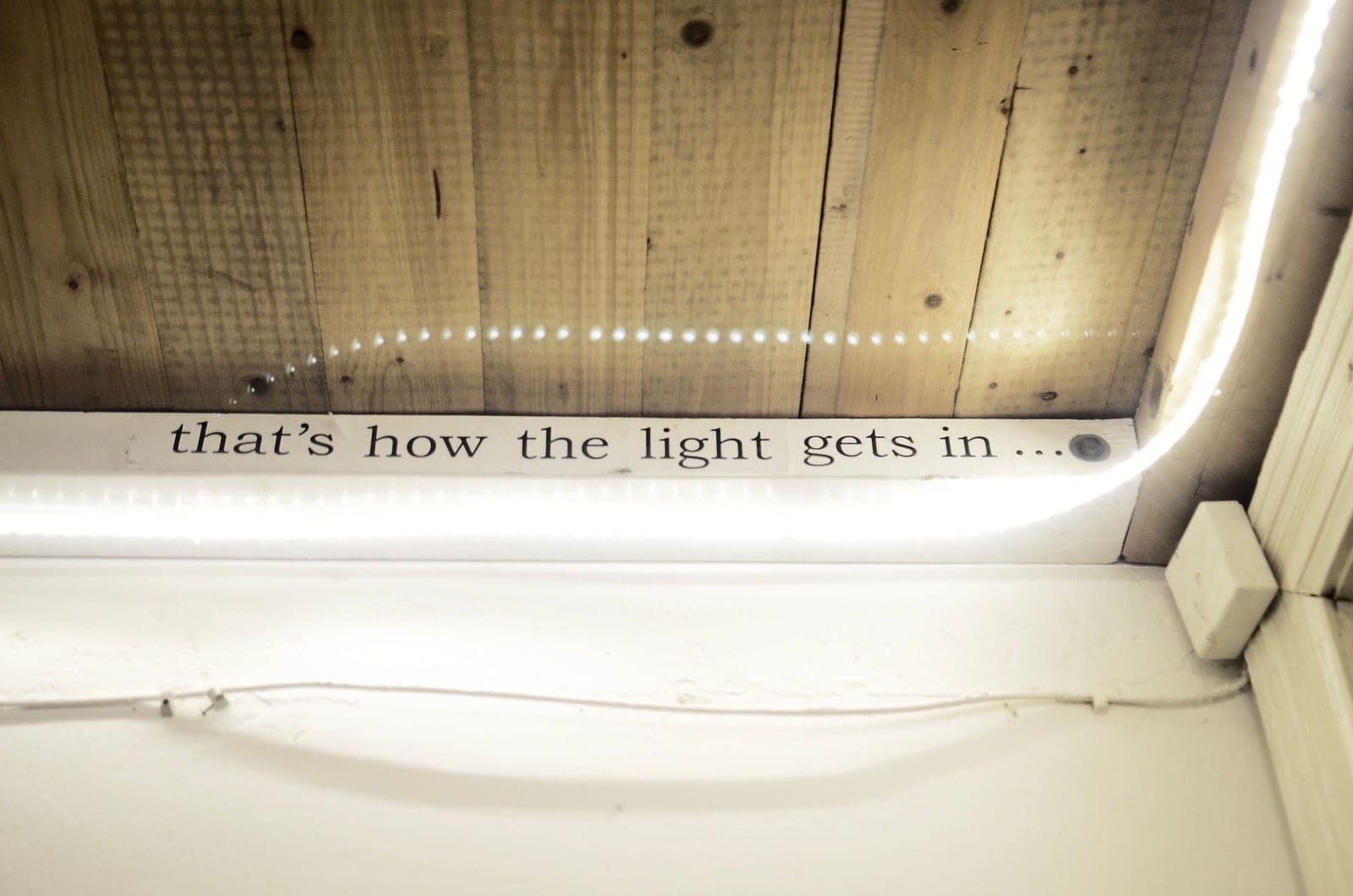
Perimeter or cove lighting for the room, not the table. Keep color off the playing surface - it changes how the balls read. The same caution applies here and it is worth being blunt: a strip light is not a dart board light and will not fix a shadowed board. What it does do is lift the ambient level in a dark basement so the board is not a bright disc in a black room, which is genuinely tiring to throw at for an hour.
- What works
- Raises ambient light, which reduces eye strain in a dark room
- Cheap, adhesive, and needs no mounting hardware
- Useful for the rest of the games room at the same time
- What does not
- Not a task light - it will not put light on the board face
- Keep the color off the board; colored light changes how segments read
Skip it if: the board itself is in shadow. Fix that with a fixture in front of the board first, then add ambient.
What to aim for, in practical terms
There is no governing-body lighting specification for a home dart board the way there is for a pool table, so the honest guidance is geometric rather than numeric. Three things to get right. The fixture sits above the top edge of the board, not level with it, so nothing in the beam path is at eye height. It sits 12 to 18 inches out from the wall, which is enough to clear the board and the thrower's sightline without putting the fixture into the dart's flight path. And it is shielded, so the thrower sees the lit board and not the bulb.
Color temperature is a minor consideration but worth getting right once: a neutral white in the 3500 to 4000 K region renders the board's red and green segments accurately. Very warm light flattens the red and green into each other, and very cool light makes the whole board look washed out. This is the same reasoning as the pool table light height page, which has the measured figures for the table case.
The floor is the other half of the lighting job
Two floor-level problems come with a dark throwing lane. Dropped darts are hard to find, which means they get trodden on - and a trodden point is a bent or chipped point, which bounces out, which is the complaint that started the whole investigation. And in a garage or basement the floor between the oche and the board usually has something on it that nobody can see.
A throw-line mat solves the second problem by making the lane visibly a lane, and an ambient light in the room solves the first. This is where a perimeter strip earns its place: not as the board light, but as the reason you can see the floor. The wall protection page covers the mat and the surround together, and the lighting plan page covers the room as a whole.
Sources and method
The throw distance and bullseye height used in the geometry are the published World Darts Federation regulation figures cited below. There is no published home lighting standard for darts, so the positioning guidance here is geometric reasoning from the thrower's sightline and the raised-wire construction of a bristle board - it is not a standard and it is not test data. Fixture specifications are each manufacturer's own listed figures. We publish no ratings or scores and have not tested these products.